Daily dose of Wisdom Brakhot 10. All the sinners saints

The Talmud brings a great story: there were uneducated thugs in Rabbi Meir’s neighborhood harassing him and giving everyone trouble.  He prays that they would die.  His wife, hearing this, quotes Psalm 104:35 to him: “Let sins cease from the earth”.  She points out that King David did not write sinners, but sins, and argues that if these sinners die, won’t there be other sinners?  Rather, it is appropriate to pray for the removal of sins, not that these men die.  So Rabbi Meir instead prays that their sins stop and that they receive divine compassion.  The men change for the better.

This is a lesson in perspective:  When a man feels he is bad, that he is a sinner, that people hate him or look down at him, then he cannot change.  If a man realizes that he is inherently good but has made mistakes or done bad things, he can change.  After all, he is still good and worthy, he just has things to fix, like everyone does.

We are all created with an urge to sin.  This is by design.  Our sages teach us that we have this challenge in order to overcome temptation and reach our great potential.  The point is not that we make a mistake and then self identify as a “sinner”.  A famous Chassidic master, the Baal Shem Tov, explained: “more than the evil inclination wants men to sin, it wants men to feel guilty and sad after their sins”.

Feeling shame and guilt is incredibly emasculating.  It removes our energy and leads to anxiety, fear of making more mistakes, and depression.  Don’t shame yourself, fix yourself and improve.  Likewise, if a person is using shaming tactics on you, don’t go on their guilt trip.  Shame and guilt are powerful but blunt tools.

The person wielding them likely never learned to use positive and specific interpersonal tools to get their needs met.  Likely family of original issues.  When the only tool she has is this hammer, you look like a nail to her.  The woman who is quick to place shame and guilt is one to avoid, as she has revealed her own lack of emotional development.

Later on today’s page of learning we have a related concept.  The prophet Yeshaya and King Hizkiya were not on speaking terms.  God makes the king sick so Yeshaya has reason to visit him (we have a commandment to care for the sick).  God could have simply ordered Yeshaya to go to the king, but then Yeshaya would have felt he had been wrong to avoid the king.  This is a lesson in sensitivity.  When you bring people together to make a compromise don’t make someone feel thy were wrong.

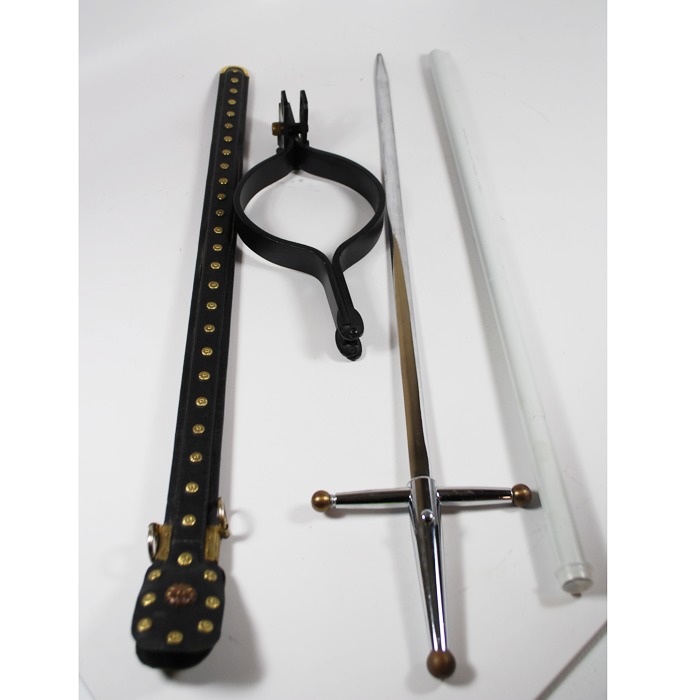
Yeshaya tells King Hizkiya, who appears terminally ill, that he is fated to die as divine punishment.  King Hizkiya has an amazing response: “Get out and stop prophesizing.  I have a tradition from my great grandfather (King David) that even when a sharp sword is pressed on your neck you never give up on divine mercy.”

Then Hizkiya prays for mercy and takes steps to fix his error.

King Hizkiya did not accept the message that he was too far gone for life.  Gentlemen, you are never too far gone as long you realize that you are a worthy man, created in the Divine image, and capable of amazing things.  You will make mistake on your path through life, but that doesn’t make you a sinner.  You need to learn from errors, not sink into guilt and shame over them.  Never give up.  Grow.  Become.  Live.

Daily wisdom Brakhot 9. Perspective and the power of now

More great material in our first section of the Talmud.  We have been in the topic of when we recite the Shema, our sages draw a comparison to the time limit for eating the Pesach offering.  On that topic we mention the time frame when the Jewish people left ancient Egypt to freedom (see Exodus).

One profound statement is that the redemption began at night, even thought the Jews did not physically leave Egypt until the next morning.  A wise man realizes that the darkness is his life, the problems and struggles, are what brings him strength and maturity.  A man suffering various life problems may be in darkness, not realizing that his personal redemption is already here, he just can’t see it yet.  He needs the light of day, a new perspective in his life, to see that he was already free. Crisis needs clarity.


On the topic of the Exodus, our sages explain why God told Moses to relate to the Jewish people that “Ehyeh Asher Ehyeh” is sending him to free the Jews.  God uses many names, not because God has different aspects or identities, but to inform us of the type of spiritual energies being employed to further His will.  We discussed the concept of anthropomorphism in the Bible, the use of multiple names for the One God serves a similar purpose- to help us understand esoteric non physical concepts.

Moses is told that the Divine name “Ehyeh Asher Ehyeh” connotes that God is spiritually attached to the Jewish nation while they were in exile in Egypt, and will still be attached to us during future exiles from our ancestral land.  Moses replies to God that he doesn’t want to inform the Jews, currently downtrodden slaves, that in the future their descendants will again be subjugated in another exile.  God agrees and tells Moses to just use the name “Ehyeh” connoting that God is with leavingt now, out the prophetic meaning that God will again be with us in future exiles.

IMG_20191226_141529

Now, you may assume that Moses debating with God has no bearing on you 4000 years later.  Moses, our greatest teacher, is teaching you how to manage your problems.  Don’t try to confront multiple issues simultaneously.  If your problems are serious (and most of us think we have serious problems until we meet someone with worse problems) then you won’t have the fortitude to solve then all at once.  This is overwhelming, and our energy and attention are limited.

Instead, list your problems, pick the most urgent, and tackle it with all your powers.  Don’t bother with the others now, just solve one thing.  Use all your energy right now to solve the one problem at hand.

Daily wisdom Brakhot 8. Now I lay thee down to sleep

The Talmud discussed the idea of reciting the “Shema” just before going to bed for the night, which is sections of the Bible that contain key concepts of faith (Daf 2).  Jews are commanded to recite Shema in the morning and evening as a reminder of our faith and commitment.  We do this as part of our regular prayers.  The Shema is so central to Jewish faith that it is one of this first things we teach children, and is the last thing we say before death.

This bedtime Shema is an additional recitation, not in public at a synagogue but in your own bedroom. It is your own private recommitment just between you and God.

IMG_20200110_124509

If you have acquired wisdom that is important to your life and personal growth, repeat it.  Internalize it.  This could be a personal motto or credo, something important you just picked up today.  Think about what you have learned and what wisdom there is that you can use.  Just before sleep is a time when most of us are either exhausted or have many thoughts and worries meandering through our minds.  Reminding ourselves of our core concepts is especially important when we are distracted or tired.

Today the daf Gemara also brings a famous analysis about the power of your wife in your life, and the need to find a good woman:

“For this, let every pious man pray to You in the time of finding, that the overflowing waters may not reach him” (Psalms 32:6). With regard to the phrase, the time of finding, Rabbi Ḥanina said: The time of finding refers to the time one must find a wife, that one should pray to find a suitable woman to marry. As it is said: “He who finds [matza] a wife finds [matza] good and obtains favor from the Lord” (Proverbs 18:22).

In Israel, the custom was that when a man married a woman, they would ask him: Matza or motzeh? In other words, they would ask the groom whether the appropriate passage for his wife is the above verse from Proverbs that begins with the word matza, as it is written: “He who finds a wife finds good and obtains favor from the Lord” or whether the more appropriate verse is the one beginning with the word motzeh, as it is written: “And I find [motzeh] the woman more bitter than death” (Ecclesiastes 7:26).

Is is vital for modern men to realize that your choice in mates has profound consequences to your life and well being.  This is not a decision to be taken lightly or out of lust.  A man must keep his own chosen mission in mind, and evaluate if this person is a good complement to his goals.

Daily dose of Wisdom Brakhot 7. Anthropomorphism, expressing emotions, being like God

We can’t even scratch the surface of the wisdom of the Talmud, but I’ll pick out a real diamond for you today from all the amazing material.

First, a note about anthropomorphism.  Naturally, we know that God has no body, no image, no mass, no form, no semblance of anything physical.  God transcends space and time.  The Bible and our sages employ language that depicts God as having physicality when we humans cannot readily comprehend a concept without resorting to anthropomorphism.

God has no body, when the Torah says “His outstretched arm” we know it does not mean God moved His arm. The Bible is in physical terms only so we understand it.  Really, this language represents an act of sending a specific form spiritual energy into the world in a certain manner to accomplish something physical.

IMG_20191225_190659
Now for a deeper level: Not only does God have no physicality, He has no emotionality.

When the Bible says “God angers” (Psalms 7:12, 30:6) and the like, don’t assume it means He became angry like we do.  God is eternal and unchanging.  God’s oneness is a true oneness, not a yin and yang, not various thoughts and aspects. Just one, in perfect unity.  Therefore, God does not experience emotions like we humans do, though God is aware of and understands our thoughts and emotions.

God does not change at all, let alone in response to trivial human activities. This language means God displayed anger, or informed us of anger, to get us to change.  It is merely a show for our benefit, to help us understand what we were doing was wrong.

On our page of learning today, our sages tell us a secret, that there is a moment every day when God gets “angry” because of idol worship.  We need to understand, God does not change or get angry in response to idolatry.  God, by way of speaking of His anger, is demonstrating so we understand that idolatry is something we should be bothered by.

Now for another shocker:
Our sages tell us that the Bible commands us to be like God… אחרי יהוה אלהיכם תלכו (Deut 13:4)

This requires a high level of mastery over your own emotions:  Don’t become angry, but display anger when appropriate.  Use it as a tool, and never let outside circumstances change you inside.

Anger can be useful to show disappointment with someone, to help them learn proper behaviors.  But it should be a show.  Do not become actually disappointed, angry, depressed.  Don’t let outside forces control your emotional world.

The ancient Greeks have a related concept of Stoicism.  Modern men can use “cocky funny”, meaning to have the attitude that anything outside of yourself does not bother you.  You are aloof and above it, or you treat it like a joke.  This outlook can generate positive good results, not everything needs to be taken seriously.  Sometimes joking about something shows the other person a new perspective, or that you are not willing to take their complaint seriously and allow them to manipulate you.

The lesson in our Talmud is broad, teaching us that sometimes it is useful to display an emotional reaction to someone’s behavior to teach them appropriate values.  But it must be only a display, don’t let them change your inner world.  Don’t let others get you angry, use anger as a tool to help others.

Today’s learning also has this gem: Rabbi Yochanon says better one impulse of self discipline in your own heart than receiving many lashes.

You understand, when you decide for yourself to pursue a certain course of action you are more likely to succeed than if it was imposed on you from outside. When you own your mistakes and fix them, you can make a lasting change. Getting reamed out by the boss or nagged by your woman is an external push on you, not as effective. And they are pushing on you to get their own needs met, not for your benefit. Only you should be able to discipline yourself, don’t give the job to other people (some will gladly take it and enjoy lashing you).

This is the corollary to our discussion of anthropomorphism. Don’t let outside players change your inside.  Do take ownership of your inside, your own self discipline and grit. Change yourself. Don’t rely on someone outside to motivate you.  Become your own motivator.  No one else in this world has your best interests at heart except for you.

Daily dose of Wisdom Brakhot 6. demons and the power in unity

Gentlemen, amazing page of Gemara today !

First, the Talmud tells us that there are dangerous Mazikin (demons) all around us all the time, that we cannot see.  Some later commentators say these are harmful bacteria, viruses, and the like.  The Talmud mentions a way to detect them, and a recipe for a potion to allow men to see them, but warns not to try it since they will damage you.

On a simple level, if we could see with our naked eyes all of the microorganisms in our environment, we would be scared and repulsed.  Could you drink a glass of water if you could see the millions of creatures teeming in it?  It is a mercy from God that we don’t see these things.


On a deeper level, we have discussed the concept that there is a The revealed world and The world behind the world.  There is a spiritual domain underlying all physical existence that we do not see, that only those with a great spiritual mastery can sense and work with.

Second, the Gemara explains the benefit of learning with a group, and prayer with a group.  While even the learning of one man merits Divine presence, a larger group brings an additional level of Heavenly merit.  While we know God is omniscient and pays attention to every detail of existence, our sages teach us that God pays extra attention when we are learning or praying as a group.  This even includes men waiting for a slower man or man running late to finish his prayers so he will not pray alone (Tos. hamitpalel).

The other benefit is unity of purpose, joining a group effort where every member wants to achieve the same goal.  Mutual reinforcement of your goals gives you more energy to accomplish them.  If you want to get fit, don’t just join a gym, join a group of men who all want to get cut.  Ask them to hold you accountable.

Unity has tremendous spiritual energy.  The Bible points out that the generation of the Tower of Bavel (Babel) was united in their purpose, and this gave them a tremendous power.  We also learn that at the time the Torah was given, the Jewish Nation was united.  You see from here that it requires miracles to unite the Jews!

Daily dose of Wisdom Brakhot 5: Don’t suffer your problems, solve them

We learn an amazing page of Gemara today with a critical message for your life:

Today the Talmud teaches three examples illustrating one concept:

  1. If you are inclined to keep making the same mistakes, learn Wisdom.  Gain a new perspective on what you have been doing.  We are not objective about our own actions, but learning new approaches to life can help us to reevaluate bad habits and flawed mental models.
    If learning doesn’t work, think of the day of death.  This is the ultimate change in perspective, and reminds you that everything is temporary.  If you need a big push to change your life situation, thinking about how your time is a non renewable resource may give the impetus to change a longstanding condition.
    Don’t stay in a relationship or career that is wearing you down.  How many years do you have really?  Do you want to spend them miserable? You can’t get that time back!  Escape the sunk cost fallacy and change it now.
  2. If suffering, sickness, or mishaps are coming upon you, examine yourself for what you are doing wrong.  Eliminate counter productive habits.  If that doesn’t fix it, learn Torah (Wisdom).  Not only does the learning itself protect from suffering on a spiritual level, but when when you are using your intellectual powers to their fullest, physical ailments are less troubling.  Also, you are opening your eyes to other opportunities in life.  Again, we are not objective about ourselves and need outside wisdom to inspire a change.
  3. The Gemara gives three examples of ancient sages who were suffering from sickness (it is not clear if these were physical or psychological ailments).  In all cases, another sage visited and was able to cure them.  The visitors asked if they wanted this suffering, since accepting suffering is a tremendous merit.  Here, the suffering was preventing learning or prayer, so it was not wanted.
    The visiting Rabbis changed the perspective of the sick sages, they had been tolerating suffering and now realized that it was holding them back and had to go.  In the case of Rabbi Yohanon, who lived in Israel 1800 years ago, he gives a deeper level of perspective by showing the sick sage a bone from his tenth son.  As in the tenth son to die in his lifetime*.  And despite this tremendous loss, Rabbi Yohanon was still teaching and helping people.
    IMG_20191227_085928
    The Talmud is teaching us the critical wisdom that you cannot keep doing what we have been doing and expect better results.  Don’t suffer your problems, solve them.  These examples show us that changing yourself requires bringing in an outside perspective.

    For traditional Jews that is through learning Torah and consulting a Rabbi.  We have millennia of wisdom and sagacity at our disposal.  Our goal here is to make it available for modern men.

    Get an outside opinion about your life.  There are expert sources teaching about personal growth and self improvement.  However, there are also many bad sources!  Vet Your Guru before you take his life advice.

    Many men in America today would benefit from Robert Glover’s book “No More Mr. Nice Guy” and The Rational Male (warning some nivul peh aka bad words).

    *Lamah metu banim shelo? N”L Ayen Kidushin 31b Amar Rabbi Yohanon “ashrei mi shlo hamaan”. Ki RY lo yada horav lo hevin legamre hashivut shel horim v’ahriut shelo l’taken banim. Lamah metu banim vlo banot shelo? NL haya efshar lo lhatzil otam al yede limud Torah imam mishum adam ki tamut ba’ohel. Raui lbanim lilmod baohel vlo lbanot. Lifi aniut dati, Rabbi Yohanon haya col cach asuk bmitzvot vyeshivah shelo haya ragil lilmod im banav caraui ki lo hayah macir hashivut!
    Sod zeh nigle li rak ki ani ohev torat Rabbi Yohanon
    [Apologies for lack of Hebrew keyboard input]

Living and legacy

Our reading in the Bible this week (Genesis 47:28 – 50:26) focuses on the last years of Jacob’s life in Egypt.  At last reunited with his lost son, Jacob and his family settled in Goshen (Raamses), in the Nile delta, an area Pharoah describes as the best part of Egypt.

The name of our Torah reading is ‘Vayehi’ (or Vayechi) meaning “And he lived”.  Our sages explain these last years were the most peaceful of his life.  However, much of this section focuses on Jacob’s thoughts of what will happen after he dies, to him and to his children, and to future generations of Jews.  Thoughts of his legacy.

Jacob left the Promised Land to reunite with his lost son Joseph and bring his family to Egypt where there is food during the famine.  On the way down they stop in Beer Sheva, and God tells Jacob not to fear going to Egypt (Genesis 46:3).  God promises Jacob that he will be buried in the Holy Land (Rashi to 46:4).

Jacob clearly feared leaving Israel, and only left due to the pressure of famine and to reunite his family.  He knew Egypt was a temporary stop for the Jewish tribe, not a home.

https://www.bibleblender.com/wp-content/uploads/jacob-moves-his-family-to-egypt-to-be-with-joseph.png

Now in Egypt, Jacob acts to ensure that he will be buried in the holy land.  He summons his son Joseph and has Joseph swear that he will bring his body up to Chevron in Israel to be buried with his fathers Abraham and Isaac (47:29-31).

You are asking the troubling question:  God Himself promised Jacob that he will be buried in the Holy Land (46:4), so why is Jacob making the effort to secure a promise from his son?  Doesn’t Jacob of all people trust the Divine Word?

The answer is that yes, Jacob believes God with a level of faith we can barely contemplate, he has wrestled with an angel and experienced miracles.  However, he fears that the Egyptians will inter him in Egypt temporarily.  The ancient Egyptians believed that important people still have power after their death, hence the mummifying and elaborate burials, pyramids, worship of dead.

Jacob is concerned that although due to God’s promise he eventually he will be back in the Holy Land, that may not happen until hundreds of years later, when the Jewish nation leaves Egypt in the Exodus. (The Egyptians later bury Joseph in a coffin in the Nile to bring blessing to the river, and Moses brings Joseph’s body out).

Of course God’s promises will become true, but humans can never know the exact time frame.  God is outside of time, His time frame is not comprehensible to mortals.  Time itself was a creation along with matter.  The Eternal Jewish God has no limitations, rather He preexists and is outside the bounds of time-space.

Our own planet twists the fabric of space-time, as shown in this animation from

Jacob is teaching us that even when God promises, you still need to do your part.  Jewish wisdom has a concept of predestination in tension tied to a competing concept of free will.  Our sages teach that even before you are born there is a field, a house, a woman (at least one) fated for you.

But this fate can change through prayer and actions.  This friction is hard to understand at first, we live with this spiritual reality and we get used to it.  A practical example my rabbi gave us:

In Heaven they can judge a man that he will be healthy to age 120, but if that man jumps off the roof today he is still dead.

All human beings tread a fine tightrope between fate and free will.  We make our plans and put in our efforts, and the Bible teaches that we have to make reasonable efforts, but there are forces and energies out of our control and even beyond our imagination.  You don’t have be a religious man to know this.  The universe is out of your control.

But not everything is.  You control yourself (to some extent) and can get help from others.  Jacob takes the steps he can to ensure his legacy, his future burial in the Holy Land, and to accomplish this in the most expedient way.

We need to do what we can for our legacy, while knowing that in actuality the future is completely out of our hands.  Jacob relies on God, but he understands that he must do his part.

For parents

We Jews have a saying that children require 50% parenting and 50% prayer.  This is a deep concept.

As parents we put in immense time and effort to shape and mold our offspring in a positive way.  Parents have the most influence over children of anyone in the world.  But still, they become their own people.  Children will turn out the way that God sees fit.  That is where prayer comes in.

You can’t control all the inputs, let alone the output.  We just do our part and try to do our best.  At the end of the day, the metric of success is did you put in the best effort you could.  Not is this child the best person I could make him.  You can’t truly control others.  You take responsibility only for your effort.  Their future is in their hands.

Our patriarch Jacob invested his life in creating and raising his 12 sons, the 12 tribes of Israel.  They are his link into the future, into immortality.  In our reading this week Jacob on his deathbed is still involved in educating his sons, guiding them into the future, and is even involved with giving inheritance to his grandchildren (48:5-20).

One of the most telling things Jacob does is give each son their own prophetic blessing, and the Torah repeats: “he blessed them, each man according to his own blessing he blessed them” 49:28.  Jacob knew his sons were unique, that each had his own individual destiny.  They were part of the larger tribe but also each man was his own tribe.

And Jacob succeeded with his sons.  How do you know?

There are millions of living descendants of those 12 sons, the Jews, still learning and teaching about Jacob’s life.  We are his legacy.  We call him our father, Yaakov Avinu.  We look up to his example.  We want to emulate him, along with his father Isaac and grandfather Jacob.

In addition, thousands of men and women not related to Jacob have chosen to join with his descendants and adopt their way of life.

Can you imagine any other man from over 4000 years ago who has descendants that still care about him and want to be like him*?  Who inspires others to change their life to emulate his model?
Jacob, with God’s help, built the ultimate legacy.

*While Genghis Khan has more biological descendants, the vast majority of them do not know or care about their famous ancestor, and have no practical way to emulate him.


Each man is a universe

Jacob understood that his children were his connection to permanency and the tools God would use to bring monotheism to the world.  But he also realized that they were not his tool, they were their own people.  At the end of his life, he blesses each in his own way (Gen 49).  Jacob does not take blame for their mistakes or credit for their accomplishments and good character.  He knows their deeds are their own.

Jacob has put in decades of effort in raising the 12 tribes, and now makes the final effort of giving them prophetic blessings and criticisms.  He tells them to be responsible.  He gives each hints to their future tribal roles within the Jewish nation (the Aramaic translation by Onkelus explains this).  The future of the Jewish people is now in their hands.

IMG_20200104_225517

We men understand subconsciously that our children are our real legacy.  Most men never accomplish anything that puts them into the history books.  By comparison, having a kid or two seems seductively easy.  There are other motivations, but a big drive for men to marry is to have children.

So men decide to settle down and start a family.  Then, if they’re paying attention, the trouble starts…  I’ve heard and read men lamenting how difficult it is to find a wife who is really family minded in our present day mainstream feminist society.

For generations, feminists have been trying to indoctrinate women to think that being a wife and mother is not an admirable lifestyle for women anymore.  The mainstream culture teaches women to focus on education and career and having fun over forming a family.

How can you become a modern day patriarch if you can’t find a proper Rachel or Leah, or even a Bilhah or Zilpah?  Gentlemen: Jacob wasn’t a patriarch because of his wives.  Of course he married the right girls from the right family.  Actually they all came from an idolatrous family in an idolatrous city and their father was a manipulative liar who threatened Jacob’s life.  Jacob had to gradually wean his wives away from that influence, as we explained in Rape, murder. It’s just a shot away.

Still, you have to do your part, like we learned from Jacob.  However, it’s not fully in your hands.  You make an effort and ask for Divine assistance too.  One mistake I have seen is a reliance on vetting.  Vetting is basically having a checklist for a woman to become your wife and mother to your children.  It simply doesn’t work under most circumstances.

Rian Stone has an excellent serious about vetting explaining this [to Orthodox Jews nivul peh warning].  If a man vets his woman, there is a danger that he thinks he is good to go.  After all, he vetted her, he got it right.  It’s on lock.  From now on it should be smooth sailing with his traditional conservative wife, white picket fence, dog, and 2.3 kids…

We learn from a real patriarch, from our father Jacob, that the work of being a man never stops.  First Jacob had to contend with his own brother and trick Isaac to become The Leader for Generations.  Jacob had to figure out how to live with four wives and how to respond to the abduction of Dinah, and when he finally thought he had some rest, his 12 sons began a power struggle that divided the family.

Jacob struggled and constantly worked on his life and continued dealing with his wives and children until the day he died.  His last act was to give his sons crucial guidance and prophecy, paying individualized attention to each son and sharing insight into what each needed for his own personal growth (49:28).

Even with God’s promise of success, Jacob’s life was never on lock and smooth sailing.  Your work as a man never stops, not when you find the right woman (and there is no one right woman), not when you get married, not when you have kids.  That is your work just beginning.

However, Jacob also reminds that while you must make your best effort, the future is really out of your hands.  God guides the universe, and as much as we can try to create and mold our families, every person is their own world.  At the end of the day you can only change yourself (somewhat).  Do what you can but don’t have a breakdown if it doesn’t turn out the way you wanted.


David and Avshalom

Our haftorah reading for Vayehi is I Kings 2:1-12, King David’s last instructions to Solomon.  This echoes the themes of Jacob’s blessing to his sons.

King David also was a big family man (18 wives, dozens of sons).  He made dire mistakes with some of his sons, most notably Avshalom.  Our sages explain Avshalom was not raised with appropriate discipline and boundaries (see I Kings 1:6 with Rashi).  Interestingly, while David was very pained at his son’s rebellion and then his death in battle, David did not blame himself for Avshalom’s rebellion, even though God told David that he would be punished by his own family (2 Samuel 12:11).

David recognized that it was God who had used Avshalom as a tool in his divine plan, and that Avshalom made his own life choices to rebel against his own father (Talmud Brakhot 7b, Mizmor lDavid).  David balanced his personal responsibility as father with the fact that Avshalom was a grown man making his own choices and was also guided into rebellion by God.

Now we have completed our journey through Genesis, the first book of the Bible.  Hazak Hazak vNithazek! (Each of us strong and together we become stronger)

While I am writing for Jews, You don’t have to be Jewish to benefit from our wisdom.

A quick summary of what we have learned in Genesis, by weekly Torah reading:

The Genesis of intersexual dynamics
Setting healthy boundaries, man’s role in marriage
בְּרֵאשִׁית In the beginning Gen. 1:1-6:8
Noah – be fruitful and multiply… With a side of abortion and castration
relative morality and birth control
נֹחַ Noah (rest) 6:9-11:32
Are Jewish women different?
Sarah vs hypergamy, polygyny
 לֶךְ-לְךָ Go for yourself! 12:1-17:27
The first family
Faith and the husband’s role in family, “headship”
 וַיֵּרָא And He appeared 18:1-22:24
Sarah and Isaac, Isaac and Rebecca
A woman’s first love is for her children. “Debt-Free Virgin Without Tattoos”
Jewish definition of love. Vetting
 חַיֵּי שָׂרָה Life of Sarah 23:1-25:18
The Leader for Generations
Alpha in appearance only vs taking responsibility
תּוֹלְדֹת Generations 25:19-28:9
Rachel and Leah, the first Sister Wives
Rachel and hypergamy
Polygyny
Women’s struggle with emotions
וַיֵּצֵא And he went out 28:10-32:3
Rape, murder. It’s just a shot away. The abduction of Dinah
influence of family and culture on women.
Stockholm Syndrome
Alpha Widows
 וַיִּשְׁלַח And he sent 32:4-36:43
Brothers and Power, Kings and Harlots
Awareness of power dynamics.
Levirate marriage.
Frame.  Play hard to get
וַיֵּשֶׁב And he settled 37:1-40:23
Power Pyramids
Rules of Power, sensitivity to power. managing your emotions. harnessing emotional energy
מִקֵּץ At the end of 41:1-44:17
Responsibility to brothers
True responsibility vs socially imposed “man up” narratives. Equal Agency
 וַיִּגַּשׁ And he drew near 44:18-47:27
Legacy, faith, parenting  וַיְחִי And he lived 47:28-50:26

Genesis features a lot of polygyny, for a primer check out Kosher Polygamy and Kosher Polygamy, part 2 for modern aspects of poly in Jewish law.

We can summarize Genesis from a Red Pill aware perspective:
Women become our Matriarchs by overcoming hypergamy, putting family and faith above personal emotional needs.
Men become our Patriarchs through awareness of power dynamics and taking appropriate responsibility for the family.  These two powers allow the nascent Jewish people the emerge from our ancestors and grow from a small family into an eternal nation.
Because we continue to honor our Patriarchs and Matriarchs, conventional Jews value these same traits that they displayed and retain these spiritual abilities that our forefathers achieved.

Humble thanks to God Almighty who has enabled me to learn His wisdom in order to share it with my fellow men.  Hazak Hazak vNithazek!

Daily dose of Wisdom, Brakhot 4: King David’s schedule

You don’t have to be Jewish to use our wisdom and improve your own life on your own terms.

On the topic of when to recite the Shema each night, the Talmud mentioned the watches of the night and how they relate to midnight.  Our sages bring an ancient tradition that King David would wake up at midnight to praise the Lord, and compose songs.  We still have the words to David’s music: the Book of Psalms.  While there are other contributors, David wrote most of them.

He would then stay awake studying Torah until dawn.  In the morning when everyone else woke up, he began to attend to official government business.


It appears from here and other historical evidence that Biphasic or bimodal sleep was more common in the past.  Since they had much less artificial lighting, people went to sleep earlier in the evening, and some woke around midnight for creative (or intimate) endeavors.  Typically in Biphasic sleep people went back to bed after this for a second sleep cycle.  King David took it one step further by not going back to bed.

King David woke before anyone else was around to interrupt and devoted this time to serving God through his music, creativity and working on his intellectual development.  This was a very wise practice, as the rest of the day he was ruling a growing nation, serving as scholar and judge, and leading his own family (we will later learn that David had 18 wives).

You can be like King David: carve out a time when no one can bother you and get to work.  When you start, use this chance to introspect and evaluate yourself.  Ask yourself what you want to get out of life, and how to go about getting it.  Then continue using your alone time to work on your goals.

If it is possible for you to schedule this block early in the morning, that is ideal.  There is a special power to the first thing you do each day, it sets the tone for the rest of the day.  By making progress towards your own personal mission first each day, you ingrain in your psyche the fact that you are important and worth working on before anything else.

A deeper wisdom here:  Praising God is usually thought of as a communal business.  The more the merrier, lets all chant hymn 23 (The Lord is my shepherd) together.  Yes, there is a power in that.  But Jewish consciousness teaches that prayer is a three pronged affair: first you acknowledge that the Almighty is all powerful and can help us solve any problem.  Then you ask Him for everything you need.  Literally everything.  Finally, you praise Him for what He has done and keeps on doing for you.

Steps 2 and 3 are very personal.  The things you need, spiritual and physical, are not the same as what others need.  What you choose to thank God for are not the same as what others value.  We all need help, but in our own individual area.  Prayer is not a generic endeavor.  King David, busy with government business (and 18 wives) wanted to carve out time when he could be alone before God and create his individualized prayer.  David understood the power of making your own personal song and exploring your unique relationship with our Creator.

More wisdom:  The Talmud explains that when King David decided to go to war against foreign invaders, the process went like this: strategize with the generals, consult the Sanhedrin (high court), then ask the Urim vTumim (a method of receiving prophecy through the High Priest).
These sounds backwards.  Shouldn’t he ask God first?  Or ask the court first?
King David is teaching us a vital life lesson.  First you plan on a practical level and map out what you can achieve yourself.  Then you seek out human assistance and advice to do more.  Only then do you ask for Divine help.
Yes, God will help you, but you have to help yourself first.  You need to get human advice and do what is within your own reach.  Then God will help you to reach further and accomplish even more than you originally planned.  And when you get divine assistance, take it, don’t keep relying on your own relatively puny abilities.  (There is a funny story about that here.)

And yet, later in today’s daf Gemara we learn that our sages instituted a one line prayer said immediately before we stand before God in prayer.  Even prayer needs divine assistance.  So yes, we do what we can as mere mortals before relying on spiritual help.  But also, everything we do requires a spiritual boost from above.  This tension is part of the beauty and excitement that comes with living a spiritually aware life.

One more thing:  Today is the 10th day of Tevet, a public fast day commemorating the beginning of the siege of Jerusalem over 2500 years ago.  The Babylonian armies arrived on this day and started a siege that years later broke into Jerusalem and destroyed the Temple.  The odd part is no one died that day, and yet we fast.  A lesson I heard is that when things start to go wrong, examine what you are doing and change course.  Don’t wait for it to get worse!

Daily dose of Wisdom. Brakhot 3: Alone with another

Today’s Talmud learning is Brakhot (aka berachos brachos) Daf 3

You don’t have to be Jewish to use our wisdom and improve your own life on your own terms.

On the second page of the Talmud we learn, from Elijah the Prophet, that it is not proper to go into an abandoned ruin to pray.  The Gemara gives a few reasons to avoid ruined buildings and similar secluded areas.  Among these is to avoid causing the suspicion that you had arranged to meet a harlot there. 

This reason did not apply out in the fields where women were not around.  But for one man to go into an isolated, private location where a woman may be waiting could raise eyebrows.

This is the concept called Yihud, meaning together, as in a man and woman alone together, behind closed doors, when that creates an opportunity to become intimate.  Jewish law has various levels of prohibition on Yihud depending on the severity, Yihud with a married woman is the most restricted.  In general religious Jews avoid being alone with someone of the opposite gender, except for family members.

In mainstream modern culture, the idea that leaving a man and woman alone together was potentially sinful used to sound silly.  A few preachers and politicians avoided such behavior and were ridiculed for it.

However, we have seen men in positions of power accused, rightfully or not, of wrongdoings with women.  One accusation can destroy a man’s career, family, and reputation.  Being considered for a high position invites the media to hunt for hints of past impropriety.  In our interconnected globalized world, any suspicion, even if later refuted, can create permanent fallout for a man.

The only surefire way to deter any accusations is to avoid entering a situation in which such activity could possibility take place.  Being alone with a woman in a way that any intimacy could happen means you can be accused of misconduct.  This ancient concept of Yihud is relevant again.


mihai-surdu-415698 c

You can infer from here the contrapositive concept: When a man and woman are trying to become intimate, it is critical to get alone time together – to create Yihud.  This requires effort when the people in question have demanding schedules or children who may interrupt.  A man needs to consider the logistics involved and plan accordingly, so he can influence the situation for the right things to happen.


On a historical note, we see that women were not expected to be out in the fields two thousand years ago.  The men were expected to be outside the home, engaged in difficult and potentially dangerous work, exposed to the elements and hostile forces.  That was their domain and men were suited for it.  The women were responsible for the demands of managing her home, raising children, weaving clothing, food preparation.

Men and women are different, but complementary.  While there are always exceptions to the rule, each gender is best suited to a specific realm and responsibilities.

Men and women work best as a team, and one gender cannot fully function without the other.  This reality was understood for 99% of human history, until just a few decades ago.  In our modern “enlightened” time, the traditional expectations for each gender are blurred.  Roles are confused, and men and women are confused too.

Daily dose of Wisdom: Brakhot 2: Choose your motto

Mazal tov on a huge milestone for conventional Jews.  We just finished learning the key text of the oral Torah, the Talmud, also known as the Gemara or Shas.  See Introduction to the Written and Oral Torah.

Many traditional Jewish men learn Talmud at rate of one page a day, the famous “Daf Yomi”.  That means learning every single day.  No breaks.  It takes seven and a half years at that speed, which is a very fast pace.  You could easily spend a lifetime exploring the intricacies of just one book of the Talmud.

Now that we have finished studying the Talmud, we begin again.  I have learned the cycle once already, so this is my second trip through.  I am also teaching on behalf of local Rabbis when needed.

I’ll try to post a brief thought when I have the opportunity.  These will be relevant to Jews studying Gemara, but I may be able to tease out some universally relevant wisdom.  You don’t have to be Jewish to use our wisdom and improve your own life on your own terms.


The Talmud begins with a Mishnah asking this question: “When do we recite the Shema in the evening?”

Much of the content in the Talmud is the result of questions, suggested answers, and questions on those answers.  Our ancient sages put a lot of effort into questioning and comparing various interpretations, trying to get to the bottom of what the Bible really means on a practical level.  They ask what the rule should be based on questioning the meaning of the original sources and drawing logical comparisons from other areas of the Bible.

In traditional Jewish education, questions are encouraged.  Parents and teachers are happy when a young boy asks a good question about the Bible.  We look for conflicting concepts and figure out why there is tension and what this teaches about each subject.  True understanding is not the result of blind acceptance, rather it comes from applying intellectual curiosity and rational analysis to your subject.

Questioning is the key step in education.  When someone tells you something and wants you to accept it, you need to question it first.  What is their source?  What is the evidence for and against this concept?  Does it even apply to my personal situation?  Does it work in practice?

In the modern world we have ready access to information, so we don’t need to simply accept what others are saying and go along with the prevalent narrative.  We can do the research, draw comparisons, and figure it out.  Get used to asking questions.

If you are not familiar with Judaism, you probably already have great questions already: “What is Shema and why do Jews recite it?”

Shema is the Hebrew word for Listen, the first word in Deuteronomy 6:4.  That verse is the beginning of the central creed of Jews: “Listen, Israel, the Lord is our God, the Lord is one”. 

We are commanded to recite this verse in 6:6-7 “And these words that I command you this day shall be on your heart.  And teach them to your children, and speak them when you sit at home and when you travel on the way, when you lie down and when you get up”.  From that last bit our sages learn that we recite this verse every evening and every morning.

Gentlemen, this is a powerful message.  If you want to put a concept into your heart, to make it part of you and ready for use, then you need to study it every day.  Make it into a slogan or motto for your life, and repeat it to yourself.  When you remind yourself of your personal credo every morning and evening, you are going to be better equipped to face whatever the day brings.

For conventional Jews, the Shema is our motto.  The entire recitation is actually three sections: Deuteronomy 6:4–9, Deuteronomy 11:13–21 and Numbers 15:37–41.  These are verses about central components of Jewish philosophy.  Studying it every day reminds us of the key features of the Jewish belief system and our obligations to God. 

For modern men, work on developing your slogan, something that helps you focus on your own goals, beliefs, or identity as a man.  Use questions to tease out what it is you want to get out of life.  Ask yourself what you are really living for, and what concepts you need to internalize to help you towards your chosen mission.

The first chapter of the famous work Path of the Just (Mesilat Yesharim) by Rabbi Moshe Haim ‎Luzzatto (1707-1746) explains that the crucial first step for your success is to keep asking himself what it is he is living for.  What is your role?  Your purpose?  Your mission in this life?

This is a seemingly simple and fundamental but at times incredibly frustrating question.  Only by continually asking yourself and honing your understanding can you keep striving for his main goal without distractions.  The process of working out your life mission and reminding yourself of it allows a man to move in the right direction.


Brakhot (aka berachos brachos) daf 2

Tosafot DH “meimatai”

Tosafot notes Rashi’s explanation.  If it is not the right time yet, why during evening prayer do we recite Shema?  From Yerushalmi, there is a major advantage to learning just before prayer.  May be like a spiritual warm up.  On deeper level, learning Torah is God talking to us, teaching us.  Prayer is us talking to God, giving thanks and asking for what we need.  Going immediately from learning to prayer gives more energy into the prayer.

The other direction is also important – prayer to learning.  As Chazal learns out from Psalms 84:8: יֵֽלְכוּ מֵחַ֣יִל אֶל־חָ֑יִל יֵֽרָאֶ֖ה אֶל־אֱלֹהִ֣ים בְּצִיּֽוֹן  “Yeilchu Me’chayil el Chayil” “They go from strength to strength; they will appear before G-d in Zion.”  Prayer is a strength (hakol kol Yaakov) and learning is a strength.  Emphasize your strengths!

For the modern man, there is actionable wisdom here.  When involved in self improvement of one type, immediately take that energy (be is physical, intellectual, spiritual) and apply it to another area.  An example would be reading about proper lifting or watching instructional videos, learning the lift, feeling that energy that you are going to lift the weights with perfect form, then executing the lift.


Then after lifting, take the physical energy (endorphins) and channel that into something else positive for yourself, like working on a business idea or sketching out a plan or artwork.

Go from strength to strength!