This week we study an amazing section of the Bible, Numbers 8:1–12:16.
Aaron, the High Priest, is commanded to raise up the flame in the holy golden menorah. The men of his tribe, the Levites, are inducted into their service in the Tabernacle. The Levites are purified and physically waved to enter into ritual service.

The men of Levi took the place of the firstborns of all the Israelites (8:16-18), we explained how this has tremendous implications regarding the census data. The Levites they would study the intricate laws of the Tabernacle, the Divine service, and ritual purity before they began to serve in the Tabernacle at age 25 as an apprentice, and then serve fully at age 30.
Now we learn they served in the Tabernacle until the age of 50 (8:25). But they did not retire then: “He shall minister with his brothers in the Tent of Meeting to keep the charge, but he shall not perform the service” 8:26. He is no longer fully engaged in the Divine service, but he is serving with his brothers. How does this work? At age 50 a man switched focus, from the actual hands-on work to mentoring and teaching the younger generation.
In a society that values elders and their years of acquired experience, the younger generation was eager to learn from the older men. The assumption, and it was true, was that age meant wisdom. For the men of Levi especially, who required an extensive education before serving, having expert teachers and role models was vital. A 50 year old Levi had been familiar with the Tabernacle for 25 years already, directly involved in the service for two decades.
In modern America, many men remain in a sort of extended childhood. There are complex causes for this tragic situation. It is tempting to berate a man who still lives with his parents as lazy. However, there serious pressures and societal factors that may make this a safer option for a modern man than starting his own family. We talked about these regarding MGTOW.
In the good (and bad) old days, a man had to master himself and his environment to survive. He had to lead his family, or at least contribute to the family, group, or tribe he was a member of. There were no bail outs for failed banks, business ventures or crops. No safety nets other than what his family or tribe could spare, if anything.
In the past there were no grown men living in their parents’ basement playing video games. A man had to build himself into something, and along the way he would necessarily grow in wisdom and strength. If he made it on his own and survived to start his own family that was itself an accomplishment. Therefore, older men were much more respected than they are today.
Nowadays a man can grow up but never become truly mature. It is no longer safe to assume that age brings wisdom. However, age does bring experience. Typically experience brings reflection and personal growth, but some memories are bitter and growing past them is very difficult.
For some men, the past is a foreign country they keep trying to get back to, but they lack a passport. We can get stuck in a rut, our thoughts on the past. Even if a man has not learned the right lessons from his own experiences, he is still valuable. You can still ask him about his life and learn from his mistakes, then consider his experience in light of the bigger perspective that you know. If he can’t grow from his life, you can.
For older men, realize the value you have gained so far in your life. If you can reflect on what you have been through and derive useful lessons, you can be an invaluable asset to others – and to yourself. Nothing in the world is in vain. Maybe an experience you had decades ago can inspire or give a warning to younger men. Use your past to rebuild your future the way you want it. You can be forward thinking at any age. Sometimes to get beyond old memories you will need to imagine you can light them ablaze and rise from the ashes.
Give Yourself A Second Chance
The Jewish people brought the original Passover offering in Egypt and another a year later in the wilderness, Number 9:5. However, there was a group of people who had contacted a dead body and could not partake in this offering 9:6. Some sources say they were carrying Joseph’s coffin up from Egypt, or those of the other sons of Jacob. They approached Moses and asked “why should we be excluded?” 9:7. Now, the obvious answer would be “because you are contaminated you are not eligible”.
However, Moses consulted God, who gives these men a second chance. Not only these men, but anyway who was impure. In later years not only the impure but also someone who was unable to get to Jerusalem, and even converts who join the Jewish people are able to take part in the Passover offering. Even though their ancestors did not physically leave Egypt in the Exodus, they have been adopted into the Jewish people. Now their ancestors are ours, our Patriarchs and Matriarchs, and they are fully equal to any Jew.
“One law shall apply to you, to the convert and to the native-born citizen” 9:14.
This is the original source for the modern concept of equality under the law. Other ancient cultures, even the widely lauded Greeks, lacked equality under the law, citizens enjoyed a different set of rules than visitors or those who joined a culture or city from the outside. Only the Jewish people required equal treatment of those individuals who chose to join.
These men who were impure could have just given up and shrugged it off. After all, they were taking care of an important job that caused their impurity. An impure man is not eligible. However, they show us a deep wisdom: the power of changing your perspective from “I missed out” to “I want more”. When you say the words “oh well” you are resigned yourself to lose out on something.
You can reconsider your attitude, which will give you the drive to do more, be more, and accomplish more in life. In life other people will not always give you a second chance. You need to build the inner will to give yourself another chance.
When your personal embers are low, people may not even give you a first chance. Rebuild your internal fire, your drive to do more and get more out of life. When you are burning inside, people around you notice this and will be more open to you. If one won’t give you a second chance that is fine, there are more ones in the world. When you raise your own fire, your joie de vie, you will have plenty of opportunities, even if you did not seize other chances in the past.
Greed and Meat
This week has the famous episode of the people complaining about the Manna from heaven (11:4-13). The Manna provided all nutrition needs, and could have almost any taste the eater wanted, except for a few specific items 11:5. A quick lesson there is you can have everything you need but still feel that you want more. The complaints for meat and against the Manna are so fierce that Moses himself would prefer to die than hear them 11:15.
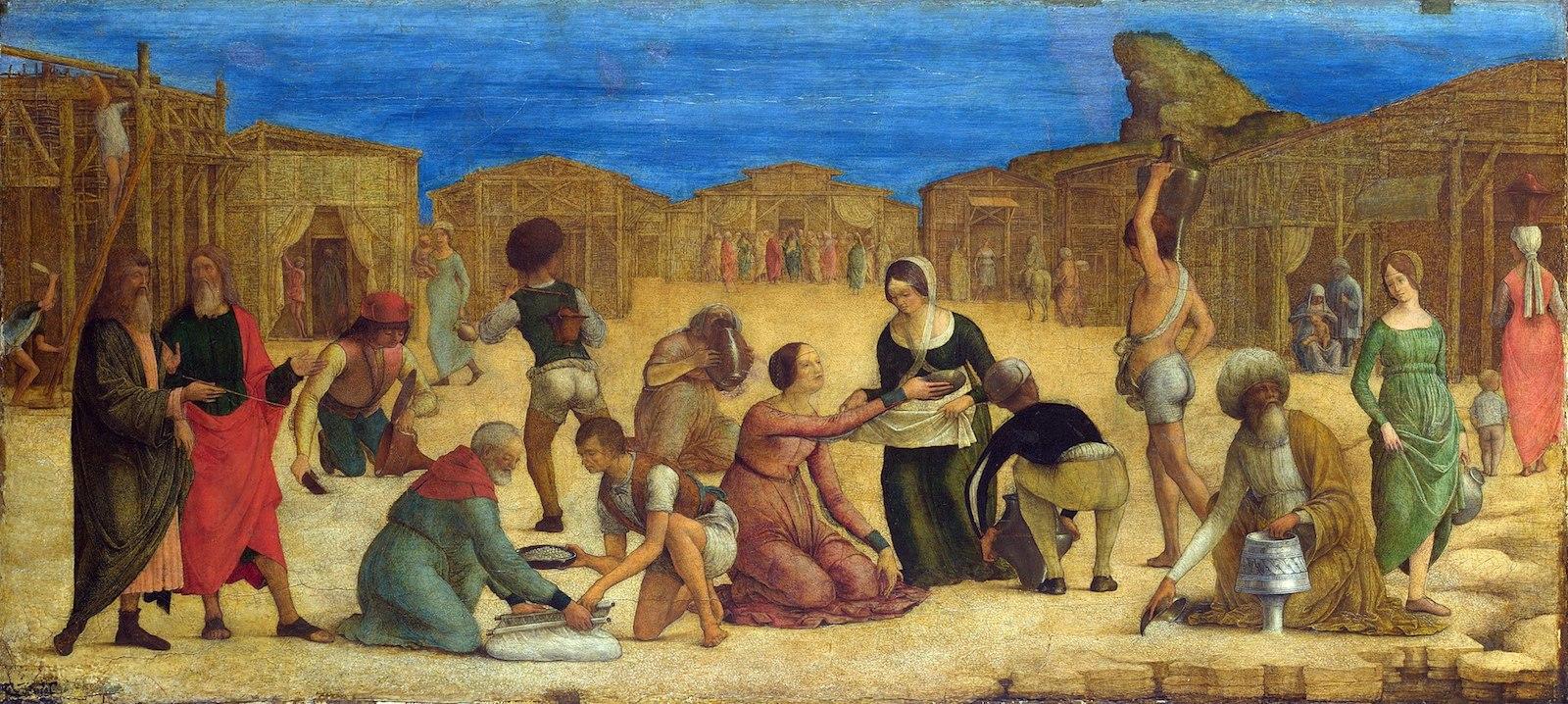
The Divine reaction here is amazing. God sent a wind blowing low flying quail to the camp to give the people meat. They gathered a massive amount of quail meat and threw a huge feast. But then: “The meat was still between their teeth; it was not yet consumed, and the anger of the Lord flared against the people, and the Lord struck the people with a very mighty blow.” 11:33. This refers to the instigators of the complaint, who died with the meat the complained for in their mouth, but before enjoying the satisfaction of swallowing it.
It is fair to say that one of the worst curses you can give to a foolish man is “may all your wishes come true”. A man needs to be aware of what he is hoping, wishing, praying, and planning for. He may be working hard towards a goal that is actually bad for him. A man must step back and consider where he is leading himself and if he is accomplishing his own mission.
We have talked about the importance of meat:
Our sages in the Gemara in Pesachim (49b) say an unlearned man (am haaretz or ignoramus) should not be allowed eat meat. This Gemara is on a philosophical level, on a practical level we allow any man to eat meat. The unlearned man is not using his intellectual powers to learn, grow, and refine himself. He is not engaged in dynamic spiritual improvement. He does not see a need to change.
He is also ignorant of his ignorance, so he doesn’t bother to learn. So he is not that different from an animal, animals have their instincts, they get by without learning and developing intellectual powers. So our sages say by the measure of strict justice he should not eat meat, since he is not lifting the meat to a higher level. He is just slaughtering an animal to enjoy the taste or feed his body. And why is his body any better than the animal’s?
The Maharal explains: what makes you have right to kill animal and eat it? Only if you are living your life with a higher value, with spiritual values, with dynamic growth, then you are raising the animal up, giving spiritual value. You are doing the animal a favor by elevating mere flesh into intellectual and spiritual energy. You are raising the mundane physical into the energy for the metaphysical. (The animal elevated the vegetation it consumed to become part of an animal, and the plants elevated the mineral level of existence).
By bringing animals to the Tabernacle, the Jews were reminded that the meat they ate was for spiritual pursuits, not for indulgence… Eating meat can make a man feel like a powerful apex predator. Bringing the animal to serve God makes us appreciate that God is giving us meat as a gift and a tool to improve ourselves and lift the spiritual level of all creation.
Yes, meat can be murder, and is allowed by the Bible or men who act like men. This is the existential question for every man: how are you different from animals?
Only men who are engaged in human behaviors of communicating, planning, learning, and growing into something better and more advanced deserve meat.
Note that the quail God sent here did not need to be brought to the Tabernacle because quail are not a species used for offerings. Therefore the people could eat them anywhere, without any religious connotation. The complainers ignored the Tabernacle, ate in an animalistic manner, giving in to their greed. They were punished accordingly, since at their spiritual level they had no real right to eat meat.

It is noteworthy that our sages understand the hint the Bible gives us that it was not just one complaint these people were making. “Moses heard the people weeping with their families, each one at the entrance to his tent. The Lord became very angry, and Moses considered it evil.” 15:10. Recall that there are no extra words in the Bible.
“With their families, at the entrance to his tent” implies they had a complaint about their families and their ‘tent’, meaning wife. They were upset that after the revelation at Sinai they were commanded not to marry certain relatives. Remember, many other people not descended from Jacob left Egypt along with the Jews, including Egyptians who had accepted immorality and open marriages as normal.
The complaint of these people was not just for meat, but for the license to give in to physical urges, even when it would be inappropriate. They wanted to eat what they craved and sleep with whoever they craved, even family members.
We find throughout Jewish wisdom that greed, hunger, and lust travel together. Indulging in wine can lead to adultery. Feasting together can lead to wife swapping. Growing fat with wealth can lead people to deny God, Heaven forbid: “So Jeshurun grew fat and kicked— You grew fat and gross and coarse— He forsook the God who made him And spurned the Rock of his support” Deuteronomy 32:15.
There is a deep wisdom here for present day men: when you meet someone who lacks self control in one area, chances are they lack self control in other areas. Someone who indulges or binges may be trying to fill a gaping spiritual emptiness that no food, drug, shopping spree, or high can sate for long. Addiction arises in chronically empty people trying to feel fulfilled through external means.
Empty and dysregulated people are always trying to fill themselves, and will readily use you do it for them. You have to protect yourself by enforcing your boundaries with people who cannot control themselves. People today are the same as they were 4000 years ago. Be aware that the messages in the Bible are for all men and all time, and use our wisdom to protect yourself.
Sister and Wife
Miriam, the older sister of Moses, expresses concern to their other brother Aaron about Moses’ personal life (Numbers 12). Moses had married to Tzipporah, the daughter of Yitro, but separated from her after the divine revelation. This was Moses’ own idea, based his extrapolation from the Divine commands issued just before and after the Sinaitic revelation, as the Talmud explains (Shabbat 87):
Moses reasoned an a fortiori inference by himself and said: If Israel, with whom the Divine Presence spoke only one time and God set a specific time for them when the Divine Presence would be revealed, and yet the Torah stated: “Prepare yourselves for three days, do not approach a woman” (Exodus 19:15); then I, with whom the Divine Presence speaks all the time and God does not set a specific time, all the more so that I must separate from my wife.
And from where do we derive that the Holy One, Blessed be He, agreed with him? As it is written after the revelation at Sinai: “Go say to them: Return to your tents” (Deuteronomy 5:26), meaning to your wives. And afterward it is written that God told Moses: “And you, stand here with Me” (Deuteronomy 5:27), indicating that Moses was not supposed to return home, but must constantly be prepared to receive the word of God.
And some give another source indicating that God agreed with his reasoning. When Aaron and Miriam criticized Moses’ separation from his wife, God said: “With him do I speak mouth to mouth, and not in dreams or hints; and the similitude of the Lord does he behold; why then were you not afraid to speak against My servant, against Moses?” (Numbers 12:8). This indicates that God agreed with his reasoning.
Moses made his decision to become celibate since he had to be available to speak with God on a different level than anyone else could. He had to be available all the time, as the emissary between God and His people.
Both Aaron and Miriam experienced prophecy as well, but had chosen not to be celibate. They were not fully aware that Moses’ direct communication with the Divine was on a deeper level and required greater purity than their own. However, Miriam overhead Moses’ wife when Eldad and Medad were prophesying in the camp (11:26). Tzipporah commented “Woe to their wives if they are required to prophesy, for they will separate from their wives just my husband separated from me.”
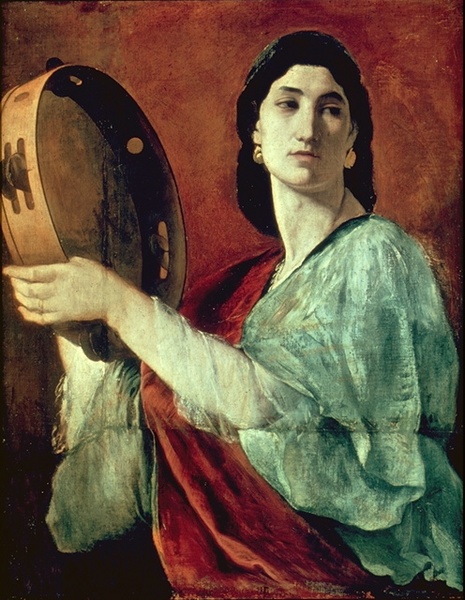
Miriam, as a sister in law and friend to Tzipporah, was concerned that Moses was ignoring his wife’s marital needs. This needs some explaining. Jewish law explains how a man has a Biblical requirement to satisfy his wife with regularity, the specific minimum amount based on his profession. For example, a camel driver or a sailor who must travel away from home would be expected to live with his wife less often than a farmer who is home each night. This is a religious duty and a key aspect of married life.
A marriage without intimacy is not a marriage. Some figures in Jewish law state that a marriage is not complete until it is consummated. Rashi explains that Moses had actually divorced his wife, apparently so he would not be held at fault for failing in the duty to provide normal marital intimacy.
Miriam is trying to be sensitive to Tzipporah, but oversteps her bounds by criticizing her brother. A man should be aware when family members, either his or hers, are intruding into private aspects of his relationship. Some are merely curious, some want to help, some want to pry, others to control. Keep your family out of the bedroom.
While Miriam certainly had good intent, she was punished for speaking about Moses and was stricken with Tzaraat (akin to leprosy) and told that Moses was on a different level that justified abstinence 12:10. Keep in mind that Moses was unique in history as the man who spoke to God directly 12:8. The message for every other married man in the world is you should be having sex.
You are no Moses. If you think you are a prophet, you are probably crazy. Real prophecy has been greatly diminished in our generation. If you are in a proper relationship you should not be abstinent. Of course you need caution when you are involved in something as powerful and central to your life as sexual intimacy. We talked about that before. Right now, our point is simply that all healthy men need physical intimacy, you are no exception.
If you are old and involved in spiritual and intellectual pursuits fine, but do not ignore your wife. In the Talmud, Rabbi Joshua son of Levi quips: Whosoever knows his wife to be a God‑fearing woman and does not visit her regularly is called a sinner (Yevamot 62b).
If you find it physically difficult, keep in mind that the modern lifestyle and diet may impact your abilities as they promote obesity and hormone imbalances. You may need to change your diet, increase physical exercise, and obtain pharmacological assistance to increase your abilities. It is worth putting in the effort and getting outside help to succeed in this critical area of life. The Bible teaches us the centrality of the physical aspect of marriage. Improving this facet of your relationship is a spiritual endeavor, may you be blessed with Divine assistance.
A woman and her beauty
The Bible emphasizes that Miriam spoke about Moses’ private life for a specific reason: “Miriam and Aaron spoke against Moses regarding the Cushite woman he had married, for he had married a Cushite woman” 12:1. Some sources say the “Cushite” Miriam mentions here was a second wife. However, most explain that Cushit refers to the distinctive beauty of Tzipporah, that she was noticeably more attractive than other women, similar to how a person from Cush would stand out in a crowd of non-Cushi people (Medrash Tanchuma Tzav 13).
Since Tziporah was exceedingly beautiful, Miriam was particularly worried about Moses’ abstinence. This is not to raise any suspicion on our holy ancestors, Heaven forbid. I propose that Miriam understood women, that a beautiful woman feels a deeper lack when she is not enjoying her sexuality with her husband. A woman who is attractive and knows she is attractive, realizes that her body is one of her most important tools in life. And she is correct.
When a woman realizes she is getting male attention for her looks, she starts to understand that she has power because of her looks. This becomes part of her personality, one of her tools to deal with people and situations. Our sages were also aware of how women view their own endowments, commenting that a woman’s weapons are always on her, referring to her beauty and ability to turn on the charm. Miriam understood this aspect of femininity in a way that Moses could not as a man, so she felt an extra degree of empathy for Tzipporah.
A man should understand that to a beautiful woman, her physical form is an integral part of her being and persona. She is always aware of how she looks, what she is wearing, how she presents herself. She is also acutely conscious of the beauty, charms, and behaviors of other women around her. Her personal beauty is something she interacts with, thinks about, and works with as a tool in life. A wise man takes all this into account when dealing with beautiful women, and a wise husband finds ways to emphasize his own wife’s beauty.
Even if a woman is not objectively above average in beauty, chances are she has some aspects of her appearance that she is proud of. When you tap into those feelings and reinforce them, you raise her emotional energy. When a woman is especially beautiful, she may be used to relying on her looks and getting attention just by being pretty. If a man ignores the physical and deals only with her mind and emotions instead, he bypasses this and sets himself apart from other men who simply focus on physicality. She will not be used to having to deal with a man without the shield and sword of her beauty as a tool.
Humans are spiritual beings, temporarily placed by God into physical vessels. Being aware of the physical aspects of our lives and working with them will help you to raise yourself up spiritually.





 Red Pill Rabbi