We study Genesis 44:18–47:27, “Vayigash” meaning He approached.
Last year we discussed how Judah (Yehudah) risked his life to approach the throne of the grand vizier of Egypt in a bid to save his half brother Benjamin from slavery. Judah and the other brothers had not realized that this powerful man was actually Joseph, the younger brother they had sold into slavery 22 years before. Judah offers himself as a slave and threatens to murder the vizier and go up against Pharaoh and his army to protect Benjamin.

We concluded that Judah had internalized the ability to take responsibility for his brothers:
Benjamin was a mere half brother to Judah, (we discussed how the 12 tribes descend from one man and four women). However, Judah accepts complete responsibility for him and proves that he is loyal to the death. Responsibility is the attribute of a mature man, who is not bothered by the fact the fact that he makes mistakes. He accepts his capacity for error and acts to correct his mistakes.
However, this aspect of masculinity holds a danger:
The idea of responsibility has been perverted in modern society to shame and blame men for all manner of social ills, and to nudge men into accepting the burden of other people’s mistakes. This is a manipulative twisting of the natural God-given masculine attribute of responsibility.
The Torah teaches that men and women are equally responsible for their actions, both are liable for punishment for sins (Numbers 5:6) and liable in civil court for damages. In modern parlance, men and women have equal agency. They are equally responsible for their actions and choices, both in the temporal realm and before God.
Contemporary feminist society manipulates us to absolve women who make poor choices from consequences and place the burdens onto men. This is against the truth that the Bible teaches us: every human being is a responsible agent. The messages from modern culture lead people to conclude that women have less agency than men. This is contrary to reality and against the Bible.

In the Torah, Judah takes the blame for selling Joseph, and goes into exile. He learns to take responsibility for his own sons, his biological family. Then he returns to his position of leadership over his brothers. Finally, as leader, he owns the responsibility for Benjamin, guaranteeing his safe return to Jacob, and is willing to lay down his life to fulfill his responsibility. Due to his complete development of his capability for proper responsibility, Judah’s descendants (through Tamar) become our kings.
What Judah doesn’t do is to take responsibility for someone else’s mess. He knows the sale of Joseph is his fault, he was the leader of his brothers and suggested the sale (37:27). He realizes that taking full responsibility for Benjamin is his way of fixing his own mistake and internalizing his changed perspective. But he is not out to take responsibility for someone else’s mess, or step in to fix a squabble that isn’t his own.
See also Brakhot 34. Taking proper responsibility
The ultimate responsibility
Judah has become the worthy ancestor to the Jewish kings by exercising appropriate authority. When Jacob hears Joseph is alive and agrees to move the family to Egypt, he sends Judah down to Egypt first “to instruct” (46:28). The Targum (ancient translation of the Hebrew into Aramaic) translates instruct as “to clear”.
Rashi in his explanation of this verse says it means as the Targum translates: to clear a place and instruct where they would settle in it. He also cites an ancient teaching of our sages that his mission was to set up an educational institution for the Jewish tribe.
Rashi is telling us that the Torah means both the Targum’s understanding to clear out and the literal Hebrew verb to teach. While Rashi seems to imply these are two different processes, we can also learn from here that clearing is an essential prerequisite to learning.
If your mind is full of incorrect ideas or the environment is distracting, you can’t learn. You must first clear out the influences that are holding you back from internalizing useful wisdom.
We see that Yehuda had a dual mission: to clear an environment suitable to teach. Who was he teaching?
The Torah tells us that the tribe of Jacob coming to Egypt numbered 70. Some of them were children, but most of them were grown and didn’t need a school. The children could have learned at home, home school was totally normal for most of human history. Our sages in the Talmud (Bava Metzia 85, Ketuvot 103b) discuss the first Jewish schools, founded by Rabbi Hiyya, who lived about 1800 years ago:
When Rabbi Ḥanina and Rabbi Ḥiyya would debate matters of Torah, Rabbi Ḥanina would say to Rabbi Ḥiyya: Do you think you can debate with me? Heaven forbid! If the Torah were forgotten from the Jewish people, I could restore it with my powers of analysis and intellectual acumen. Rabbi Ḥiyya replied to Rabbi Ḥanina: And you think you can debate with me? I ensure that the Torah will not be forgotten by the Jewish people!
I sow flax seeds and twine nets with the flax, and then I hunt deer and feed their meat to orphans. Next I prepare parchment from their hides and I write the five books of the Torah on them. I go to a city and teach five orphan boys the five books, one book per child, and I teach six other orphans the six orders of the Mishna, then I say to them: Until I return and come here, read each other the Torah and teach each other the Mishna. This is how I act to ensure that the Torah will not be forgotten by the Jewish people.
The Gemara concludes that Rabi Yehuda the Prince, a direct descendent of King David and Judah, praised Rabbi Hiyya as greater than himself.
Naturally Rabbi Hiyya taught orphans because boys with a father already had a teacher. They learned at home with their parents. Jews were the first people really into universal literacy. It was the orphans and boys with an absent father who were in danger of never learning the Bible and Jewish law. Rabbi Hiyya made all the necessary preparations to write them their own Torah scroll, from beginning to end.
The most critical aspect of Rabbi Hiyya’s work was that he had the orphans teach one another what they knew. He could have taught all eleven boys every section of the Torah and Mishnah, since he was teaching the whole corpus anyway. He didn’t, because he understood responsibility.
He made each boy fully responsible his section, with a desire to become an expert and master of that learning. Then each boy had to teach his section to the ten others, and became the leader to the other boys while they studied that part. Each orphan became the rabbi to the others in turn, until all eleven boys knew the entire Torah.
Rabbi Hiyya would travel between his schools and test the students, but most of the actual teaching was done by the boys themselves, who had learned the most important lesson: to take responsibility for their own spiritual life and for one another. This was the only way to prevent the Torah from being forgotten.
Rabbi Hiyya was following the example of Judah, who set up a school in Egypt before Jacob brought the whole tribe down. Judah knew that each individual family could teach it’s own sons, as they had before in Israel. However, creating a central educational establishment in Egypt would be critical to make sure each boy had a full Jewish education. Each Jew had to be responsible for maintaining the Jewish traditions in a foreign land, and a centralized place to issue rulings for the entire tribe would ensure the tradition continued.
The ultimate responsibility is not only to your brothers, but also to the next generation of men. When we are gone they will still be here. What can we give them now to help them succeed? The greatest gift is to teach them to be responsible for themselves and their brothers and sons.
Conceal your true powers
Joseph takes some of this brothers to meet Pharaoh, and instructs them to tell Pharaoh that they are shepherds, and their fathers were shepherds (47:2-3). He did not take all of them since Pharaoh would want to draft the strongest ones into the army. Recall that Egypt was the superpower of the time. Pharaoh had picked Joseph as prime minister, and would no doubt want to draw more talent from his family to serve Egypt, as he reveals (47:6).
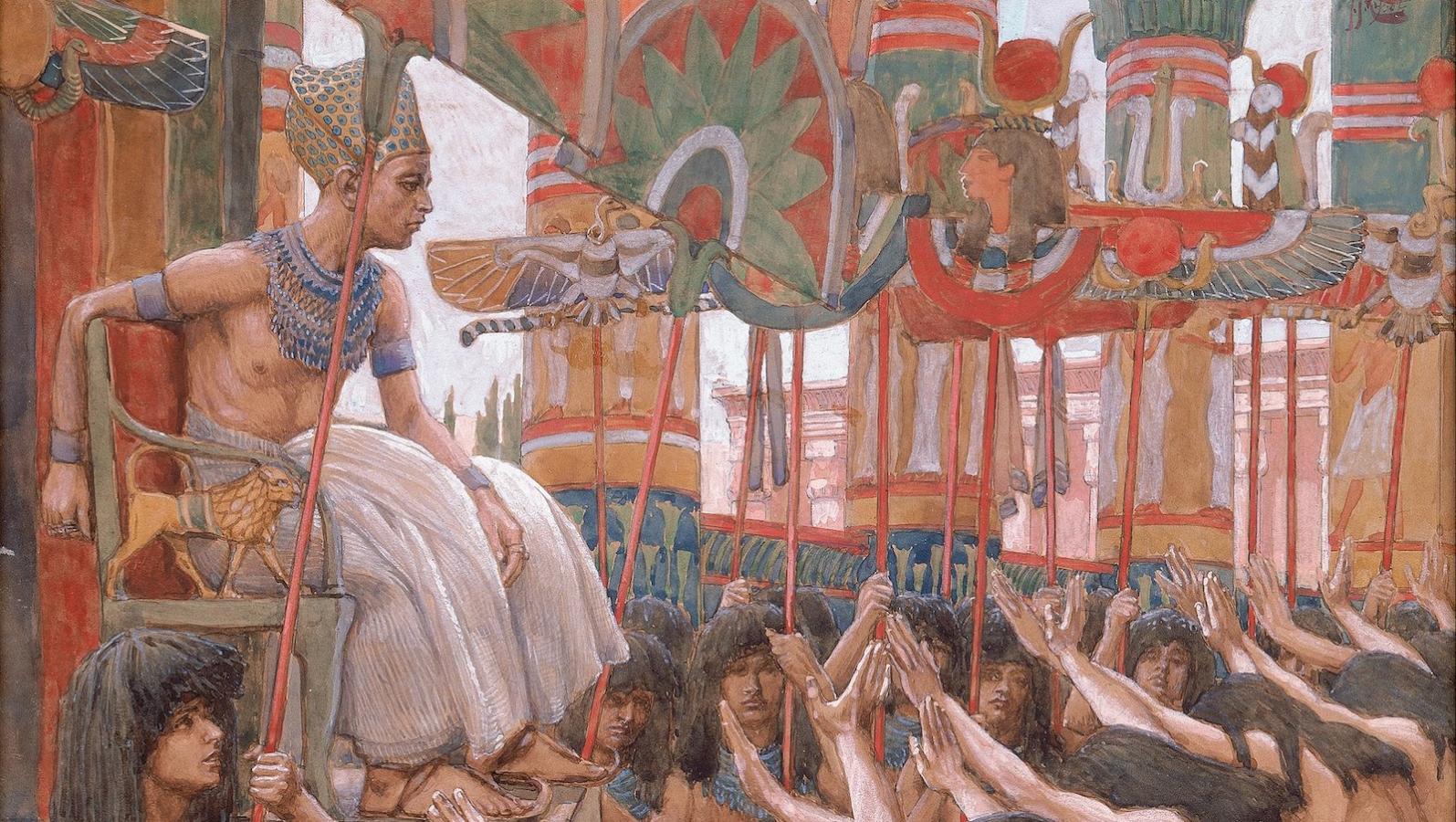
Joseph wanted to avoid this, and keep his brothers in Goshen, away from the Egyptian government. He understood that having some brothers appointed to positions of power in a foreign nation would have led to more loyalty to Pharaoh and undermined their connection to the Jewish tribe. Joseph himself had been humble before Pharaoh, hiding his own abilities and dreams of power.
It was also necessary to tell Pharaoh they were shepherds. The Egyptians of the time worshiped sheep (among other things) and abhorred shepherds who routinely ate sheep. This was another device to keep the tiny Jewish tribe from being absorbed in the sea of Egyptians.
When you have talents or powers that other people may be able to use, be wary of revealing these. As we noted above and in detail last year, other people will want to use your abilities for their own ends. Get busy using your strength for your own ends, your own family, your own tribe. Then you won’t be tempted to serve others in their own missions.
You say it’s your birthday
Joseph brings Jacob before Pharaoh, who asks what seems to be a trivial question, “How old are you?” (47:8). Jacob answers, “I am 130 years old. They were few and bitter compared to my fathers.” (47:9).
.jpg/0/0/3)
This is extremely odd, Pharaoh was the mightiest ruler of his day, and Jacob was the greatest spiritual leader. Pharaoh appointed his son as prime minister based on his wisdom, and Joseph’s wisdom was from Jacob. Pharaoh must be asking something deeper from Jacob.
Rabbi Shimshon Raphael Hirsch explains: Pharaoh asked, “How many are the days of the years of your life?” The word “days” was extra. Pharaoh was asking about days out of years. He was really asking “How many days out of your years were really life? What portion of your time was used for real productive ends? What did you do every day to make if count as a day of truly living life?”
Jacob answers that his days have been few and difficult, admitting that only a small number of his days were lived to his full ability, and those days were hard. Growth does not come easy. Jacob had many difficulties in life, with Esav, his wives, his daughter, then with his sons. His beloved son was missing and assumed dead for 22 years. Looking back, Jacob realizes that he spent many days in the struggle, coping with all of these issues. He wished for more time to focus on personal growth.
Keep in mind that our patriarch Jacob was on an amazing spiritual level. He probably accomplished more lasting personal growth on a day he considered “wasted” than we modern men pull off in a year. Jacob was judging himself by his own very high standards, and realizing that he had not done as much as he could. He was hinting to Pharaoh that real development is very hard, and rare.
For us, the message is to make every day count as best we can, not to let any go by wasted. However, we should be aware that we will rarely encounter deep levels of inspiration and major growth. Men don’t grow in a day, unless they are confronted by extreme shock, and changes caused through abrupt shock are not likely to last.

The best we can do is to try to use each to to further our incremental changes towards a specific goal. This is most obvious in the physical realm: if you could squat 135 five times last week and now you can squat 145, Mazal Tov, you grew. In the intellectual and spiritual realm growth is harder to quantify.
Conventional Jews are blessed that we study the Bible and Jewish law each day. Even if you are not religious, you can set aside time for study and reflection. Don’t live as a zombie then look back and regret all the days you wasted. Stop and think, set goals, and get to work. Don’t waste any day of your years.


 Red Pill Rabbi