Passover: important women lean

Tonight we begin the Jewish holiday of Pesach or Passover.  During the Passover Seder, the festive meal, Jews famously drink four cups of wine while reading from the Haggadah the story of the Exodus from Egypt.

We eat the Matzah (unleavened bread) and drink the wine while reclining or leaning to the left side.  In ancient times, free people or the rich and powerful ate while reclining on a couch.  Couches were the defining feature of a Roman dining room, called a triclinium after the three couches or beds to eat upon.  The Rambam wrote 1000 years ago that royalty would eat reclining.

However, the Ra’avya (Eliezer ben Yoel HaLevi, Germany, 1140-1225) comments that it should not be required nowadays as no one eats reclining anymore.  The general custom is still to recline or lean – at least for men.

There is an exception to leaning, explained in the Gemara (Pesachim 108):

אִשָּׁה אֵצֶל בַּעְלָהּ לָא בָּעֲיָא הֲסִיבָּה, וְאִם אִשָּׁה חֲשׁוּבָה הִיא — צְרִיכָה הֲסִיבָּה..
A woman who is with her husband is not required to recline, but if she is an important woman, she is required to recline.

The Gemara continues that the same would apply to students who especially revere their Rabbi, unless the Rabbi told them to lean.

The Rashbam, writing almost 1000 years ago, explains why a woman with her husband would not recline:  אשה אינה צריכה הסיבה – מפני אימת בעלה וכפופה לו ומפרש בשאילתות דרב אחאי לאו דרכייהו דנשי למיזגא:  “Because of her respect (lit. awe) of her husband and her subservience to him.  It is also explained in the Sheiltot of Rav Ahai that women do not normally recline to drink wine.”

The Sheiltot d’Rav Achai Gaon 77:1 reads: “A woman does not need to recline. What is the reason? It is not the manner of women to lean over. If she is an important woman, she needs to recline.”
It appears that it simply was not common for women to eat or drink reclining, so this was not expected of them by Jewish law.

We can safely assume that the Rashbam did not mean to imply that a wife was cowering in awe before her husband, but simply that she would need to be available to get up and fetch food from the kitchen when he asked.  This fits with the explanation of the Meiri (Menachem ben Solomon Meiri 1249 – 1306):  “a woman is not free in the presence of her husband.”  In Jewish law generally, a woman is usually exempt from commandments that must be performed at a specific time, because she must be free to attend to the needs of her household.

The Rambam (Maimonides) in Mishneh Torah, Chametz U-matza 7:8 rules: A woman does not need to recline; but if she is an important woman, she does need to recline. And a child with his father; and a butler in front of his master need to recline. But a student in front of his teacher may not recline unless his teacher gave him permission.

Rabbeinu Manoach (thirteenth-fourteenth century, Provence) in his commentary on the Rambam goes into more detail:

If she is an important woman – meaning she has no husband and she is the mistress of the house, she must recline. Alternatively, if she is important with respect to her deeds, a God-fearing woman, or the daughter of the great Torah scholars of the generation, or she has the praises of a woman of valor, such a woman, even if she has a husband, must recline.

Alternatively, you can explain: “She need not recline” – since she is busy with cooking and preparing the food, they exempted her from reclining, just as they exempted her from time-bound positive commandments. But an important woman, who has male servants and maidservants who take care of food matters and she sits idle – she must recline.

Rabbis as early as the medieval era stated that in our times all women consider themselves as important enough that they could recline.  The Mordechai (Mordechai ben Hillel HaKohen, Germany, 1250-1298), writes in his comments to Arvei Pesachim 611: “For all our women are important and need to recline.”

The Shulchan Aruch, a major code of Jewish law written about 500 years ago, rules:

אשה אינה צריכה הסיבה אלא אם כן היא חשובה: הגה וכל הנשים שלנו מיקרי חשובות (מרדכי ריש פרק ע”פ ורבינו ירוחם) אך לא נהגו להסב כי סמכו על ראבי”ה דכתב דבזמן הזה אין להסב (ד”ע):
A woman does not recline unless she is important. (Rema: All of our women are called important, but they do not have the custom to recline because we rely on the words of the Raaviah who wrote that at that time they do not recline.)

The words in the parenthesis are the addendum of the Rema (Rabbi Moses Isserles, 1525-1572) from Poland.  The Rema added on to the Shulchan Aruch the accepted practice of Eastern European (Ashkenazi) Jews, and Jews of Eastern European heritage typically follow his rulings.  The first bolded part is the Shulchan Aruch itself, by Rabbi Yosef Caro (1488-1575) in Israel.  The Shulchan Aruch, without the addenda of the Rema, was accepted outside of Europe by the Sefardi and Mizrachi Jews.

The Rema brings the words of the Mordechai that all our women are considered important, while the Shulchan Aruch does not, implying that outside of Eastern European some women felt themselves important and others did not.

Here is another wrinkle:  In Eastern Europe Jews adopted a custom to marry only one wife, to mirror the practice of their Christian neighbors.  It is worth noting that this was a temporary edict, and later was accepted as a binding custom in certain locations.  One might have thought that since a European man could have only one wife, any wife would certainly consider herself important and would lean as the Talmud states. 

However, in Eastern Europe many women did not recline.  You might see this and assume they were demonstrating profound respect or awe for their husbands, per the Talmud and the Rashbam’s understanding.  The Rema explains otherwise: even though all their women were considered important, they did not lean.  But this was not due to her feelings towards her husband, but because they were relying on the ruling of the Ra’avya.  Perhaps they wanted the convenience of not having to lean or recline during the Seder, when they may need to get up and go to the kitchen many times.  However, a woman’s lack of leaning could not be assumed as a sign of how she viewed her relationship with her husband, since the Rema writes that they all considered themselves important, as the Mordechai stated.

When we discussed this page of Talmud we noted:

This is a stark reminder that the general culture, even in a religious setting, has shifted massively regarding men and women since Biblical and Talmudic times.  Women no longer think of themselves as dependent on men for their value.  Don’t get married assuming your wife will get her identity through you and only you.

We see that in Europe there was already a hint of this cultural shift, since the Rema states explicitly that all the women considered themselves important, and their lack of leaning was not due to a lack of self importance, but a reliance on the Ra’avya.

By contrast, the women outside of Eastern Europe did lean.  Since they followed the rulings of the Shulchan Aruch, we  see that they considered themselves important.  Recall that the Shulchan Arukh was writing from Israel, where per Sefardic law, a man can have multiple wives.  It would be logical to assume that since a man could marry more than one wife, then each wife, whether or not she actually had a co-wife, would feel more awe towards her husband.  After all, he has the option to make her one of many wives, even if he never does so.  So why would Sefardi women lean, displaying their importance and independence?

We can conjecture that even with the awareness that she could become one of many wives, each woman knew her husband valued her as an individual.  The Bible requires a husband to continue his original commitment and level of intimacy with his first wife even when he takes more wives.  In fact, we learn the basic obligations of a man in marriage from a verse stating he cannot decrease these items when he takes another wife (Exodus 21:10).

When each woman knows she will be taken care of by her husband with the same love and care, she feels important even if he marries another wife.  A woman who feels that her husband is valuable and attractive and knows that he will be able to provide for her and show her love and attention is not threatened by a rival wife.  The custom of Sefardi women to lean during the Seder reveals that the practice of polygyny was not undermining the sense of security and love these women felt in their marriages.

We could also say that the same cultural shift the Mordechai and Rema documented was happening outside of Europe as well.  Perhaps Sefardi women were beginning to consider themselves more independent and less in awe of their husbands.  However, unlike the Rema writing in Europe, the Shuchan Aruch did not write that women automatically considered themselves important.

In addition, we do not have any sources stating that Sefardi women were once accustomed not to lean in accordance with the Talmud and then later developed a custom of leaning based on a changing sense of self worth vis a vis their husbands.  Many Sefardic Jews lived among Muslims, and it is likely their cultural milieu also influenced how they felt about their own marriages.  We can assume that the cultural shift in how women viewed their relationships occurred much more slowly outside of Europe.

However, it is safe to say that today all women, religious or not, have been profoundly influenced by modern feminist culture, and would consider themselves “important” independent of their relationship with their husbands.  I would guess, due to the absence of objective measures, that most women do not feel what the Rashbam called awe towards their husbands anymore.  Driving this point home, Rabbi Moshe Feinstein (aka Rav Moshe 1895-1986) mentions a reason modern women should recline in Iggrot Moshe OC 5:20:

שהכירו במשך הזמן שאין להאינשי במה להתגאות נגד נשותיהן, והנשי הכירו צורך הגדול שיש להאינשי בהן. והמיעוט חשובות שהיו בכל הזמנים היו נשי כאלו שהכירו צורך הבעל בהן, כמו שיש להו צורך בבעליהן, והכירו שגם בעליהן יודעין זה דהסיבה הא אין זה דבר חדש, אלא תיקנו דמעשה אכילתו ושתייתו שחייבה תורה להכיר החירות והגאולה, יהיה באופן שיותר יש בו היכר החירות.

…they recognized over the passing of time that husbands have nothing to lord over their wives, and the women recognized the great need husbands have for them. And the minority of important women that existed in all eras were women like this, who recognized their husbands’ need for them, just as they need their husbands, and recognized that their husbands also know this. Reclining is not a new innovation, but [the sages] established that one’s act of eating and drinking ordained by the Torah to recognize freedom and redemption, should be in a manner that more clearly signifies freedom.

The key point is that leaning is not a sign of independence, since a husband and wife are interdependent.  Instead, it is a sign of freedom from Egyptian slavery.

It is worth noting that Ashkenazi women can lean, and some sources encourage this, such as Kaf HaChayim (Rabbi Yaakov Chaim Sofer, 1870-1939) on Shulchan Arukh, Orach Chayim 472:28.:

The custom among Sefardim is for women to recline… it seems that also in the holy communities of Ashkenazim where the women had the practice not to recline, that a woman who is stringent and reclines should merit a blessing, since it is merely a custom to be lenient. Therefore, since they are important, as mentioned, it is good to fulfil the mitzva according to all opinions.

Here the Kaf HaChayim uses the factor of importance as a reason to lean.  An important person should want to fulfill the commandments in the best possible way, and reliance on the Ra’avya was a leniency and convenience.

A Sefardi woman is supposed to recline, as is our ancient custom.  However, if she did not, she does not need to go back and drink the four cups again (Chazon Ovadiah, Pesach, page 6).  It comes out that Jewish women everywhere, from any background should try to lean while eating Matzah and drinking the four cups.  This does not require lying down, even leaning slightly in your chair will suffice.  We commonly add a pillow to the left side of our chairs to make this easy. 

However, women reclining is not a sign of self importance or arrogance vis a vis her husband, but simply an appreciation for the miraculous Exodus that God wrought for our ancestors.  Putting her heart and soul into feeling the salvation of Passover is the real sign that a woman is important.

Egypt+Pyramids+Wallpapers+2

Daily dose of wisdom, Shekalim 5: appreciating your inheritance

Today the Talmud explains that in the time of the Temple, when giving the half shekel coin a man would add a small coin (kolbon) to ensure that he had paid in full, since not all half shekel coins were identical due to wear or variations in minting. However, in a case where two brothers inherited money from their father’s estate and had not yet divided it up, and paid one full shekel together, they would pay only one kolbon.  This is because the estate is viewed as one man, even though the two sons are separate individuals.  The Gemara goes on to debate cases where the brothers began to divide the property of their father.

This reminds us that we often do not appreciate what we receive from our elders and ancestors.  It is not merely an inheritance of money or property, those who came before us grew up, earned a livelihood, met a partner and reproduced.  Otherwise we would not be here.  To accomplish all of this required some degree of knowledge, skill, and acquired wisdom.

Nowadays the prevalent attitude is to ignore or reject what was the normal way of life just a few decades ago.  The past is unfairly judged as barbaric and backwards, and young people think they have all the answers.  However, if you look deeply into what our ancestors accomplished, you will see that there is tremendous wealth.  When a young man takes the time to connect with older men and learn from them he will gain a crucial inheritance of useful life wisdom.

Daily dose of wisdom, Shekalim 4: sponsorship and ownership

On the subject of collecting the half shekel coins for the temple,  the Gemara brings an amazing event in the days of Ezra, about 2500 years ago.  The Jews were allowed to return to Jerusalem and rebuild the holy Temple, and were trying to raise the funds.  Non Jews in the area offered to pitch in, but the Jewish leadership refused those donations (Ezra 4:3).

Why would they refuse free money?  The Gemara explains two problems.  First, the Jews themselves would not contribute as much since they would rely on other people to fund the Temple.  Second, the non Jews would take credit, or possibly want to take their gifts back after the Temple was constructed.

This concept is priceless for you.  If you rely on other people to get your own life going in the right direction, you will not put in all the effort you could and should.  In addition, when you do succeed,  God willing, they will take credit for it, undermining your feelings of accomplishment.

Obviously we do need to learn from older and wiser men, and give credit to our mentors.  However, each of us need to put in the work and take pride in our own growth, which inspires more growth.

Daily dose of wisdom, Shekalim 3: marking graves and forbidden weeds

The Talmud explains the source for our obligation to mark graves, one of them being the aftermath of the future war of Gog and Magog (Ezekiel 39:15) which will leave unburied bodies scattered around Israel.  These will be marked so they can be buried in the valley of Gog.  We mark graves so we can avoid becoming ritually contaminated.

The idea for modern men is to be self aware and pin down what causes problems for you.  If you know your triggers and boundaries you can stay in your frame when other people are trying to get under your skin.  In other words, be familiar with the skeletons in your personal closet so others don’t use then against you.

The Gemara also explains how the agents of the court would enforce the rules against Kilayim, fields sown with different species that are forbidden by the Bible to be grown together (see Deuteronomy 22:9-11).  At first they would pull out the forbidden plants, but the landowners were happy that their weeding was being done for them.  The number of men leaving forbidden mixtures in their fields in defiance of the law increased.  Finally the court decreed that their fields would be ownerless until the Kilayim were removed, incentivizing the owners to remove the Kilayim or face financial loss.

The message here is not to rely on others to find your personal problems and give you the solution.  A man who knows he has issues but leaves them sitting and festering is inviting people to come in an put him in place.  The common theme today is to be self aware and address your internal problems yourself.

Daily dose of wisdom, Shekalim 2: reminders

We begin our study of Shekalim, literally coins.  Shekalim is actually part of Talmud Yerushalmi,  the Jerusalem Talmud, while the rest of the volumes we learn in our daily study (Daf Yomi) are from the Babylonian Talmud.

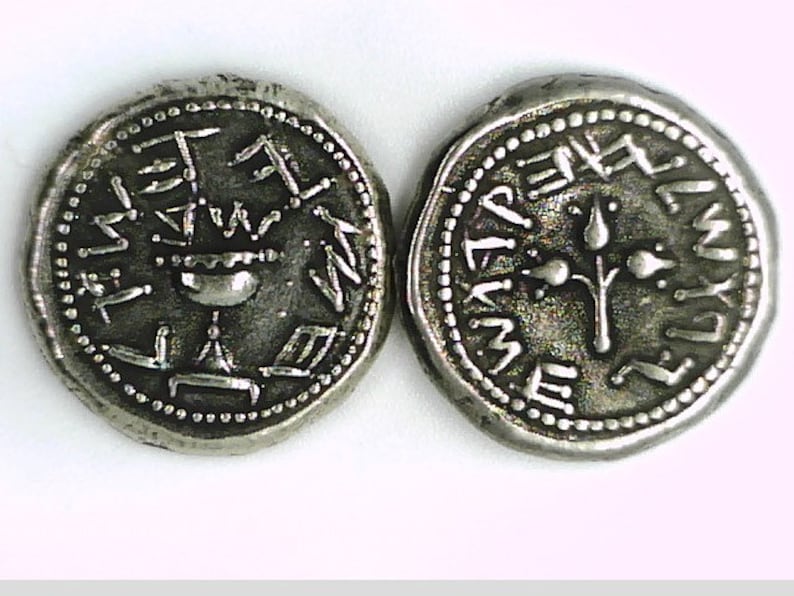
This tractate deals with the Divine command to donate a half-shekel coin, which was a communal contribution to building and operating the ancient Tabernacle (see Exodus 30:11-16).  In later generations this money would go the Temple, to fund the public offerings.  We have discussed the importance of using a  half-shekel.

Our study begins with a Mishnah detailing what the court would announce on the first day of the month of Adar, which includes a reminder the half shekel is due by next month, and other items such as the need to repair the roads and baths before the upcoming holiday of Passover.

The message is that each of us need to set up our own system of reminders.  You may have had an experience or read a book that gave you tremendous inspiration, but that only lasted a short while.  You need to set up a time to review and renew this information to recapture and use the energy.  When studying an important book, take notes or highlight.  Set an appointment to go back and look at your own notes or highlights.  Don’t lose the wisdom you have already gained.

Daily dose of wisdom, Pesachim 121: redeeming your firstborn son

Today is the final page of the Talmud’s volume on Passover.  The Mishnah relates to blessings reciting when eating the Paschal lamb and Hagiga:

MISHNA: If one recited the blessing over the Paschal lamb, he has also exempted himself from reciting a blessing over the Festival offering. However, if he recited the blessing over the Festival offering, he has not exempted himself from reciting a blessing over the Paschal lamb. This is the words of Rabbi Yishmael. Rabbi Akiva says: This blessing does not exempt one from reciting a blessing over this one, and that blessing does not exempt that one, as there is a separate blessing for each offering.

It can be helpful to be able to finish multiple tasks at the same time, but this is not always appropriate or effective.  On the topic of blessings, the Gemara relates this story:

Rabbi Simlai attended a redemption of the firstborn son. The celebrants raised a dilemma before him about the blessings:  It is obvious that the blessing over the redemption of a firstborn son, (Who sanctified us with His mitzvot and commanded us over the redemption of the firstborn son), is certainly recited by the father, as he is the one obligated to redeem his son. However, the second blessing: (Blessed are You, Lord our God, King of the universe, Who has given us life [sheheḥeyanu], sustained us, and brought us to this time), does the priest recite this blessing, or does the father of the son recite it?

Maybe priest recites the blessing, as he benefits from the five coins he receives when the boy is redeemed.  Or, perhaps the father of the son recites sheheḥeyanu, as he is the one who performs the mitzva. Rabbi Simlai did not have an answer, and he went to ask this question in the study hall. The scholars said to him that the father of the son recites the two blessings.

When you don’t know the answer, use your logic and approach the question rationally, weighing your options.  If you cannot figure it out, seek help from men who study wisdom.

What does the subject of redeeming a firstborn son, see Exodus 34:20, have to do with Passover?

The Sfat Emet (Yehudah Aryeh Leib Alter, 1847-1905) writes that whatever mitzvah the Jewish people perform, God Himself does for the Jews as well.  When God took the Jews out of Egypt in the Exodus, this was the redemption of His firstborn.  God refers to the Jewish nation as my firstborn son (Exodus 4:22).  The entire holiday of Passover is an eternal reminder of His love for us, how He recued us from slavery, gave us the Bible, and brought us back to Him in Israel.

We discussed educating your children and how that is a critical topic in Jewish wisdom. We know that fathers and mothers guide children in their own gender specific ways, both necessary to raise healthy adults.  As you study the Bible, realize that God himself is trying to guide us, each of us on our own individual level.  The various concepts in the Bible will appeal to different people.  However, the overarching theme is that each of us can find his own path through life, using ancient wisdom as a guide and inspiration.  The wisdom and inspiration a father gives a son is the greatest tool that the son can use to succeed in life.

The holiday of Passover is our way to recall that God considers each of us important and worthy of His attention, redemption, and loving guidance.  It is a sign of extra affection that God has arranged it that this year, 5780, we have studied Pesachim just before the actual holiday of Passover this Saturday night.

Mazal Tov on completing Masechet Pesachim. 
Tomorrow God willing we begin Shekalim.

Daily dose of wisdom, Pesachim 120: leave a good taste

As we approach the completion of the volume of Pesachim, and the holiday of Passover itself, the Talmud covers the topic of “Afikoman” which in ancient times meant changing locations of the meal for dessert, or referred to the dessert itself.  Nowadays, Afikoman refers to eating Matzah (unleavened bread) at the end of the Passover Seder, as a remembrance of eating the Paschal lamb.

The Gemara rules that we do not eat after this final Matzah, so we keep the taste of the commandment in our mouths.  Our sages explain that during the time we brought offerings in the Temple this law also applied to eating after the Paschal lamb.  We may have thought we could eat other foods after the Paschal lamb since it has a much stronger taste than Matzah.

When you deal with other people, you certainly want to make a solid first impression, but you also want to leave a good taste when you depart.  Often people remember you by the last interaction you shared, and forget much of what happened before that.  Don’t leave on an awkward note.

It can be especially important to make eye contact as you leave, or look back, to display to the other person they are important to you.  You should also make an effort when you leave someone’s company to let them know you are off to do something important.  You want them to realize that you are a man with responsibilities and accomplishments, so they understand your value.  Often you can do this by entering the encounter with a caveat that you only have an hour before an important investment meeting or similar.

Daily dose of wisdom, Pesachim 119: transitory riches and permanent wealth

The Talmud explains an amazing history lesson:

Rav Yehuda said that Shmuel said: Joseph collected all the silver and gold in the world and brought it to Egypt, as it is written: “And Joseph collected all the money found in the land of Egypt and in the land of Canaan” (Genesis 47:14). From where do I derive that he also collected all the money that was in other lands? The verse states “And all the land came to Egypt to buy food from Joseph, because the famine was sore in all the earth” (Genesis 41:57).

This refers not to the whole globe, but to the entire cradle of civilization, the known world of the time.

And when the Jewish people ascended from Egypt they took this treasure with them, as it is stated: “They despoiled [vayenatzlu] Egypt” (Exodus 12:36). The Sages explain this term. Rav Asi said: They made Egypt like this trap [metzuda] for birds, where grain is usually placed as bait, in which there is no grain. Rabbi Shimon said: They made Egypt like the depths [kimetzula] of the sea in which there are no fish.

And this treasure remained in Eretz Yisrael until the time of Rehoboam, at which point Shishak, king of Egypt, came and took it from Rehoboam, as it is stated: “And it came to pass in the fifth year of king Rehoboam, that Shishak king of Egypt came up against Jerusalem. And he took the treasures of the house of the Lord, and the treasures of the king’s house; and he took away all” (I Kings 14:25–26). Zerah, king of Kush, who ruled over Egypt, later came and took it from Shishak.

Asa came and took it from Zerah, king of Kush, when he defeated him in battle (II Chronicles 14) and sent it to Hadrimmon ben Tabrimmon, king of Aram (see I Kings 15). The children of Ammon came and took it from Hadrimmon ben Tabrimmon, as learned by tradition. Jehosaphat came and took it from the children of Ammon (see II Chronicles 20), and it remained in Eretz Yisrael until the reign of Ahaz.

Sennacherib came and took it from Ahaz. Hezekiah came and took it from Sennacherib, and it remained in Jerusalem until the reign of Zedekiah. The Chaldeans came and took it from Zedekiah. The Persians came and took it from the Chaldeans. The Greeks came and took it from the Persians. The Romans came and took it from the Greeks, and this treasure still remains in Rome.

At the time the Talmud was composed, Rome was still the most rich and powerful entity in the world.  After that time, the riches were taken from Rome itself to various places.  Coins from the Roman empire were often melted down and minted into coins for new kingdoms.

The lesson is that wealth, along with national power, are transitory.  Your society may be rich and successful in one generation, but soon on the decline as another rises.  This is the natural state of the world, the Bible testifies that (relative) wealth and poverty will never cease (Deuteronomy 15:11).

This is a lesson for you personally as well.  You will have times of financial success and personal freedom, but this may slip away.  You will also have times of need, crisis, and uncertainty.  Keep in mind this slogan: “it’s not yours, it’s just your turn”.  When you have your wealth, health, and happiness enjoy it and make the most of it.

The only wealth you can really keep come what may is your wisdom.  Be diligent to acquire wisdom and then use it. Unlike money spent, your intellectual powers only grow and improve when applied to your life.  Indeed, the only way to retain your personal wisdom is to review it and use it.

We see this concept from Jewish history.  All of these proud historical kingdoms, even the Jewish ones, rose and fell, waxed and waned.  They conquered, obtained treasure, but lost it, and lost their independence.  But the Jews as a people are still here millennia later.  The only reason for our continuity is our strong connection to the eternal Wisdom of the Bible.  That is a treasure that cannot be stolen from us.

Daily dose of wisdom, Pesachim 118: what men risk

We continue discussing the section of Psalms known as “Hallel” which we recite during the Passover Seder.

The Gemara asks: And why is this section called the great hallel? Rabbi Yoḥanan said: Because this passage states that the Holy One, Blessed be He, sits in the heights of the universe and dispenses food to every creature. The whole world praises God through the great hallel, which includes the verse: “Who gives food to all flesh” (Psalms 136:25).

On this topic our sages comment:

Rabbi Yoḥanan said:  providing a man’s food is twice as difficult as the suffering endured by a woman in childbirth.  With regard to a woman in childbirth, it is written: “In pain [be’etzev] you shall bring forth children” (Genesis 3:16), with regard to food, it is written: “In toil [be’itzavon] you shall eat of it, all the days of your life” (Genesis 3:17).

Itzavon is an emphatic form of etzev, hinting that a man’s work to put food on the table involves more a suffering.  If you ask women they will not agree, so how can we understand this statement?

Both childbirth and a man working out his livelihood require facing significant risks.  However, in a normal situation a woman giving birth has the support of her family, her husband, and midwife or doctor.  She is at risk during the birth, but we have specialized medical care to minimize the possibility of problems.  After she gives birth other women will often help out and praise her, and admire her infant.  We all understand that typically a woman going through labor and delivery has quite a lot of resources to draw on.

A man starting his own farm, business, or factory may have help, especially from his own family of origin.  However, more often he does not.  If he gets his operation running he can look forward to taxes, regulations, and paperwork.  If he expands beyond a one man show he must deal with employees who may not be reliable or could steal.  Other men might voice their approval – or they might be jealous or attempt to derail his own project so it does not interfere with their own business. If he works for someone else, he must perform to keep his position, and save for the possibility he will lose his job.  There is a lot of ongoing worry and stress for a man to put bread on the table.

Of course in modern times many women have entered the workforce, which of course provides tremendous benefits (for corporate revenue and tax coffers).  However, if you look carefully you will tend to see that men are more likely to become an entrepreneur and start a new company, while woman are much more apt to become an employee for someone else, and especially in positions with high job security.  Sure there are exceptions, we know that exceptions prove the rule.

This reflects the biological reality that our sages found in the Bible.  Men are better able to take risks to obtain financial success, while women seek security with minimal risk.

Daily dose of wisdom, Pesachim 117: Halleluyah! Music, joy, Divine favor

The Talmud continues the topic of singing certain psalms during the Passover Seder, and inquires the origin of the word Halleluyah (Hallelujah) found in many Psalms.  Our sages note that the Psalms use ten different words for praising God.  Recall the Eskimo have many words for various types of snow.  Hebrew has multiple words for praise, prayer, wisdom, and soul, reflecting that Jewish culture deeply values and understands these items.

The Gemara explains:

If a psalm begins: “Of David a psalm”, this teaches that the Divine Presence rested upon him first and afterward he recited the song. However, if a psalm opens with: “A psalm of David”, this teaches that he first recited the song, and afterward the Divine Presence rested upon him.

This is a profound lesson.  When  you find yourself inspired or energized, use that immediately to create your art or further your mission.  But when you are not inspired, get yourself moving through your own creative expression.

Our mystical sources refer to these states as “awakening from above” and “self awakening from below” (akin to the concept of Chitzonit me’orrer pi’nimiut).  Both are needed – even King David was not always on the highest level and worked on himself to receive prophecy.  Note that the famous Psalm 23 “The Lord is my shepherd I shall not lack…” was composed and sung by King David in order to receive the spirit of prophecy through this Psalm.  Psalm 23 is commonly recited at funerals by both Jews and Christians, and it appears to me that King David composed this for the purpose of a funeral.

The Gemara adds: this serves to teach you that the Divine Presence rests upon an individual not from an atmosphere of sadness, nor from an atmosphere of laziness, nor from an atmosphere of laughter, nor from an atmosphere of frivolity, nor from an atmosphere of idle conversation, nor from an atmosphere of idle chatter, but only from an atmosphere imbued with the joy of a Divine commandment. As it is stated with regard to Elisha, after he became angry at the king of Israel, his prophetic spirit left him.  Then he requested: “But now bring me a minstrel; and it came to pass when the minstrel played, that the hand of the Lord came upon him” (II Kings 3:15).

Your external mood can influence your internal process – your thoughts and emotions.  It may be hard to change thoughts and emotions, but it is very easy to change your activities, and this changes your mood.  We have an obligation to use joy and positivity, which means any man can work on himself to be able to turn these on.  We explained this in Tools for Life #8: live with Joy.

The Gemara advises us to get into joy before studying and even sleeping.  Even though learning Wisdom is a serious matter, our sages cite the practice of Rabba: Before he began teaching Law to the Sages, he would say some humorous comment, and the Sages would laugh, then he sat in awe and began teaching the Law.

You can turn on your internal energy by changing your outward behavior.  Experiment and learn what works for you.  Often for men lifting weights or hiking outdoors will bring about a positive mood.