Daily dose of wisdom, Shekalim 14: attitudes towards leadership

The Gemara mentions that Moses became extra wealthy through a gift from God (that entire generation of Jews was wealthy since they received gold and silver from Egypt).  Our sages cite a verse and have an amazing discussion about how the people viewed Moses:

It is written: “And it came to pass when Moses went out to the Tent, that all the people rose up, and stood, every man at his tent door, and looked after Moses, until he had gone into the Tent” (Exodus 33:8). Two sages interpreted this verse in opposite ways. One said: The people looked at Moses to criticize him; while the other said: The people looked at Moses to praise him.

He who said unfavorably maintains that they said: Look at his legs, look at his feet, look at his thick flesh.  All that he eats comes from us Jews, all that he drinks comes from us Jews, and all of his assets are from us Jews.
And the one who said that they looked at Moses in praise maintains that the people simply wanted to see a righteous man, saying: We want to view the righteous, as one who merits to view him earns great spiritual rewards.

We see from here two competing attitudes towards leadership.  On one hand, some men admire and want to emulate the men who rise to the top and guide others.  However, being on top can invite envy, suspicion, and criticism.

Be aware of how you personally view men who are higher in a hierarchy.  Do you automatically look for flaws and ways to undermine a man in leadership?  Or seek to understand how he got into his position, so you can better yourself or work with him?

Daily dose of wisdom, Shekalim 13: regular accounting

The Talmud cites a Mishnah that every 30 days the Temple accountants would check the prices of the items the Temple regularly purchased, wine, flour, oil, to be aware of price fluctuations*.  When the Temple entered into a business contact, it was stipulated that the Temple got the benefit of changes in price:

Any merchant who contracts to provide fine flour when market price was four se’a per sela, even if the market price rose and stood at three se’a per sela, he must provide fine flour based on the set price of four se’a per sela. However, if the set price was three se’a per sela, and the market price fell to four se’a per sela, he must now provide fine flour based on the new market price of four se’a per sela.  This is in order that the Temple treasury of consecrated property always has the upper hand.

You may ask why a business would contract with the Temple when the Temple always gains.  Not only would there be spiritual benefits, but it would have been an enormous positive to be a supplier to the Temple, which would draw other customers.

The wisdom here is that a man should not assume that once he has entered a relationship, things will keep going the same way.  People fluctuate, and perhaps you will find that down the line you are not getting the same benefit for your investment.  Take a regular accounting not just of your finances, but how you invest your time and energy as well.  Are you still getting a good return?

*The Bible assumes what modern people would consider a free market economy

Daily dose of wisdom, Shekalim 12: regret and holiness

The Talmud examines what happens if someone consecrates all his possessions to the Temple, and among them are animals.  On a side topic, the Gemara cites:

One who set aside a female animal for his burnt-offering, or his Paschal lamb, or his guilt-offering, although these offerings may be brought only from a male animal, the consecration is still effective in the sense that the female animal gets inherent sanctity, such that it can make a substitute (Temurah); if he tries to substitute another animal in place of the first, both animals are consecrated.

The Bible is gendered, certain words are masculine and others feminine.  Not only that, but certain offerings must come from a male animal and some must be female (a few can be either).  According to this opinion, the original female animal cannot fill his obligation for these offerings but since it gets inherent sanctity, then trying to switch a male into it’s place is effective.

However, the Bible teaches that one is forbidden to switch his chosen offering to a different animal (Leviticus 27:10).  This is true even if the new animal is bigger and better than the original.  You may assume God wants you to switch to a better offering, but this is not the case.

One should not regret the first effort he made even though now he is able to accomplish more.  Maybe when you started you could only squat the bar, 45 pounds, but now you can squat much more than that.  Don’t look back at yourself as weak, but realize this was a necessary step to get you to where you are now.

The Passover Haggadah and Egyptian cuckoldry

Passover, or Pesach in Hebrew, is the Jewish festival commemorating freedom from slavery in Egypt, the Exodus.  The Haggadah, the text we read during the Passover Seder, the festive meal, dates back to the Mishnaic Era about 2000 years ago.  Of course, Jewish fathers told over the story to their children in their own words since the actual Exodus almost 4000 years ago, based on the Torah’s command “And you shall tell (v’Higadata) your children on that day…” (Exodus 13:8).

The Haggadah was compiled by learned sages who were intimately familiar with the Bible and the Oral Law, which explains the written Torah.  Despite this, Rabbi Yosef Haim Sonnenfeld points out an amazing contradiction between the Haggadah and the Bible itself.

First of all, in Jewish wisdom we do not simply accept the tension when ancient sources conflict or contradict.  We delve into our tradition and figure out what is going on.  Throughout Jewish history, our sages questioned apparent contradictions to flesh out what ancient sources and texts really meant and how to apply them.  This is primary method used in the Talmud to expound the Bible and Mishnah.

Rabbi Sonnenfeld (Jerusalem, early 20th century) notes that in the Bible (Torah), Exodus 12:23 states:

וְעָבַ֣ר יְהֹוָה֘ לִנְגֹּ֣ף אֶת־מִצְרַ֒יִם֒ וְרָאָ֤ה אֶת־הַדָּם֙ עַל־הַמַּשְׁק֔וֹף וְעַ֖ל שְׁתֵּ֣י הַמְּזוּזֹ֑ת וּפָסַ֤ח יְהֹוָה֙ עַל־הַפֶּ֔תַח וְלֹ֤א יִתֵּן֙ הַמַּשְׁחִ֔ית לָבֹ֥א אֶל־בָּֽתֵּיכֶ֖ם לִנְגֹּֽף:

The Lord will pass to smite the Egyptians, and He will see the blood on the lintel and on the two doorposts, and the Lord will pass over the entrance, and He will not permit the destroyer to enter your houses to smite.

The verse implies that God sends a “destroyer”, most likely the angel of death, into homes to kill the firstborn.  It also states that God will prevent his servant, the angel of death, from entering Jewish homes.  In Jewish tradition, the devil or angel of death is not opposed to God, but is only a servant.

See the source image

However, in the Haggadah the authors of the Haggadah riff on Exodus 12:12 וְעָֽבַרְתִּ֣י בְאֶֽרֶץ־מִצְרַ֘יִם֘ בַּלַּ֣יְלָה הַזֶּה֒ וְהִכֵּיתִ֤י כָל־בְּכוֹר֙ בְּאֶ֣רֶץ מִצְרַ֔יִם מֵֽאָדָ֖ם וְעַד־בְּהֵמָ֑ה וּבְכָל־אֱלֹהֵ֥י מִצְרַ֛יִם אֶֽעֱשֶׂ֥ה שְׁפָטִ֖ים אֲנִ֥י יְהֹוָֽה:

Thus it is said: “In that night I will pass through the land of Egypt, and I will smite every first-born in the land of Egypt, from man to beast, and I will carry out judgments against all the gods of Egypt, I the L‑rd.”

“I will pass through the land of Egypt,” I and not an angel;

“And I will smite every first-born in the land of Egypt,” I and not a seraph;

“And I will carry out judgments against all the gods of Egypt,” I and not a messenger;

“I- the L‑rd,” it is I, and none other!

The Haggadah is vehement that God’s smiting of the first born was direct, without any intermediary, and expounds a clear verse supporting this notion.

So what is going on?
Was the angel of death killing firstborn Egyptians or was God Himself?  Or both?

Rabbi Sonnenfeld has an amazing answer:  it depends on which firstborn we are talking about.  He refers us to the Talmud in Bava Metzia 61b, which asks why the Torah mentions the Exodus along with the prohibition on loaning with interest (Lev 25:38) keeping honest weights (Lev 19:36) and with the dyed strings of the tzitzit (Numbers 15:41).
“אמר רבא למה לי דכתב רחמנא יציאת מצרים ברבית יציאת מצרים גבי ציצית יציאת מצרים במשקלות”

The Talmud answers: The Holy One, Blessed be He, said: I am He Who distinguished in Egypt between the drop of seed that became a firstborn and the drop of seed that did not become a firstborn, I am also He Who is destined to exact punishment from these

Mentioning Exodus reminds a potential sinner that God will discern when a man is violating these commandments secretly, even though no man could know.  In all of these commands, a man could pass himself off as honest to his fellow men while only God would know his true treachery.

Only God Himself could know which drop of sperm fertilized the egg and led to this child.  So only God himself could have identified and killed the firstborn sons when there was no other way to know.  When a son was the first born to his mother, everyone would know, and the angel of death, the “Destroyer” could take those.  But when the mother slept with other men, and conceived their sons as well, only God would know that these too were firstborns.

Egypt was a society were cuckoldry was commonplace.  When we studied the Book of Exodus, we learned from the temptation of Joseph that it was accepted for married people, both men and women, to sleep with their slaves.  It was common that a married woman could become pregnant from another man.  Of course, she did not admit or advertise this fact, but hid it.

It is worth nothing that despite being enslaved in Egypt, a society which normalized open marriage and adultery, the Jewish women were steadfast to their husbands.  Our sages state that the loyalty of the Jewish women is what saved our entire nation.

However, when God Himself smote the firstborn Egyptians, the sons of cuckoldry died as well.  Even then, the Egyptians did not admit their adultery.  See Exodus 12:33 “So the Egyptians took hold of the people to hasten to send them out of the land, for they said, “We are all dying”.  Rashi (a prolific rabbi in France almost 1000 years ago) comments, based on the ancient Medrash: They said, Not according to Moses’ decree is this what has happened for he said (Ex 10:5) “And every firstborn shall die”, and here all the ordinary people are dead, five or ten in one house (citing Mekhilta d’Rabbi Yishmael 12:33).

Since Moses had said only a firstborn would die, when the Egyptians saw multiple sons dying they assumed they were all doing to die, and rushed the Jews out of Egypt.  The actual cause of multiple dead in each house was cuckoldry.  The Ibn Ezra (Spain, 900 years ago) points out that the first verb in the verse “took hold” has a feminine prefix.  One can theorize that the wives of Egypt had some certainty about which of their sons were from their husbands and which were from adultery, and realized that their game would be up.  They urged the Egyptian men and officials to rush the Jews out because non firstborns were dying too.

So yes, the angel of death killed the firstborn sons – but only the ones who were the firstborn of their mother.  God Himself, knowing every detail of the Egyptian cuckoldry, was needed to kill the sons of adultery.  The Jewish women had not engaged in cuckolding their husbands, and did not need protection from God.  However, God commanded the Jews to apply the blood of the Paschal lamb to the door posts to block the angel of death, who was empowered to kill regular firstborns.

It is interesting to note that our ancient sages, thousands of years ago, were familiar with the reality that some married women would also get pregnant from other men and conceal this.  This fact was of course deeply hidden in those generations, and is only recently being exposed through the increase in genetic testing and through women admitting such behavior because the consequences are few. 

Our rabbis, through the study of the Bible and the world, managed to understand deep secrets in female nature.  We would do well to pay attention to our forefathers and learn from them.


Daily dose of wisdom, Shekalim 11: expensive bridges and your own money

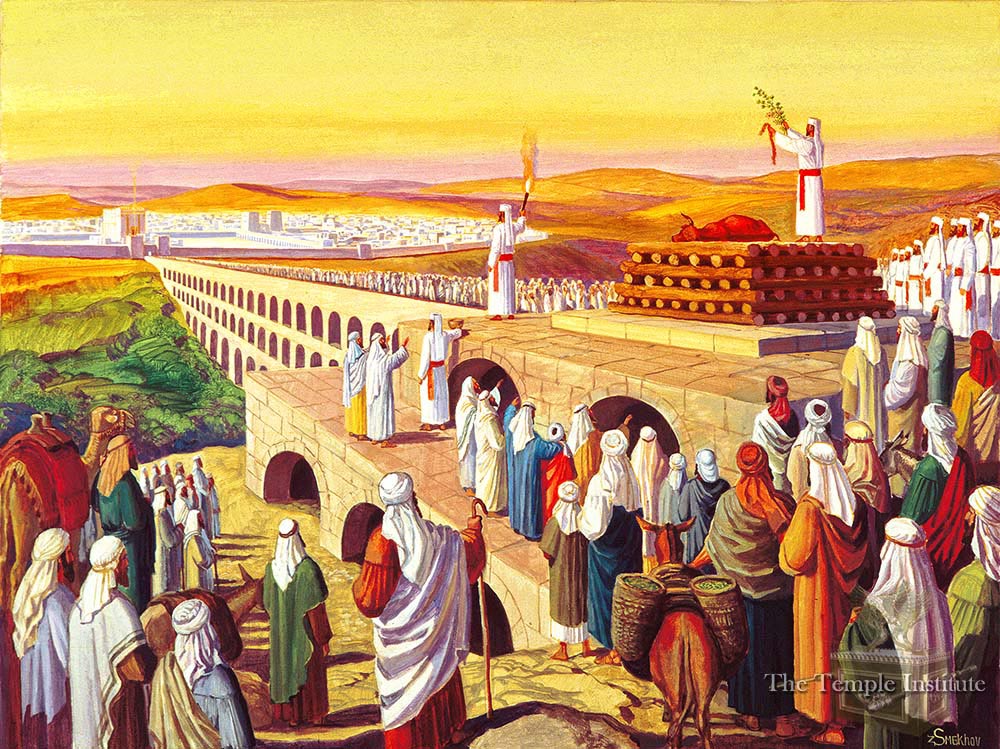
While explaining the accounting of the ancient Temple, the Talmud details which items came from which funds.  The Gemara notes that the bridge built to facilitate the ritual of the Red Heifer was funded by the current High Priest, this bridge connected the Temple to the Hill of Olives which is across a large ravine.

Red Heifer Preparation

The Gemara first assumes that each High Priest building his own bridge was an arrogant display of wealth:

Rabbi Ḥanina said: There was great haughtiness among the High Priests, as they would spend more than sixty talents of gold (some say silver) on it, even though the previous ramp for the heifer was still standing. But not one of the High Priests would take out his heifer on his predecessor’s ramp. Rather, he would demolish it and build a new one from his own money.

However, our sages point out why this vast expenditure was necessary:

Rabbi Ulla raised an objection in the presence of Rabbi Mana: Wasn’t it taught that Shimon HaTzaddik (a contemporary to Alexander the Great, see Talmud Yoma 69a) performed two red heifers, and the ramp on which he took out the first one he did not use again to take out the other one? Is it possible for you to say Shimon HaTzaddik* was haughty?!

What, then, is the reason that he constructed a new ramp? It is due to the higher level or purity that was established with regard to the ceremony of the red heifer; and the higher honor accorded to the red heifer.

Our sages wanted the Red Heifer to be taken very seriously, since any touch of ritual contamination can render it useless, and it is very difficult to obtain a Red Heifer.  Therefore, rebuilding the bridge for each Heifer would serve as a reminder to the people of the high levels of care required for the Red Heifer (and in my opinion was needed in case there was a ritually contaminated item in the old bridge).

This wisdom here is that you should not spend money for no clear purpose.  However, when there is a good reason, go ahead and lay your money down and get the job done.  Money itself is not good or evil, but is a tool God gives us for us to use to better our lives and the lives of others.

Ecclesiastes 5:10 states:  He who loves money is never satisfied by his money.  But a man who uses his money wisely to further his chosen mission in life appreciates the benefit his wealth can give him without being seduced into the rat race simply to grow his bank balance.

*The fact that Shimon met Alexander the Great and was given permission to destroy the Samaritans’ idolatrous temple may give us the reasons that two Red Heifers were needed during his tenure.  The special water prepared from the Red Heifer is needed to purify Jews who touch or get near a dead body.  There were bloody battles during the invasion of Alexander, and then the Jews fought with Samaritans as well.

Daily dose of wisdom, Shekalim 10: holy volunteers and gratitude

Today the Talmud debates if someone can volunteer his services for the Temple (to guard grains that grow by themselves during the Sabbatical year) or if he must be paid from the Temple treasury.  The Gemara compares another donation:

at the time that the Jewish people ascended from the Babylonian exile and returned to Israel with Ezra, they did not find wood in the Temple chamber of wood for the altar. And certain families took the initiative and donated wood from their own property and gave it to the community; and they offered communal offerings using it. And the prophets among them stipulated with them that, in the future, even if the chamber were full of wood, if these families took the initiative and donated wood from their own property, the offerings would be brought using only theirs first.

This event is offered as proof that a man can donate from his own resources for the public.  What is interesting is that the leaders of that time rewarded these families with priority even over wood purchased with public funds.

When you give your time, money, or energy to others, be aware of how they react.  Some people will take everything you can give, and then take it for granted.  In modern times the trait of gratitude is typically less developed, while the sense of entitlement is well honed.  If you are a man looking for a serious relationship, one of the best indicators is a woman who displays real gratitude and the desire to give back when you give to her.  Men by nature are givers and generate more than they can personally use; but men who continually give without commensurate praise or reward become resentful.


Daily dose of wisdom, Shekalim 9: cleanliness leads to Godliness?

Today the Talmud cites a famous teaching:

וְכֵן הָיָה רִבִּי פִינְחָס בֶּן יָאִיר אוֹמֵר. זְרִיזוּת מְבִיאָה לִידֵי נְקִיּוּת. נְקִיּוּת מְבִיאָה לִידֵי טַהֳרָה. טַהֳרָה מְבִיאָה לִידֵי קְדוּשָּׁה. קְדוּשָּׁה מְבִיאָה לִידֵי עֲנָוָה. עֲנָוָה מְבִיאָה לִידֵי יִרְאַת חֵטְא. יִרְאַת חֵטְא מְבִיאָה לִידֵי חֲסִידוּת. חֲסִידוּת מְבִיאָה לִידֵי רוּחַ הַקֹּדֶשׁ. רוּחַ הַקֹּדֶשׁ מֵבִיא לִידֵי תְחִײַת הַמֵּתִים. תְּחִײַת הַמֵּתִים מְבִיאָה לִידֵי אֵלִיָּהוּ זָכוּר לַטּוֹב.

The Gemara goes on to cite scriptural sources for each of these steps, see also Sotah 49 and Avodah Zara 20.

There is a famous English phrase: cleanliness is next to Godliness, which many assume to be ancient, while it has no actual basis in scriptures.

We see that in truth that cleanliness is merely one step on your path, and is in fact one of the first steps.  Hundreds of years ago, Rabbi Moshe Chaim Luzzato wrote Mesillat Yesharim, an entire book detailing how to make progress on the steps of the ancient Rabbi Pinhas.

When you figure out your personal life mission, make your plans in depth, mapping out how you will develop step by step.  Trying to skip ahead to the end result will not help, you must put in the work at every single step.

Daily dose of wisdom, Shekalim 8: without suspicion

Today the Talmud explains how money would be withdrawn from the Temple treasury:

The one who collects must not enter while wearing a cuffed garment, and not with a shoe, and not with a sandal, and not with phylacteries, and not with an amulet. Perhaps the one collecting the funds will one day become poor, and people will say that it is because of the sin of stealing in the chamber that he became poor. Or perhaps he will become rich and people will say that he became rich from the funds of the chamber.

Since a person must appear justified before people just as he must appear justified before the Omnipresent One, and it is stated: “And you shall be guiltless before the Lord and before Israel” (Numbers 32:22).  And the verse states: “So shall you find grace and good understanding in the sight of God and man” (Proverbs 3:4).

Keep in mind the Temple official withdrawing the money was a trusted and respected righteous man.  Even so, our sages teach that it is not enough to be innocent before God who certainly know that he did not steal.  He must also be innocent before the Jewish people (which is more difficult, so the verses list them second). 

Interestingly, our sages point out that no matter what happened to the collector, other people may come to suspicion about him.  Other men will always have some degree of jealousy or suspicion of success.  You should expect this and not flaunt the wealth you create.


Daily dose of wisdom, Shekalim 7: achieving eternality

The Talmud discusses monies raised for a deceased man being used for a monument over his grave.  On this topic, Rabban Shimon ben Gamliel says: One does not need monuments for righteous people, as their words of wisdom that continue to be taught are their memorial.

Naturally, we all understand that we are mortal and we recognize that there is a basic human drive to leave something that will continue after our deaths. For many of us this is our children. However, even your children may not continue in your personal path. It is possible, God forbid, that they will ignore whatever you tried to teach them.

Even during your lifetime, whatever physical items you acquire can be lost. Your only lasting asset is the wisdom you accrue and use during your lifetime. If you work at it, you can get better at life. When a man is able to put his personal wisdom into words and pass that on to his students and children, he has a lasting impact beyond his brief lifespan. Therefore, our first task as men is to learn wisdom, to get better at living, so we can have such an impact.

The Talmud brings an event proving that Rabbi Yochanon insisted that his students say his teachings in his name, so he would be remembered. Our sages state that having your wisdom repeated in your name brings your soul satisfaction life good wine brings to the body. Rabbi Yochanon explains:

Even King David entreated God with regard to this issue to have mercy, as it is stated: “I will dwell in Your tent forever; I will take refuge in the covert of Your wings, Selah” (Psalms 61:5). Did David imagine that he would live and endure forever? Rather, this is what David requested before the Holy One, Blessed be He: Master of the Universe, may I merit that my words will be said in my name in synagogues and study halls

King David got his wish, we recite his Psalms which convey deep wisdom he acquired through his personal struggles. We also learn certain statements he made regarding Jewish law, and learn his life story to glean actionable wisdom regarding women.

Think about the wisdom you have gained so far, and how you may be able to put it into words to pass it down to the next generation. You cannot live forever, but maybe you can grasp eternality.

Daily dose of wisdom, Shekalim 6: a sinner in your own eyes

Today the Talmud asks if a man designates two coins for his half-shekel obligation when he is required to give only one, what would be the status of the extra coin.  The Gemara compares another case:

If one set aside his sin-offering, and at that point he thought that he was liable, as he had unwittingly sinned in such a manner requiring him to bring a sin-offering, and it turns out that he was not liable, the animal is not consecrated. If one set aside two animals and thought at the time that he had unwittingly transgressed two prohibitions and was therefore liable to sacrifice two sin-offerings, and it turns out that he was liable to sacrifice only one, what do you do with that second animal?
It must be left to graze (until it develops a blemish and becomes disqualified from being an offering, then be sold, and the proceeds used to purchase donated offerings).

This is because even though the man did not sin twice, his act of setting aside an animal for a second sin offering imbues that animal with sanctity.

We all make mistakes in life, you should expect this.  However, don’t be the man who assumes he is always making mistakes and develop a paranoid sense of self deprecation.  You may be doing okay, but feel like a sinner in your own eyes, and become hyperaware of your own failings.  While you do need to know when you are mistaken so you can self correct, this can lead to feeling guilty and stagnant.