Daily dose of wisdom, Brakhot 62b: King David teaches respect

Our sages bring up the encounter between David and King Saul in the cave (I Samuel 24).  King Saul, fearing that the increasingly popular David will become a rival to his throne, had been pursuing David to kill him. 

David was hiding in a cave when King Saul went in to relieve himself.  David silently approaches and cuts a piece off Saul’s robe, so David can later show the king that while he had the opportunity to kill Saul, but truly meant him no harm.

Though he intended to demonstrate goodwill, since David was disrespectful to clothing, this created a long term effect.  When he was old and his metabolism slowed, clothing and blankets did not warm him up anymore: 
“King David was now old, advanced in years; and though they covered him with bedclothes, he never felt warm” I Kings 1:1.
 
This is a concept called “midda cgened midda” in English ATFAT: A Turn For A Turn.  God rewards and punishes based on your specific behaviors.  For men on the great spiritual level of David, God is exacting to a hair’s width.  Disrespecting a cloak once meant that later on clothing did not warm him.
 
Since David was chronically cold, what did they do for him? 
 
“Let a young virgin be sought for my lord the king, to wait upon Your Majesty and be his attendant; and let her lie in your bosom, and my lord the king will be warm.”  I Kings 1:2. This human electric blanket was the beautiful Avishag.
 
David did not marry Avishag or take her as a concubine, not due to old age, but since had already had maxed out his wives at 18 (this limit was based on a prophecy; See Sanhedrin Daf 22 for the juicy details).
 
This is eye opening: Clothing and blankets did not work because David had once disrespected clothing.  But a woman worked to warm the King.  Based on ATFAT, it must be true that King David had respected women his entire life.
 
The King with a harem of 18 wives was always respectful to women.
 
That may sound ridiculous to modern people, but a situation in which more than one woman share one man used to considered normal.  It does not necessarily undermine the man’s respect and admiration for these women (the converse is false: a woman with multiple partners inevitably does not respect at least one of them). 
 
The Bible shows us that David never disrespected his wives or concubines.  In fact, the concubines of the king lived a better and much more luxurious life than they could have had as the sole wife to anyone else.
 
It is a modern assumption that multiple women cannot share one good men.  Historically that was never true. Recent DNA research confirms that humans have twice as many female ancestors than male.  Meaning that on average, for most the existence of the species, a successful man had at least two mates.
 
In addition, men and women have vastly different definitions of respect.  If a married woman took a “second husband” or the equivalent, this will create disrespect and massive insecurity for the first man.  He does not know who is fathering the children
 
The converse, one man with multiple women, does not mean these women are insecure or threatened.  If this man is the best option and can provide for all of them, they will be happy to share him.
 
Our first Matriarch, Sarah, gave her maidservant as a concubine to Abraham.  This was not an easy choice, but one Sarah could make due to her loyalty to her husband and their joint commitment to monotheism, which required creating an heir to continue the family mission.
 
Women are capable of sharing a man not only when a critical spiritual goal is at stake.  A woman may decide that this man is the best she can get and accept that he has other interests on the side.  He may be especially rich and able to provide for her.  It was not uncommon historically for wealthy men to have access to more than one woman, and for kings and leaders to have an entire harem.


Respect for men can take various forms, do not assume that your financial standing is the only measure.  In King David’s case, it was not only wealth or power that attracted women.  He married many of his wives before he became king.  However, he earned respect and reputation as a brave soldier and wise military leader serving to protect the Jewish people. 
 
He was known as pious and God fearing, dedicated to the mission of building a temple for God in Jerusalem.  David was also an accomplished musician and songwriter, since his early days as a shepherd.  Most of the book of Psalms was composed by David. 
 
David worked on the Psalms over decades, they also serve as a journal of David’s life.  In Psalms David does complain about difficulties and curse his enemies (109, 55:15, 69:29, 139:19-22).  He never mentions women, or his wives or any problems or issues he had with them.  With 18 wives and dozens of children, much of David’s life was naturally spent on his family. 
 
However, Psalms deals mainly with praises to God, philosophical reflection, developing self awareness, and requests for Divine assistance with political enemies.  While David respected and was heavily involved with women, they were not the center of his life.
 
This leads us to a deep insight from David’s life.  Because he did not focus on women and define his life by his successes and failures with women, he was able to treat them all with respect.  When a man makes a specific woman the central pillar of his life, then any negative aspects of that relationship undermine his sense of self, making it harder for both to respect one another.


Daily dose of wisdom, Brakhot 62: the Rabbi under the bed

A true story from about 1850 years ago in Babylon:

Rav Kahana entered and lay beneath Rav’s bed.  He heard Rav chatting and laughing with his wife, then “seeing to his needs”, meaning having intimate relations with her.

Rav Kahana, from under the bed, said to Rav: The mouth of Abba, (Rav’s first name), is like a hungry man who has never eaten a cooked dish before.

Rav said to him: Kahana, you are here?  Leave, this is not appropriate.

Rav Kahana said to him while leaving:  This too is Torah, and I needed to learn.

First of all, Judaism is not merely a system for the spirit, but fully accounts for all of man’s natural needs. Our holy men do not sit alone meditating on a mountain or silent in a monastery. They get married, have kids, hold day jobs, ride the subway, and wake up early and stay up late to learn and teach wisdom.

Yes, human beings are in truth spiritual beings inside physical vessels. God in His wisdom put us into a tangible world, so our way of life needs to account for the physical. However, any philosophy or system that doesn’t factor in man’s spiritual aspect is missing half the picture.

So yes, Judaism has guidelines about intimacy.  While it would have been proper for Rav Kahana to ask Rav in the study hall, Rav Kahana felt he would not receive a full understanding of proper intimacy. We have a concept that you can’t learn wisdom just from books, you have to see it in practice.

Rav Kahana learned about seduction. Rav was chatting, joking, and laughing with his wife. He was setting a playful and fun mood with her before being intimate. He put effort into getting her interested.

Rav Kahana, aware that for a man, living with your wife is a mitzvah, a Divine commandment, probably thought intimacy should begin in a more serious or spiritual way. Rav showed by example that this pleasurable commandment should be performed with fun, joy, and passion for both parties.

https://lightingtip.com/wp-content/uploads/2020/09/under-bed-led-mood-lighting.jpg

If Rav Kahana was merely there to learn and observe, why did he blow his cover?

Understand that Rav was not young, he was the head of the Torah academy at Sura. He was a serious scholar and respected man in the community. Perhaps Rav Kahana was concerned that Rav was enjoying the act on such an intensely physical level that he was forgetting that intimacy is also spiritual and a God-given commandment.

The Bible actually provides guidelines to foster proper sexual intimacy between man and wife, see Mishpatim.

Rav Kahana was surprised by Rav excitement and passion, comparing him to a virgin, “a hungry man who never tasted cooked food”. Rav’s intense and apparently vocal lovemaking was not expected by his student. Rav, unaware he was being observed, was simply doing his normal thing. And not through a hole in the sheet. 

Friends, there is a terrific power in intimacy. When used correctly it brings man and woman together like nothing else and is considered fulfilling a Divine command. When used improperly it lowers a man to the level of a hungry animal or worse.  Be mindful both how you set the mood before an intimate act, and how you engage in it.

A wise man is also careful and tactful how he discusses intimacy with his students and peers. It is worthwhile to teach men effective methods to improve their sex life, as long as these conversations are in a proper venue and with the utmost sensitivity.

Daily dose of wisdom, Brakhot 61: good and evil, the creation of gender, looking at women

This is an amazing page of Talmud today and I don’t have time to give it justice.  This wisdom will change your life.

Our sages call to our attention that in Genesis 2:7, the word “created” is spelled with two letters Yud instead of one. Not only are there no extra words in Torah, there are no extra letters.  We learn from here that Man was created with two inclinations (Yetzer), the tendency for good and the opposite.  The Gemara points out that someone completely righteous is ruled by the Yetzer for good and someone completely wicked by the other, but that practically everyone is in between and ruled by both.  Of course at times one desire is stronger and wins out.

When you make a mistake, you are not a sinner or corrupt.  You are a normal man, created with an urge for such behaviors, who made a mistake.  The Hebrew word for “sin” ‘het’ really means missing the target.  You’re not abhorrent or evil, you’re not a damned sinner.  You missed your target.  Aim better next time, aim for the right things in life and practice.


Today our Gemara also discusses the Genesis of genders, about how man and women were first created.   Our ancient sages point out that is seems that men and women were created simultaneously in Genesis 1:27 “male and female He created them” but states clearly in Genesis 2:7 that man (singular) was created before the women, who was later taken or built from his “side” or “rib” in some translations 2:22.  Our sages give various explanations for how it really went down.

There is a lot of depth, most of it over my head as well (See Maharal if you can).  One take away message is that a man must work on himself and become something as an individual before trying to pair up with a woman.  A woman by contrast just is, she comes fully formed, or grown out of a rib (Maybe cloning?)
Another message is men can exist alone, but women need to be paired up or in a group.  The first man was by himself before God brought him the first woman.  Our gemara concludes with an enigmatic statement from Rabbi Abahu that God’s intent from the beginning was to make two, but in practice He first made one, the man.  God does not change His mind.  The Divine plan was always for two genders.  However, the man needed to be alone first to develop himself and also to realize that it is not good for man to be alone, he should have help and support with his mission.  Some comment that Adam tried to befriend all of the animals but did not find true companionship.

This is earth shattering wisdom for the modern day.  Yes, there are two and only two different biological genders and men and women are different.  The genders were created to complement each other not to copy one another.


Our sages note the danger of walking behind a woman, because a man will look at her and have sexual thoughts.  The spiritual danger is expressed in extreme terms: he will lose his share in the afterlife.  Even scheming to stare at her hand can bring punishment.  Rashi (commentator explaining the Gemara 1000 years ago) states this applies to a married woman.  Tosafot (medieval commentaries on Gemara) propose that the problem is when a man does this often, since he get used to seeing and thinking about women and will lust after them, and eventually come to adultery with married women.

We have mentioned that ancient societies had a radically different standard of modesty in which women were not encouraged to attract sexual attention in public. See:

Daily dose of wisdom, Brakhot 20. The red dress: taking a stand against indecent behavior, defining social norms


and

Daily dose of wisdom, Brakhot 43: Pearls to swine, ancient modesty

Back then, society put a premium on female virtue and loyalty to such an extent that behaviors that we engage in daily might raise suspicions.  Their culture guided men and women to behave in a more modest fashion.  Modern secular culture does the opposite.

I’m not saying we should go back to a two thousand years old social fabric; that is frankly impossible.  Studying the past, cultures that thrived for millennia with patriarchy, shows you how different modern values are from the default situation for almost all of human history.  Today it seems that the attitude is “it was always like this”.  Immodest behavior is taken for granted.  Serious (and honest) students of history and sociology can tell you that the modern situation is vastly different from 99% of human existence.

Gentlemen, getting used to indulging in explicit images of women is dangerous.  In ancient times that was due to the risk of an illicit relationship with a married woman.  In modern times it appears to me that men who are sadly addicted to images of women suffer immensely.  They are wasting their masculine energy on emptiness and losing their motivation to pursue actual greatness in real life (not women, don’t pursue women; you pursue greatness and then women come to you).


Daily dose of wisdom, Brakhot 60: gratitude, fear, orgasms and conception

So much amazing wisdom today!

We discuss the famous blessing of “You kept us alive”: Blessed are You, Lord, our God, King of the Universe, who has kept us alive, sustained us, and brought us to this time.  We say this blessing at important milestones such as a wedding, circumcision, and holidays, and also for buying a significant item.  Realizing it’s good to be alive and counting your blessings is a method to build your sense of gratitude.  We talked about the importance of gratitude.  It is vital to choose a woman with this trait.  “You kept us alive” is a way of being grateful for life itself.  Your life is your greatest asset.

We also have a blessing on our health, which we say after using the bathroom.  Don’t take good health for granted, work to maintain your body and appreciate what you have.

Our sages also discuss fear and anxiety, based on Proverbs 28:14 “fortunate is the man who is always fearful”.  The Talmud explains this verse does not mean literally afraid and anxious, and brings sources that those traits generally are associated with sinners.  The verse is talking about a man who is fearful of losing his Torah learning and close relationship with God.  Those are valid fears, and the concern over losing his spiritual level is a motivator to achieve greater spiritual levels.  Our sages state that regular fear, of people of events, is not helpful and that being fearful and anxious in everyday life actually invites suffering.  If you are always waiting for the other shoe to drop, then friend, it will drop on you!

Confidence comes from knowing you are doing well spiritually, connecting to God and making an effort to improve.  Then the only fear is the good form of fear, a catalyst for improving and developing yourself.


Now the really juicy bit.  Our sages, based on ancient wisdom, teach that when the man releases seed first, the resulting child is more likely to be a daughter.  When the woman releases seed first, a son is more likely.  Many understand this to refer to orgasm*.  For the man that seems obvious.  For the woman it can refer to the release of the egg in ovulation.
*this is mashma from the Gemara, Niddah 31b: שמשהין עצמן בבטן כדי שיזריעו נשותיהן תחלה שיהו בניהם זכרים מעלה עליהן הכתוב כאילו הם מרבים בנים ובני בנים והיינו דאמר רב קטינא יכולני לעשות כל בני זכרים אמר רבא הרוצה לעשות כל בניו זכרים יבעול וישנה

There is some scientific evidence that makes the ovulation reference also sensible.  In short, if the women has already released an egg when relations occur, then the faster male sperm (they are a tiny bit lighter with XY instead of XX as X is larger) are more likely to reach that egg first and fertilize a son.  If the sperm were already present when the egg arrives, since the male sperm die sooner than female sperm, a girl is more likely to result since there are more XX sperm.  So we see that when the woman releases seed could also refer to her ovulation, as there is some relationship between the timing of ovulation vs conception and gender likelihood.

This concept needs much more exploration than we have time for today.  A woman’s phase impacts her hormones and emotions.  There is some research showing that in her proliferative phase of ovulation a woman will be more attracted to a man with alpha “manly” traits.  As this is right before and around ovulation, she may be more likely to have a daughter from her tryst with the alpha male (assuming she can’t get him to stick around after ovulation as well).  After ovulation, in her luteal phase, she is more attracted to trait that are more emotionally reassuring.  Assuming there isn’t old sperm hanging out still, then during that time she may be more likely to conceive a son, as the egg is already dropped.


There is something going on here that need further study.  In the meantime, read this: https://therationalmale.com/2012/09/25/your-friend-menstruation/
(warning for orthodox Jews: adult nibul peh language and content)

Daily dose of wisdom, Brakhot 59: ‘natural’ phenomena and you, gratitude and wine

The Talmud teaches the blessings on ‘natural’ phenomena such as earthquakes, windstorms, lightning, thunder, constellations, high mountains, oceans and great rivers, rain, rainbows.  The Gemara explains that earthquakes and the like have a source in the spiritual world that impacts the physical universe.  Rabbi Alexandri cites his Rabbi Yehoshua ben Levi who said that thunder was created to straighten crookedness of heart.  This is a physical event influencing a man’s spiritual sensitivity, showing us that the spiritual-physical continuum works in both directions.

External events have an internal impact on you.  Be aware of this, and learn to control your reactions by making the decision for yourself.  At times something or someone is trying to get under your skin; you need to be the one to determine for yourself if the situation really bothers you or affects you.  Does it really affect you?  If you let it!
Likewise, some events are truly God trying to get your attention to take care of something or improve yourself.  Be aware of the hints and nudges you get and think about the correct response to them.

Our sages state that we bless God for every drop of rain.  Everything in your life can be used for blessing, and everything can be a personal message to you.  One of the measures of a person is how well they have developed their sense of gratitude. We gave the example of flying in a jet plane and having gratitude for men and God who gives them wisdom.  Be aware too that ‘natural’ happenings are for your sake, for you to enjoy, learn, and grow.  Everything in creation is for you.  Man is the crown of creation.

Another amazing teaching today regards men who began a meal with one wine, then a superior wine is brought to the table.  They say a blessing to God “who is good and does good”.  However, this does not apply if a man is alone, only in a group.
Super practical advice here.  Have a solid group of guys to drink with.  Men who appreciate the good things in life and give thanks for what they enjoy.

Daily dose of wisdom, Brakhot 58: unique within the group

The Talmud, after an exploration of the meaning of dreams, teaches various blessings.  On a collection of 600,000 Jews we say a blessing on God who knows secrets.  Our sages explain that God knows our thoughts, and is aware of all the diverse ideas of these men.  The Gemara also points out that just as our thoughts are different, our faces are different.  Simply, just as each man has a different face, so too our approach to life and thought process is different.  On a mystical level, the face reflects the inner thoughts of a man.  The Ben Ish Chai (Chief Rabbi of Baghdad about 100 years ago) writes in Ben Yehoyada that this situation is necessary to the continuity of the world.  If every man had the same thoughts and desires, everyone would want the exact same jobs, the same foods, the same women.  If men had the same thoughts and faces, the wife of one man would sleep with someone else.  They would all be interchangeable, the economic and social life would crash and the world would not continue.

This recognition of the nature of men as individuals with disparate thoughts and desires is a key concept in Judaism.  I recently wrote about how Judaism is at the core an individualistic religion. This concept also explains why communism and socialism inevitably fail.  They don’t allow for the proper expression of God given human nature (only for the people in charge who are expressing their greed by victimizing everyone else).

Appreciate you have a unique nature and learn to recognize your individual strengths.

Today we also learn the blessing of Ben Zoma, a wealthy sage, who reminds us that bread and clothing take significant effort to prepare.  Planting, plowing, weeding, watering, harvesting, winnowing…  He gave thanks to God that other people prepared these things for him and he was able to purchase them ready made.  Understand that our society and economy provides a lot of what we need, which frees our time and energy for intellectual and spiritual development.  Ben Zoma could buy everything, but took nothing for granted.

Daily dose of wisdom, Brakhot 57: subconscious motivations

The Gemara today continues discussing dreams and their symbolic value and interpretations.  Our sages bring some bizarre dream visions and explain that the shocking things in those visions actually mean that the dreamer is preparing for something spiritually good.  The strange visions include intimate relations with a mother, sister, or betrothed woman.  Our sages explain that ‘mother’ stands for intellectual understanding, based on Proverbs 2:3, the betrothed woman is Torah from Deut. 33:4, and the ‘sister’ is wisdom from Proverbs 7:4.  It was readily understood by our ancient sages that visions of copulation reflected a deep yearning in a man, so the dreams really showed that he was yearning for wisdom etc.  Therefore, this man should take the energy of this yearning and act on it in to gain spiritual value.

The practical wisdom here is that your physical desires and fantasies are not inherently dirty or impure.  They can reflect a desire to attain greatness in other areas.  A man should remember to realize that his masculine energy can be channeled into intellectual and spiritual development, and be careful not to waste it.

It is interesting to note that Jewish sages had the concept of subconscious motivations figured out 2000 years before Freud.  Freud was not educated as an orthodox Jew and probably never learned any Talmud, but he did write a ridiculous reimagining of exodus, so he was familiar with the written Bible.  Our ancient rabbis knew that dreams reflect a man’s deep desires, not just his bodily fantasies.  In fact, the Talmud explains that these dreams are not a good omen if the man was thinking improper thoughts about these women during the day.  In that case he is just a pervert.


The Talmud also discusses factors that help a sick person or jeopardize his recovery, and unhealthy foods.  Judaism is a spiritual faith that fully acknowledges that you need to work on bodily and mental health in order to attain spiritual health.  A man needs to work on his health and have a healthy outlet for his natural God given desires.

Daily dose of wisdom, Brakhot 56: Thoughts and dreams, create your reality

The Talmud continues on the subject of dreams.  The Caesar (it doesn’t specify which, other Gemaras identify him as Hadrian) challenges rabbi Yehoshua Ben Hananya: “since you are so wise, tell me what I will see in my dreams this coming night”.  The Rabbi states you will see the Persians enslave you and force you to herd pigs with a golden staff.

Caesar thinks about image that all day, and then has that dream at night.  This teaches that your thoughts create your fantasies and dreams.  It was because Caesar dwelled on that image and thought about the idea of herding pigs with a golden staff that he saw that dream.  (This was at a time when Rome and Persia/Parthia were rivals, so that idea was troubling to Caesar on a practical level.  Later on there was even a Caesar who was captured in war by the Persians.)

If you instill an image into someone, or into yourself, it becomes internalized through thinking about it.  This holds a vital power and a grave danger.  You can busy yourself with reading and thinking and contemplating self improvement and personal growth and that will become your focus, your dream.   This power God put into us can be incredibly damaging.  Think about corruption and nonsense and you will internalize it.  Look at filth during the day and you will dream of filth as well.

We can also learn from your dreams what you have been thinking and fantasizing and doing.  The Gemara brings the story of a heretic who went to rabbi Yishmael and told him his strange dreams.  The rabbi was able to discern from his dreams the horrendous sins this man had committed, including incest, and that his own wife was unfaithful.  Your dreams reflect your thoughts and memories, conscious and unconscious.  This man probably suspected his wife, and had dream visions relevant to those suspicions.


Another incident had people relating seemingly horrible dreams to rabbi Yishmael and other rabbis, who gave positive interpretations.  As we learned yesterday, dreams follow their spoken interpretation into reality.  Giving a good explanation for a troubling vision changes how that idea enters the physical world.

On a deeper level, you create your own reality, by choosing your thoughts and shaping the lens through which you view reality.  When you give something a positive spin, it comes out more positive in your reality since your thoughts and emotions about that item are more positive.  The dream interpreters were not prophets, they were proposing a positive frame for the dreamer to see their vision.  Your life narrative flows through a construct, and you have a role in creating this construct, your frame.  If people assign negative interpretations to events, this creates negative effects in their life.  Positive people assign positive reactions to same events that push negative people to anxiety attacks.

There is a tremendous power in positive thinking (but it is not a cure all).  I recommend Rabbi Pliskin’s classic Gateway to Happiness:  “Happiness is a skill that can be learned. The essential factor whether or not you will live a happy life is based on your attitudes towards life, towards yourself, towards other people, and towards events and situations. Regardless of how you have viewed those areas in the past, you can presently change your attitudes and master the attribute of happiness.”

See also 48 laws of power #10 Avoid the Unhappy and Unlucky

Daily dose of wisdom, Brakhot 55: dreams and words

The Talmud starts an amazing and relevant topic:  dreams.

We know from the Bible that dreams can have profound meaning and convey prophecy.  Our sages also point out that dreams can have elements that are irrelevant or do not come true, and can come from a pure source, or an untrue source.  But how real can our dreams be?  Our ancient sages say that a dream not interpreted is like a letter never read.  Friends, a letter you never read is nothing.

Our sages in the Gemara explain that ״כׇּל הַחֲלוֹמוֹת הוֹלְכִים אַחַר הַפֶּה״ All dreams follow the mouth, meaning that how a dream is interpreted changes the outcome in real life.  Assigning a positive interpretation to a dream actually changes the impact of the dream for the better.  The source for this is the dreams the Joseph interpreted in prison, Genesis 41:13.

The practical wisdom here is that you have meaningful dreams, but they do not begin to manifest at all in reality until you speak them out.  We all have dreams, plans, aspirations.  Most of these stay in the world of dreams and never emerge.  Speaking makes an impact in this world, on the micro level you are causing air molecules to vibrate, and you are causing someone else, or yourself, to listen and contemplate.  Even if you are only talking to yourself, debating your own ideas, you are making your plans more real, and giving yourself the motivation to begin acting on them.

Whatever your dreams are, you need to say and do something to get them started.  Don’t just leave them as dreams.

Our sages in the Gemara advise that if you have a dream and are troubled, go to three friends and tell them the dream in a good way, and they will respond that it has a good meaning, and all your dreams should be good.  Obviously his friends are positive people and going along with the positive interpretation of a dream, not raining on his parade.  48 laws of power #10 states Avoid the Unhappy and Unlucky.  Your friends should be positive and help you to see the value or goodness in a troubling dream.

Trumah: individual vs central authority; you are a universe

This week we study a rich section of the Bible called “Trumah” starting at Exodus 25.  Trumah marks a major shift of gears from the narrative of the Exodus to the topic of building the Tabernacle, “Mishkan” in Hebrew.  The Mishkan was an ornate tent housing the holy ark and other items surrounded by a courtyard containing an altar.  This portable Temple complex served as the place for ritual sacrifices.

Trumah opens with the commandment to Moses to accept material donations to build the Mishkan from anyone who is motivated in their heart to bring them, Ex 25:2.  The people are never commanded to give the gold, silver, etc., rather the donations must be given voluntary and wholeheartedly (more on that later).

We also learn about the items used in the Tabernacle, including the Ark of the Covenant, the Gold Menorah, and Table for show breads.  Then, in Exodus 26, the Bible teaches the architecture of the Tabernacle and courtyard, and how the tent, walls, and coverings were constructed.

tabernacle-shekinah

The Bible is not always written in chronological order.  Rashi points out that God’s instructions to build the Tabernacle were only given after the golden calf debacle, which appears later in Ex 32.  Some sources explain that if not for the sin of the calf, the Jews would not have needed the Tabernacle as a central location to connect to God and gain atonement.

Prior to the golden calf, offerings were brought by each family individually.  The sacrifice was normally performed by the father or first born son, on a private family altar (Ex 24:5).  Each family was offering directly to God without intermediaries. 

After the calf, the responsibility for ritual sacrifice shifts from the first born son of each family to the priests (Cohanim or Kohanim).  At that time there were only five Kohanim, Aaron and his sons.  This was a drastic change centralizing a vital aspect of religious practice.


Building the Tabernacle was a critical juncture in our historical-spiritual development.  Judaism is in a real sense a decentralized religion that emphasizes individual authority, when exercised within proper limits.  The Jews began as just one man, Abraham, standing steadfast against the establishment culture of idolatrous polytheism and subjective immorality.  In Genesis we learned how this man with a mission blossomed into a family, 12 brother-tribes, then a nation during the exile in Egypt

But even as a nation, individual authority was always the ideal.  See Judges 21:25 and Micah 4:4.  Each man as head of the household was reponsible for the spiritual well being of his family.  A man was expected to set the example for religious dedication, educate his children and guide the entire family in service of God in his own way.

However, whenever individuals stray too far from the spiritual norm, God finds a way to recentralize authority in order restore key values.  Thus we see the national ritual in the Tabernacle to correct the calf.  When sin made the individual Jewish tribes vulnerable to outside attack, the Judges (Gideon, Deborah, Samson and others) were needed to unite the tribes against pagan enemies and remind them to uphold Jewish spiritual commitments.  However, the judges were temporary leaders for a confederation of tribes, not a central dynasty.

Later, appointing a king was necessary to consolidate political and military power when a lack of unity among the Jewish tribes had invited aggression by idolaters.  Eventually, the Temple in Jerusalem was built by Divine command, started by King David and completed by King Solomon.  This had the practical effect of bringing religious unity to the disparate tribes settled over the length and breadth of the Holy Land, who had been previously allowed to bring offerings to God on local and private altars.  Now only the central altar at the Temple was used, and every man who could would make pilgrimages three times a year to Jerusalem.

While each tribe had their own leadership as well, there was now a federal capital.  With the Temple as the focal point of Jewish ritual, all of the separate tribes would come together as one for festivals.  Jerusalem became the religious, spiritual, and political capital of the Jewish nation.  Each tribe was distinct and had self rule, but was subordinate to the king, similar to a modern state of the United States.

https://i0.wp.com/bibleencyclopedia.com/picturesjpeg/Rehoboam_refuses_good_counsel_1219-130.jpg

After Solomon’s son Rehavam took the throne (and raised taxes), there was a counter reaction to this centralization of power.  A political schism erupted between Judah, the southern kingdom, and Israel, the northern area.  The leader of the north, Yeravam ben Navat, refused to allow his subjects to go to the Temple in Jerusalem for pilgrimages.  He feared they would become loyal to Rehavam instead of to him.  Yeravam was told by God that he would be equal to King David if he allowed pilgrimage to Jerusalem, but he threw away that chance and turned to idolatry (Talmud, Sanhedrin 102a).

It appears to me that God was willing to keep Yeravam as a political king as long as he allowed Jerusalem to be the religious capital of the Jews.  Political and religious power are meant to be independent of one another in Jewish wisdom.  This concept of separation of Temple and state is important for the issue of do we define Jewish as a religious, political, of genealogical identity.  This struggle over the value and extent of centralization led to the split of the kingdoms.

When the Temple was destroyed, authority was fractured, and the sages of that generation took great pains to uphold rabbinical authority to keep order in that chaotic time.  At the time of the bloody Roman siege leading to the destruction, the chief rabbi was Yochanon ben Zakkai.  He escaped from Jerusalem and was granted requests by Emperor Vespasian.  He assumed the Romans would not spare Jerusalem and the Temple, so he decided to ask Vespasian to save the scholarly city and academy of Yavneh, and the royal house of the prince, the descendants of King David (Talmud, Gittin 56).

The central political authority had failed against the might of Rome, and a decentralized religious authority was needed to keep the Jewish people together without a king or Temple.  This was another massive turning point in Jewish history, when we transitions to being nation without a state for 1900 years.  [Yochanon ben Zakkai himself was plagued by this decision until his last words on his death bed, Talmud Brakhot 28b וְהָכִינוּ כִּסֵּא לְחִזְקִיָּהוּ מֶלֶךְ יְהוּדָה שֶׁבָּא].
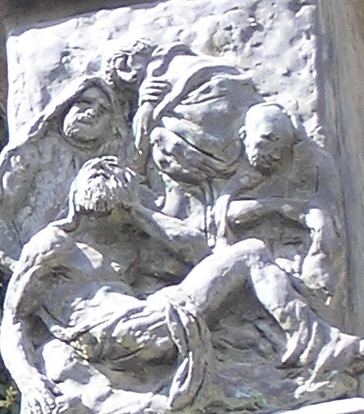
https://alchetron.com/cdn/johanan-ben-zakai-c7dc2e7b-9b89-4290-ae06-2d3e6a2f5e0-resize-750.jpg

As centuries gave way to millennia, Jews have been scattered all over the earth, developing local customs and variations on prayers and rituals.  However, conventional Jews are still following the exact same legal guidelines from Sinai, Jerusalem and Yavneh, the Law from 4000, 3000, and 2000 years ago.  Our individualism is exercised within the boundaries of Jewish law.  In the future we will all be reunited in Jerusalem with a rebuilt Temple (may it be soon), committed to one spiritual goal.

Not to say that Jews will all become the same again, far from it; the 12 tribes were also different with unique missions.  Rather, we will again have a central focus that brings us together despite all our differences.  This is the ongoing push and pull tension between individuality and centralized power in Judaism.

Micah 4:4 deals with “the end of the days“, describing our future situation after Messianic redemption as “each man under his own vine and under his own fig tree, and no one shall intimidate…”  This prophecy is speaking of a return to individual autonomy, even though during this era the Temple will be rebuilt and everyone* will go up to Jerusalem for festivals. 

In the Messianic phase there is both individual and central authority, but they will be reconciled.  The “vine” and “fig” here are not only literal, these are profound esoteric concepts relating back to the first man.  We understand that each type of grape requires a specific approach to produce fine wine.

https://thumbs.dreamstime.com/b/book-micah-one-books-bible-38720384.jpg

This prophecy hints that each man, within the bounds of Jewish law, will be his own master, develop his own unique spiritual talents, and pursue his personal chosen path to connect with God.  No external human authority will be needed to nudge a man onto the proper path, he will develop and walk it for himself.

Each man means everyone, Jew and non Jew.  Isaiah 56:7: “Their burnt offerings and sacrifices will be accepted on My altar; for My house will be called a house of prayer for all nations”.


Balanced freedom 

While personal autonomy is idealized in the prophets, it was not always practical to enjoy the freedom of decentralized authority.  The establishment of the monarchy was seen as a necessary evil; Samuel the prophet warns the people that a king will have great power over them, limit individual freedoms and impose taxes, I Samuel 8 [amazing: a 10% government tax was perceived as oppressive!] 

However, the people decided, voted, that as this juncture they needed to appoint a king to lead them in war against the aggressive idolaters.  They felt that it was a practical necessity to give up some individual freedom to preserve group unity, when they were faced with invading idolatrous armies led by strong kings.

Here too in Trumah, after the golden calf episode, there is a realization that a stronger central spiritual authority is necessary.  Giving individuals too much leeway in their personal spiritual choices, without a leadership to draw correct examples from, leads to disaster. 

As we will later discuss, God willing, the instigators of the golden calf idol were the “mixed multitude”, people who left Egypt along with the Jews but were not actual descendants of Jacob.  God faulted the actual sons of Jacob because they did not step up and enforce our ancient spiritual values when these people demanded an idol. 

When the people as a whole pass the buck, God steps in and arranges history to install a person where the buck is going to stop.  Thus the priests take center stage and the Tabernacle takes the place of individual and family altars.

Fitting in as an individual

In Trumah, we see that every Jew, men, women, and children, was involved in donating and fabricating to build the Tabernacle.  While it is a place where only the Kohanim, the priests, did the actual Divine service, each individual wants a share in it.  This involvement in the Tabernacle took the place of individual offerings brought by each family.

Every individual needs to find a way to fit into their society.  When God told Moses to accept the donations that the people chose to bring, God was reminding us that we need to fit in on our own terms, not in the way outside society pushes on us.  The Tabernacle will be built without taxes or requisitions, each person will give what he chooses and between all of them the job will be complete. 

You choose what you want to give to your society, how you want to be a part of the group and participate in the economy and in public life.  You, in your own heart, make your decision of what wisdom, energy and time you want to give to others, and to society at large.


The Tabernacle is a diorama of the creation of the universe.  The ancient Medrash Rabbah explains how each part of the Tabernacle corresponds to creation: the tent (Exodus 26:7) was spread like the heavens (based on Psalms 104:2) on the first day; the divider between the Holy and the Holy of Holies” (Exodus 26:33) was like the heavenly firmament dividing between the waters and the upper waters (Genesis 1:6). 

Other Medrashim point out that the Tabernacle contained elements of all parts of creation: inanimate and animate, animal, plant, mineral.  The Tabernacle is a miniature creation, a man made reminder of the original Divine creation of the universe.

In conventional Jewish thinking, every man is also a microcosm of all creation.  Jewish law has a concept that killing one person is destroying an entire world while saving one human life is like saving an entire world.  The Talmud, Sanhedrin 37a, states: “For this reason was man created alone, to teach that whoever destroys a single soul, the Bible imputes guilt to him as though he had destroyed an entire world; and whoever preserves a single soul, the Bible ascribes merit to him as though he had preserved an entire world.”
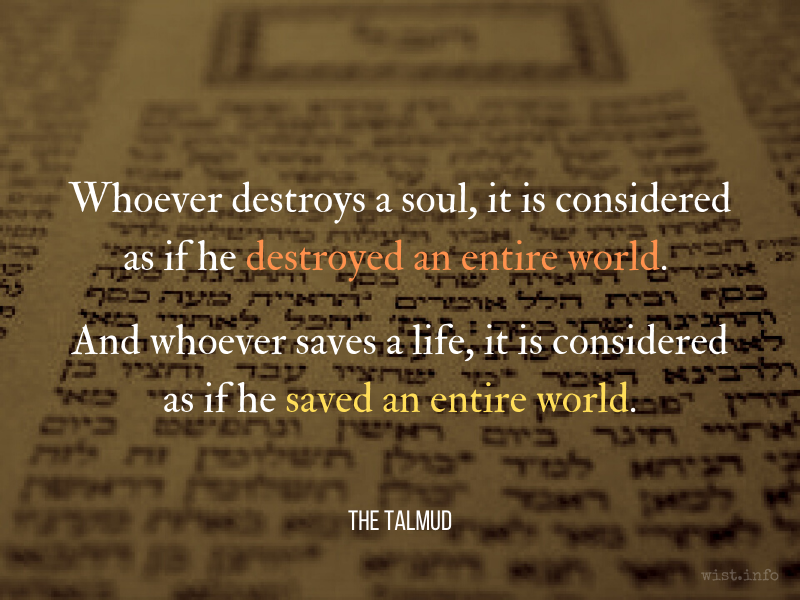
Not only is each man created as a unique individual, but “And God created man in His image, in the image of God He created him.” (Genesis 1:27).  Our sages point out the amazing contrast: A human being can mint many coins with the same stamp, but each one is exactly like every other one; while God made many human beings with the same stamp, and each and every one is unique.” (Mishna Sanhedrin 4:5).

Naturally, you already know that God has no physical shape, image, or “stamp”.  Anthropomorphisms are not to be taken literally.  See also NefeshHaChaim 1:1.  Rambam (aka Maimonides, in Teshuvah 5:1) explains that in all of creation only mankind resembles God in that we were made with free will.  That is the true stamp our sages are referring to.

Because we have free will (a limited free will), our decisions and actions matter.  Ancient Jewish mysticism teaches that every man, on the soul level, is woven into the fabric of creation in such a way as to be interdependent with all of creation.  If a man chooses to elevate himself, for example by giving charity, he changes himself into a more charitable person, and also changes the balance of the entire universe to be a more charitable place (see Rambam, laws of return 3:4).  He is molding the entire world by his decisions and actions. 

Everything you do, even each thought, ripples throughout the universe.  Our mystics have been teaching this concept for millennia.  The Zohar, riffing on the flood of Noah, refers to scientific wisdom as “the wellsprings from below,” while wisdom from Torah is “the windows of heaven.”

This interconnectedness sounds less far fetched in the internet age, and after the discovery of quantum entanglement.  It is possible that your inner thoughts, physically manifested as charges jumping in your neurons, can have a very subtle effect on the universe.  Electric charge moving induces both electric and magnetic fields.  A sensitive enough system could detect this. 

It could be that in the future scientists will discover what Jewish mysticism has been saying for thousands of years.

Individual with God

We were chosen to be the partner with God in creation (a junior partner).  This is one of the secrets in Genesis 1:26 “let us make man“.  Angels do not create, they do not develop or change.  God is not talking to angels.  In one sense, God is using the ‘royal plural’.  In truth, God is talking to man.  To us.  To you! 
Telling you: “Let us make man!” Join God in the work of making yourself into a man.

Stop right here and reflect:  You are an entire world.  There is no one exactly like you in existence.  There never was before and there never will be again.

You have unique talents and hold tremendous potential:  You are a world unto yourself, and you can create worlds, or destroy them.  You have been given a mission to make yourself into whatever you choose to be and you are infused with the power to accomplish anything.  Your choices matter.

My rabbi taught us an amazing thing.  He said take every man seriously.  This man in front of you could cure cancer.  He could start a nuclear war (this was back when that was the greatest fear).  Most of all, take yourself seriously.

Brothers, you can become partners in the most important job of your life: creating your own life.  You, like the Tabernacle, are a microcosm of the universe, containing every aspect and energy of creation.  You have the responsibility to make your choices and develop your personal powers, and become the man you envision.

And as we are all interconnected, every thing you do also changes every element of the universe.  Man is the crown of creation, the last being created (Talmud, Sanhedrin 38a).   Everything created before man was just to prepare for us.  For you!  Our Sages say: בִּשְׁבִילִי נִבְרָא הָעוֹלָם “Bishvili nivra ha’olam” For my sake, was the universe created” (Mishna Sanhedrin 4:5).

There is a related concept in modern “red pill” parlance: Be Your Mental Point of Origin.*  Loosely defined, this is putting yourself as your own first priority, and making decisions based on the question “how will this affect me?”  This may sound selfish, but is closely tied in to the Jewish concept of individuality and self worth based on each of us being in the “Divine image”.
[*Nibul peh warning for Jews, unclean language and adult content on that site]

In Judaism, we put God first, but God wants each of us to succeed and connect to the Eternal, which requires putting our own self development first so we are able to get closer to God and do his will.  While Jews are acutely aware our responsibilities to the group, you can’t help anyone until you help yourself first.  You can’t bring a family or community closer to God if you don’t work on yourself.

One of the most damaging problems in modern mainstream society as that men and boys are given the message that they are not important, not worthwhile to invest in.  Men are the object of jokes and ridicule in the media.  Masculinity is condemned.  In public schools boys are taught like they are dysfunctional girls (my kids are not in public schools, but this is what people tell me).  Men are told to serve their country, serve their society, to serve women.  They are not told that they are worth anything themselves.

As our ancient sages knew, there is a lot of variation among men.  However, it seems to me that most men, most of the time, are mostly content with their lot.  There are a lot of reasons not to change.  It takes work, you might not succeed, you need a stable job to pay the mortgage and fear taking risks.

So most men, most of the time, do not work on themselves in a serious, methodical way.  They are okay with their lot, they don’t feel a need for more.  In modern “red pill” parlance, they could be identified as “beta”.  This is not a pejorative.  They are good men, not hurting anyone, contributing and going along with the flow of their society.

But here’s the rub:  mainstream society has changed radically over the past 60 years, and just going along with the flow doesn’t work as well as it used to.  It isn’t guaranteed to get a decent outcome for a man like it used to.  Rollo explains this concept in the second set of books.  Many men never realize that mainstream society has changed the social rules on them, has thrown out the “old books” and is now operating from a different software or set of “rule books”.  

Men who just want to go with the flow get frustrated, they are still playing by rules that are now ignored.  Others realize the changes and retreat from some aspects of society to protect themselves (MGTOW).  A small minority of men realize the challenge and want to change themselves.

When you find it difficult to change, that is a fair assessment.  It’s exactly as hard as you perceive it to be.  Despite our socialization, our generation of young men is beginning to realize going with the flow is not working.  As a man, the mainstream culture no longer has your back.  Playing by the old rules doesn’t pay anymore. 

When the situation looks bleak, that is an impetus to act and change, evolve if you like.  Due to the current dysfunctional social order, there is a tremendous potential energy that can push men to work on ourselves, learn, adapt, and self actualize.  There are also many pitfalls and so much false information.  Lies crisscross the world before truth can put shoes on.

I see a lot of movement, but it is too soon to know where this energy is going and where we will end up.  There is deep dissatisfaction with the default mainstream approach to life.  You could fairly say that modern centralized authorities such as the mass media, education, government etc. have failed men.  Men are sick of corrupt authorities who can’t control themselves having the arrogance to try to control each individual man as much as possible.

It could be that this generation of men responds by becoming more self motivated and individualistic, even while our modern technology which has brought about unimagined interconnectedness.  On a deeper level, having the ability to connect allows men to see new options to choose for their paths through life.  Having access to ideas of personal empowerment lets us stray farther from the normal, average “old books” way of live.  Again, that ancient tension between central and individual authority is still ongoing.

I recognize that not everyone will seize their own reins and ride to the victory of their choosing. One of the valuable concepts in Jewish philosophy which encourages a stable, healthy society, is that you as a Jewish man don’t have to be exceptional to contribute to the universe.  Regular daily acts, simple decisions, small donations, little efforts here and there, these all make changes in the fabric of reality.  What you do in your daily life, even if it seems minute or normal, is already exceptional.  This is an amazing concept, but should not be taken as a license for complacency.

Rebi (Yehudah HaNassi, 1900 years ago in Israel) used to say; “Be careful about how you do a small deed, just as if it were a big one, for you do not know the reward of commandments.” (Avot 2:1).  We don’t know how our actions change the fabric of creation, or which tiny actions create lasting changes.  Your example doing just one thing to the best of your ability may help another man improve, he may inspire others.  Our behavior during morning prayers or on the subway could send a spiritual tidal wave through the cosmos. 

A regular Jewish man, every day is praying with his fellows, learning a little, working to provide for a family, trying to keep the Sabbath, raising children and grandchildren to value the Torah, may think he is just going with the flow.  He is actually causing profound changes in himself, his family, and in the entire universe.  He is a partner in creation, building himself, his family, his community.  Realizing this can help him to focus his energies on his responsibilities, and to do even more.  Even if he is just going about his regular day, he is accomplishing sublime and eternal things.

Being part of an ancient religious minority provides some buffer against the changes in mainstream society that have upended the prior system and social expectations.  Within our subculture a man can still afford to “go with the flow” and still enjoy some level of personal success, start a family, and know he is doing something valuable with his life.  This is because the flow in our culture rewards a man for his efforts, a benefit that is evaporating in mainstream society.

The sense we get is that everyone in this generation is being called on to rise to new challenges.  It’s no longer enough to just go along with the status quo, and keep following the standard path through life that mainstream society pushes on us.  It may be time once again for a needed rebalance to reduce the role and influence of central authority over our personal decisions and paths through life.

We all have our unique personalities and must find new ways to succeed based on our individuality rather than what mainstream ‘society’ and cultural authority wants or demands from us.  When the going gets tough…

This requires investment in self improvement, and the realization that no matter what level we are on now, we all have so much more we can accomplish.  We are being urged to realize that each of us is a complete universe with profound individual value, take ourselves seriously, and recreate ourselves into better men.