Shemini: MGTOW in the Bible

Gentlemen, we have an amazing opportunity to glean priceless insights from the Bible.  This ancient wisdom from millennia ago applies directly to marriage and masculinity today.  Let’s dive in.

This week we read Leviticus 9:1–11:47, the portion called “Shemini” meaning the eighth.  The number Eight in mystical sources signifies going above and beyond natural limits.  We have cycle of seven days, with the Sabbath every seventh.  The Jews also plant for six years, and let the earth go on the seventh.  The eighth represents transcending the natural order.

In Shemini, the Bible discusses the inauguration of the Tabernacle, the portable Temple complex that the Jewish people used thousands of years ago as the focal point of worship and sacrifices.  Moses erected the Tabernacle and served as temporary high priest for seven days. 

On the eighth day, Aaron takes over as permanent high priest (Cohen Gadol) and brings special sacrifices to inaugurate the complex.  Amidst national celebration, God rests a Divine cloud of glory over the Tabernacle, showing His favor to the Jewish people.

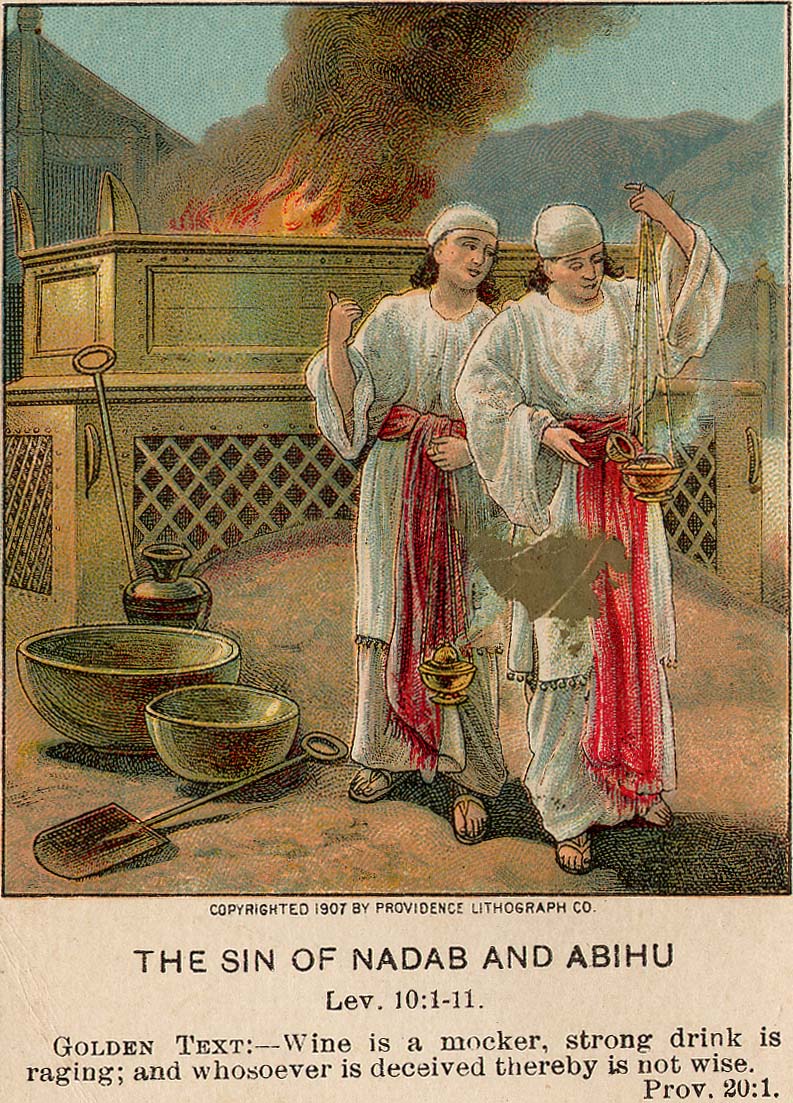
Then a shocking tragedy smashes their joy: Aaron’s sons, Nadav and Avihu enter the holiest chamber in the Tabernacle and are struck dead (Lev 10).  They had wanted to bring their own offerings but instead become burnt offerings.

Our sages explain that there were multiple reasons that the sons of Aaron were taken by God, including drinking wine beforehand, and deciding a legal matter without consulting their Rabbi.  However, one of the main reasons given are that they did not marry (Rashi from Medrash Rabbah).  

The Torah states that a high priest must be married, in Numbers 3:4 and Leviticus 16:6, “his house” refers to his wife.  This is the only position in Jewish theology that requires marriage, even a king could be a bachelor.

Nadav and Avihu chose not to get married for what they saw as perfectly valid spiritual reasons.  The responsibility to support a wife and family greatly detracts from the time and energy a man can devote to divine service.  They wanted to be totally dedicated to God, not to another person.

5e64622af3a598ff16c1b58ca1551823c0b52ba5-1899546

Our sages millennia ago discussed this concept in the Talmud, Kiddushin 29b:

ת”ר ללמוד תורה ולישא אשה ילמוד תורה ואח”כ ישא אשה ואם א”א לו בלא אשה ישא אשה ואח”כ ילמוד תורה אמר רב יהודה אמר שמואל הלכה נושא אשה ואח”כ ילמוד תורה

The Sages taught:  To study Torah or to marry a woman, which should you do first?  You should study Torah and afterward marry a woman.  And if it is impossible for you to be without a wife, you should marry a woman and then study Torah. Rav Yehuda says that Shmuel said: The halakha (final ruling) is that you should marry a woman and afterward study Torah.

A wife prevents a man from sin, as she is available to provide a healthy outlet for his natural sexual energy.  Our sages recommended early marriage to prevent a young man from having lustful thoughts.  Acquiring Wisdom for life is vital for every man, but it is also important to learn in a state of purity from sin and sexual thoughts.  See also Talmud Menahot 110a. 

Our sages consider intimacy to be a normal and vital part of a man’s life.  A healthy man should have a healthy sex life.  So, based on the prevailing views of conventional Jewish philosophy, Nadav and Avihu should have gotten married.   Obviously as students of Moses and Aaron they were aware of these ideas.  So why didn’t they? 

The Gemara in Kiddushin continues:

ר’ יוחנן אמר ריחיים בצוארו ויעסוק בתורה?! ולא פליגי הא לן והא להו:

Rabbi Yoḥanan says:  With a millstone hanging from his neck can he engage in Torah study?! (if he marries first and has the responsibility of providing for his family weighing upon him). 
The Gemara states: he does not disagree with Shmuel, rather this is for us Jews of Babylonia, whereas the other idea is referring to those living in Israel.

[Rabbi Yochanon himself married and had ten sons, after he was already a scholar]
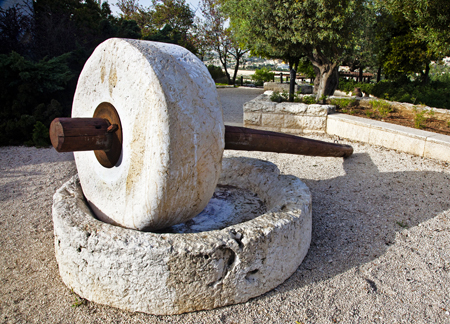
Our commentators explain that in that era, the Jews in Babylonia were wealthy, and would marry and then immediately leave town to learn Torah in Israel, away from their wife.  The families of the bride and groom would support the wife while the man pursued advanced Torah studies and became a scholar.  A form of this custom continues today, when the parents of the newlyweds try to support the couple for a period while the man engages in full time Torah learning.

The poorer students from Israel could not afford to support a wife while learning abroad.  So they put of marriage until they had learned more Wisdom.  This is Rashi’s explanation;  Tosafot in Menahot 110a states that the Israelis were more wealthy and the advice was for the Babylonians to travel to Israel to learn before they married.  That may have been true at a different time period.  Some Rishonim note that women in Bavel worked to support their husbands who were learning.  This is a source for the celebrated Kollel Wife who works to support the family while the man learns.

Jews in Babylonia and Israel still married much earlier than is typical in modern mainstream society.  In both locations, men would have the opportunity to pursue their own education and self development before being obligated to give their time and energy in support of their family.

We see that a man cannot wholly devote himself to his mission when he has the burden of caring for a wife and children.  A man needs to educate and develop himself, learn wisdom, and gain a healthy understanding of the world before he tries his hand at marriage. 

Aaron’s sons considered themselves in the category of men who needed to learn more and improve themselves before they would consider marriage and family.  It sounds like Nadav and Avihu were motivated by self development and possessed an incredible amount of self awareness and patience.  They wanted to reach the highest levels of serving God before they would start a family, which would reduce their ability to be dedicated to God.

Amazingly, the Bible teaches us that they were dead wrong.

"That Is What YHWH Said" — Moses Interprets Nadav and Avihu's Death
The bodies of Nadav and Avihu are carried away by Mishael and Eltzaphan. James Tissot c. 1896-1902. TheJewishMuseum.org


I have an explanation.  Nadav and Avihu, by not marrying, held themselves out as being unfinished.  They were giving the impression that they needed more study and self development before they could marry and start a family. 

If that was their honest and accurate self assessment, they would not have been punished.  But our ancient sages point out that their other actions were the opposite of this aura of humility:

Nadav and Avihu made their own legal ruling that they could bring offerings without being commanded by God, and did so without consulting their own rabbis, Moses and Aaron.  They brought their own unsanctified fire from their hearths, despite witnessing the Divine fire consuming offerings.

Then they entered the tabernacle and the Holy of Holies, a room reserved for the High Priest on Yom Kippur only, showing they thought they were on the level their father.  And they drank wine first, implying that they assumed they could focus on divine service even when intoxicated and distracted. 

So while delaying marriage was a reflection of their asserted humility, their other actions reveal that they were not so humble.  They considered themselves as being on the highest spiritual level.  Rabbi Hirsch says they were arrogant.  If they felt that they were already mature enough to decide to enter the Holy of Holies, they were certainly ready to marry.

Do not think I am insulting them; Nadav and Avihu were at a spiritual level that I cannot being to fathom.  God holds people at the highest levels culpable for even small mistakes. 

Moses points out to Aaron that they were, in some ways, on a higher level than themselves: That is what God hinted: “Through those near to Me I will be sanctified, and be glorified before all the people.” And Aaron was silent. Lev 10:3. Our sages in the Talmud Sota 35a teach that Nadov and Avihu are called to as ‘keruvim” -literally “close ones”, implying they accomplished something amazing with their offerings.
 

MGTOW

There is a modern movement called Men Going Their Own Way (MGTOW), that has a philosophy reminiscent of Nadav and Avihu.  These men avoid marriage, some avoid any serious relationships with women.  They wish to preserve their independence to pursue their chosen mission in life for their own benefit, not for the needs of a wife and family.

This movement is vastly misunderstood and unfairly ridiculed.  Their idea has Biblical precedent in the sons of Aaron, and in the ancient debates of our sages about when a man can marry.

Our ancient sources teach that a man needs to develop himself first, learning both divine wisdom and practical skills, before he undertakes to care for a wife and family.  A man must be able to focus on his mission (and first to decide what his mission is) without distractions.  He has to build a foundation for his own life before he can help other people. 

When he has attained a level of proficiency, wisdom, experience – and the self respect and recognition that flow from these – then he can decide to be a rock for others.  A modern summation of this ancient concept I heard from Dr. Robert Glover: a man needs to bake himself a good cake first, his woman is just the icing on the cake.

However, in modern secular society men are fed contradictory messages about what it means to be a man.  No one teaches boys how to “bake their cake”, let alone that they should focus on personal growth.  Men are told (indoctrinated) that their role and goal in life should be to respect and serve women and amass resources for women and children.  So they invest in their relationships, or in pleasing women generally, and put minimal effort into improving themselves.  Because that is what feminist society urges them to do. 

Then men are shocked when it does not pan out, when these investments in women don’t pay.  Women don’t actually reward men for being their doormats and plow horses.  Women are naturally hypergamous and want the best man, men with confidence and assertiveness.  Men who follow the agenda are told not to be assertive, lest they offend.  Society does not help, it calls men losers when they don’t win a rigged game that the media and culture told them how to play.

So today we have a generation of so called “lost boys” looking for guidance that actually works.  In ancient societies, boys were given a clear path to develop themselves into accomplished men.  Conventional Jewish culture provided sound guidance for a man to build himself up into something valued by his peers, an example is the ancient Mishnah in Pirke Avot (Wisdom of Fathers) 5:21. Yehudah ben Tema advises:

At five years of age the study of Scripture; At ten the study of Mishnah; At thirteen subject to the commandments; At fifteen the study of Talmud; At eighteen the bridal canopy; At twenty for pursuit of livelihood; At thirty the peak of strength; At forty wisdom; At fifty able to give counsel…

A boy was expected to build wisdom and experience and make himself into a man before marriage.  This even included three years of advanced Talmud (Gemara) study before marriage. 

Men understood this was expected of them and was a badge of personal accomplishment.  An interesting note is that a man was advised to devote himself to his profession after marriage, his wife was expected to support his professional and even supplement the family income.  A man, even after working on his basic education, marriage, and professional life, was still expected to grow in wisdom and be an asset to other men.

The appeal of the MGTOW approach is enhanced by the modern social and legal reality.  2000 years ago, when our sages were discussing if a man should pursue his own dreams first or marry first, the cultural situation was vastly different.  Men could count on their society supporting the idea that the husband and father was the head of the household.  This was considered completely obvious and did not even need to be said.  Men had authority over their wife and family.

The legal situation too was completely alien to moderns.  If a man needed to divorce his wife that was his decision; the divorced wife was entitled to one year of support (food) plus whatever amount the man had himself chosen to add to this basic level.  If she had cheated or gone against societal norms, she was considered the cause of the divorce and she lost even the basic level of support.  [We will learn these laws in detail in the Gemara].

The legal assumption was that the man, who had greater earning potential and the onus of educating his children, would have full custody of and be the decision maker for his offspring.  Women and men were punished with death for adultery, and there was even a Divinely sanctioned loyalty test for a woman suspected of straying.  Even before genetic testing, a man could be very sure that his wife’s children were his own.

The modern landscape it vastly different, with serious and sometimes fatal consequences to men.  The suffering that a man can be put through to try and see his own children once a week is worse than anything ancient men would countenance. 

Imagine a man from 2000 years ago hearing that in our modern enlightened society a wife could betray her husband, become impregnated by another man, and then be entitled to her husband’s house and his future income.  What would he think about what we call “justice”?  He would rightly call it barbaric and idiotic.

A young man considering marriage today has to account for a hostile cultural, social, and legal climate that does not have his best interests in mind.  Modern secular society could be fairly seen as anti-family, thanks to decades of feminist propaganda supplanting traditional values.  It’s a veritable minefield for a modern man who wants a family.  We have discussed related topics regarding our Responsibility to brothers and in Chanukah and the Red Pill.

However, a man tempted to go his own way should have a plan of where he is “going”.  If is he simply avoiding relationships, he won’t actually get anywhere in life.  Instead he needs to have a mission, things he wants to accomplish, instead of people he fears and avoids.  You are what you do, not what you avoid.

The MGTOW have a lot a valid arguments.  In the current mainstream culture, why would a man want to be vulnerable to the very serious risks inherent in modern marriage? 

The Bible gives some answers, a man has to consider if they are valid for his personal situation

A fully developed man is expected to be able to provide not just for himself, but for a wife and children.  A man has potential be more than just an ends unto himself.  He can build a business, employ others, feed others.  A grown man knows his capabilities and can choose for himself if he wants to do so.  He can build a legacy.

More than that, the Bible states “it is not good for man to be alone, I will make him a helper corresponding to him” (Genesis 2:18).  The Bible is called Torat Haim literally “instructions for life”.  It is the manual for humanity written by the Creator who created humanity.  The Bible reveals to us that it is a feature of men that it is not good for a us to be alone.  A man needs companionship.  Immediately after this statement God creates a woman fitting for the man. 

Now, this feature can certainly be a vulnerability, as the MGTOW rightly point out, but can also be a tremendous source of comfort and merit for men, and fill an innate emotional need.  Men do want meaningful, committed relationships with women – when they won’t get destroyed for committing.  Also, being able to start and maintain a healthy relationship on your terms is a sign of personal maturity. 

Is the Bible telling men to get married?  Yes, but only in a society that practices conventional, traditional marriage, and reinforces the biological reality that the man is the head of the household.  For Aaron’s sons, they were part of a culture that valued marriage and family, and celebrated loyalty. 

Women were expected to join and support their men in divine service, adding to the mission of the men, not subtracting.  See our discussions beginning with Are Jewish women different?  Indeed, much of our learning in the book of Genesis touches on this theme, and we noted the loyalty of Jewish women in our traditional culture in Exodus: Women and assimilation.

Nadav and Avihu lived in a culture that had their back.  As two of the only five Priests at the time, they were at the pinnacle of the social-religious hierarchy.  They could have sought out righteous wives from the best families and found young women that could complement their fiery devotion to divine service instead of hindering it.

Their mistake was thinking they would not find a woman who would be totally devoted to following their mission.  In the ancient Jewish society, women would be happy to support the Priests.  Perhaps in this aspect they were less than fully mature, and did not feel ready to lead wives.

Their brothers Elazar and Itamar did marry and beget children, who became the ancestors of all the current Cohanim.  The vast majority of the men you meet named Cohen or Katz descend from the two sons who did marry, this has been shown with genetic testing. 

Nadav and Avihu, though they had valid reasons, missed their chance to become patriarchs to the Jewish Priests.  All men desire a form of legacy and eternity, and raising their children is the closest most of us can get. 

Nadav and Avihu lacked children to give a healthy outlet for their sense of giving.  Nadav means donation, Avihu means He is my Father.  Biblical names have deeper meanings, their essence was to give, but their giving was misguided.  They wanted to give to God, even when no commanded to do so, in part because they lacked the outlet of giving to family and sons.  With this in mind, we see that their lack of wives and children was the root cause of their mistake; the Torah alludes to this Numbers 3:4.

Again, this is why a man needs a healthy outlet for his passion.  Men are by nature givers, and can naturally produce more than we consume and teach more than just what we learn.

For the high priest the Bible says (Leviticus 16:6) that he atones for “his house”, and house means his wife, who is responsible for his house, and provides a refuge for him, a safe harbor in the world.  The man is responsible for the spiritual development of his wife and family, we discussed this in The first family using Abraham and Sarah as example.  There is a potential that God built into men to be a guide, educator, and leader for his family.  A man who does not step into this role is not fulfilling his potential, he is not using all of his features that he has available from the factory. 

However, the woman needs to be fitting for him and assist his mission, not hinder it.  It seems to me that Nadav and Avihu lacked complete confidence in their mission as Priests; if they were sure they were fit for this role, then they would have assumed their wives would follow into this solid frame.  Nadav and Avihu in some sense were looking for women that do exist, wives who would push them further in their mission.  They needed to be the ones to pull their wives along in their holy life, not the other way around.

In modern mainstream culture I would not fault any man for “going his own way”.  Be aware that there are serious consequences and risks for men who commit to a wife and family.  Yes, there are potential gains.  A mature man considers all of the factors.  The Bible is not telling you, the modern man today in America, to get married.  The men of the Bible would not even recognize what passes for marriage in contemporary secular society.

I get the sense that our ancestors understood all of this much better than we do today.  By the time they got married, many times around age 18, our sages had a mastery of wisdom and self knowledge that we can barely hold a candle to.  And yet, some of our greatest righteous men did not feel ready to be responsible for others until they had further developed and mastered themselves. 

This is an important message for a man considering taking the next step either in a relationship or in his own personal work.  Again, the Bible gives you numerous factors to weigh, you are the only one who can decide if they are valid for your personal situation.  You choose your way, make it an informed and rational choice.

Daily dose of wisdom, Shabbat 41: personal heat and frame

Gentlemen, amazing daf of Talmud today with a universal message.  Our sages have been discussing cooking on the Sabbath, which is prohibited by the Bible.  But what about pouring hot water onto something cold or pouring something cold into a pot of hot water, does that cook?
Our sages debate (in the Talmud Chullin) if the lower item already in a vessel dominates or if the top, the poured-in item, asserts superiority over it.  They conclude that the bottom dominates over the top, so pouring something cold into hot water causes cooking of the cold item.

Gentlemen, this concept in Jewish law is also a truth in psychology. When you have a firm disposition, deeply established as your frame*, then the people and events that enter your life do not change your essence.  You have to view yourself as central and fixed, and everything else is merely coming into your vessel.  You don’t need to change, instead you change the newcomer to meet your standards. Using the temperature analogy, if you are ‘hot’, with an energetic and magnetic personality, you heat up others who enter your space to match your emotional state.  When you are jovial, extroverted, and playful, you treat people a certain way and they mirror this back to you.  You change them to fit your frame.
*We discussed frame as in the larger framework of your life regarding Chanukah and the Red Pill. See also Rollo’s classic essay https://therationalmale.com/2011/10/12/frame/


We feel the opposite as well.  When you are in a new situation, an unfamiliar place with people you don’t know well, you most likely will find yourself mirroring their disposition.  You try to blend in with others when you are not entirely sure of yourself.  This is an automatic human response.  When you are aware of it, you can change your response.
Keep tabs on your emotional ‘temperature’ and you can understand how you respond to others or how they are responding to you.

Tools for Life #8: live with Joy

Pirke Avot 6:6

Greater is learning Wisdom than the priesthood and than royalty, for royalty is acquired by thirty stages, and the priesthood by twenty-four, but Wisdom by forty-eight tools :

Tool #8: בְּשִׂמְחָה with joy

There is a myth that some people are naturally more happy than others.  Yes, each of us have a personality shaped by our own path through life.  But happiness is a skill that can be learned, a tool that can be honed and applied as needed.  Whatever you are doing, if you can get into a state of joy first, you can accomplish more.

There is a danger in joy, it is false happiness without internal joy.  Many people celebrate New Years Eve by drinking and carousing.  It’s a happy time, everyone is exuberant.  Right?
And yet, New Years is the night of the year with the most suicides.

So what is going on here?  Does joy cause suicide?
No, it was not real joy, but mere hysteria and drunkenness, an illusion of joy then a fatal let down when they realized it was not real.

There is a common mistake that happiness is a happening.  When you are young you say “when I get a car I’ll be happy”.  You get a car and you feel great for a while, but then you get used to it.  A man working hard in college may think “when I graduate I’ll be happy”.  He will get used to that too.  Pop culture influences us to think that when we meet that special someone we will always be happy.  That’s a ridiculous childish view of relationships, and a dangerous indoctrination to boot.  Again, Happiness is not a happening.

Nothing that comes from outside of you can make you inherently happy.  Real joy is the pleasure of fulfilling your potential.  It is taking a chance and succeeding, growing through adversity.  Real joy is knowing you did your best to further your mission.  It requires facing the pain of realizing you need to change and grow as a person, and putting in the effort.  As we know, Pain is the price we pay for Pleasure.

However, we can change external factors to improve our internal mood.  In conventional Judaism we have a concept that physical factors influence spiritual development “Chitzonit me’orrer pi’nimiut”.  It is easier to change external factors than your spiritual essence, but working first with the accessible physical world allows you to begin changing the inner world.

This is one reason that we put on nice clothing and enjoy delicious foods on the Sabbath and holidays.  It brings a certain mood conducive to spiritual elevation.  We also see in the Bible that prophets could not tap into prophecy when depressed, as we see by Elisha using joyful music to bring prophecy (2 Kings 3:15).  See also Pesachim 117 regarding King David’s Psalms.

We can use many external factors to influence our mood, food, wine, song, dance, nature, exercise.  Find what works for you.  While a workout (weights) takes energy, it also gives back energy and endorphins and T that help you in other areas of your life.  A walk on a beach or in the woods brings you peace of mind.  When you are in a slump you can change the factors within your reach first, to give you the spiritual energy to start more difficult internal changes and get your mission back on track.


Anticipation can also bring joy.  We all know the feeling of excitement when we are about to depart on a trip or undertake a new adventure.  That energy is from anticipating the pleasures that are coming our way.  You get joy now just from thinking about the impending good times.  Real joy is anticipating the pleasures that are coming your way.

We can take this a step farther and get joy right now from appreciating the pleasures we already have.  You may have a pain in your leg.  Imagine if, God forbid, your legs didn’t work, then you underwent surgery and were able to walk.  You would run and dance for joy, even if you still had some pain.  God gave us eyes, ears, hands, a whole suite of tools to use to enjoy this world.  We can get a lot of pleasure in the pleasures we already have.

We noted in Pesachim 71:

In fact, the definition of happiness from ancient Jewish wisdom (as taught by my Rosh Yeshivah) is this: appreciate the pleasures you already have.
By contrast, the definition of misery is to appreciate the pleasures you do not have, or that someone else has and you want.

Your homework is to make a list of what brings you joy, and what thoughts increase your joy.  You can train yourself to be a joyful person, a man who can turn on his inner joy.

For further instruction I recommend “Gateway to Happiness” by Zelig Pliskin, which is a textbook in acquiring this tool.  It is written for a Jewish audience but applies to anyone.  You can get a chunk of this book for free, and find it in many Jewish bookstores.

Click to access GATEWAYTOHAPPINESS.pdf


Daily dose of wisdom, Shabbat 40: preventing mistakes

A very interesting incident is recording in today’s Talmud learning.  In a bathhouse (2000 years ago they did not have their own baths, but used public baths), Rabbi Yitzhak wanted to warm up a flask of oil.  Rabbi Yehuda the Prince told Rabbi Yitzhak to take hot water out of the bathtub into a bowl before he placed the oil inside.

This seemingly innocuous statement teaches us important rules in Jewish law regarding the details of cooking (in the hot bathtub) on the Sabbath.  The Gemara asks how could Rabbi Yehuda the Prince make this statement in the bathhouse, since we don’t discuss Torah concepts where people are naked.  The Gemara explains that to prevent a transgression we do state Jewish law even in such a place.

This concept may seem odd to modern secular men.  In conventional Jewish culture we have an idea that when one man is about to make an error in life, we try to stop him or warn him.  There is a concept that Jews are responsible for one another, even though each individual makes his own choices.  The Bible instructs us that a Jewish court does not punish a man unless he was warned first not to do the crime and did it knowingly.

The idea being that most men will think twice and not do a sin when others are warning him about the consequences.  A man who sins anyway knows what he is doing and is culpable.  [This is unlike modern secular law which often punishes even when a man was unaware of a law or broke a law without knowledge or intent].

Gentlemen, there are times when even when it is difficult we need to warn our brothers that they are about to make a mistake.  In mainstream culture trying to prevent other people’s mistakes is rare, it seems to be unpopular and discouraged on a societal level.  There are many reasons for this: society values independence and assumes men learn from their mistakes.

Also, some elements in society want men to make mistakes since this benefits them.  The classic example is feminist society encouraging men to ‘man up’ and marry single mothers and adopt their children from other men, absolving them for their earlier life mistakes.  We talked about this cultural push in Responsibility to brothers and regarding Chanukah and the Red Pill

When you see the big picture and understand what is going on, you have a moral responsibility to try to help your brothers.  You can’t save everyone, and at the end of the day men make their own mistakes and forge their own path through life.  But when you are in a position to give good advice, take the opportunity.

Tools for Life #7: humility vs narcissism

Pirke Avot 6:6

Greater is learning Wisdom than the priesthood and than royalty, for royalty is acquired by thirty stages, and the priesthood by twenty-four, but Wisdom by forty-eight tools.

Tool #7: בַּעֲנָוָה with humility

There is a widespread misconception about humility.  It is associated with low self esteem, an inferiority complex, and being ineffective in leadership and relationships.  In modern secular society, humility is out of style.  Instead, with terrible consequences, mainstream culture celebrates selfishness and narcissism.

Narcissism is a bone fide mental disorder, the narcissist thinks she deserves the attention and favor of others; she manipulates you to make her the center of your world, sucking away your time, energy, and attention.  Her emotional world falls apart when you do not live up to her selfish expectations.  This ego crisis is called Narcissistic injury by mental health professionals, and is often expressed by lashing out in Narcissistic rage.  It is a deep but ultimately self inflicted injury, always blamed on the people who did not fulfill the narcissist’s demands, since the narc herself is perfect in her perception.

You see, the narcissist’s emotional world is ultimately at the mercy of others.  But what about the humble man who thinks he is lower than everyone else?  Is he not also at the mercy of everyone by virtue of his feelings of inferiority?  This is a misconception, a wrong definition.   We know the vital importance of correct definitions.  Gentlemen, let me focus your attention on the true definition:  The humble man knows that doing the right thing is more important than himself.

While the arrogant narcissist thinks only her feelings matter, the humble man knows that the doing the right thing is greater than himself, greater than anyone.  The best example of humility is the one that the Bible calls the most humble person of all time, Moses (Numbers 12:3).  Moses was raised in the royal palace of Pharaoh, and could easily have become another selfish, pampered snob.  But when he saw that his people were enslaved and terrorized, he realized the right thing and took action, killing an Egyptian man and stopping a fight between Jews (Exodus 2:11-13).  Moses did this at risk to himself, indeed Pharaoh sought to kill him for these actions and he had to flee the country.  A selfish man would think first of saving his own skin, not of taking risk to execute justice.

When Moses is called to be God’s messenger to deliver the Jews from slavery, he now has a chance to become famous.  What does Moses say?  Send a better messenger (Exodus 3:11, 4:13).  Moses understands this is a vital mission, he feels that someone else could do a better job.  For Moses, building his personal reputation does not matter, only having God’s plan enacted matters.

But did Moses feel less than anyone else?  No.  He stood up to the Egyptians, the fighting Jews, to Pharaoh, to the Jews who wanted to turn back, to the rebellion of the Golden Calf, to Korach’s challenge to his leadership…  Moses was effective as leader because he didn’t take any of this personally.  It wasn’t about him as a person, it was about the mission.  When the stiff necked Jewish people repeatedly rebelled or strayed, Moses stayed cool, confident he was doing God’s mission.  He didn’t explode in Narcissistic rage when the people were rejecting him.  It wasn’t ever about himself.  Moses was never at risk for Narcissistic injury, since his whole life was centered on doing the right thing, doing God’s will.  This quiet confidence makes an unshakable leader.

Moses was also willing to take criticism and grow stronger from it, not be injured by it.  He listened to Jethro’s advice, and took the complaints of the nation seriously.  A narcissist cannot take criticism.  Being humble allows you to hear other opinions outside your own, and consider the wisdom in other people.  It opens you to increasing your own wisdom.

For us modern men, we are not always aware that in truth we are all on a divine mission.  We need to decide what is the right thing for us, what our mission and purpose in life is.  My rabbi said start by asking What are you living for?  Are you living to work and working to eat, and eating to work?  So what, ultimately, is your purpose?  What are you willing to die for?

Plenty of men have died for a cause they thought was good, but we consider to be evil.  Hitler thought he was good, he thought he was the best.  He believed that he was saving mankind from genetic inferiors and spiritual shackles so humanity could thrive.  Stalin, and all socialists and communists think they are great, promoting justice and freeing man from economic servitude.  The most horrific acts are carried out by people thinking they are doing good.  Obviously we need to apply great wisdom before we decide that our path in life is good.

We need to find our cause, our focus.  A man with a cause greater than himself has power to accomplish.  A good part of this power is from putting the cause above his own ego.  Like Moses, that makes the man confident and effective.  You cannot injure his ego and provoke narcissistic rage, because it’s not about him personally, his life is about his mission.

Once you figure out what mission you want to pursue, think about why.  What is your reason?  Doing the right thing is even more powerful when you can do it for the right reasons.  When we have proper motivation, we are intellectually aware that our cause is proper and can pursue it free of second guessing ourselves.

Tools for Life #6: fear and true sight

Pirke Avot 6:6

Greater is learning Wisdom than the priesthood and than royalty, for royalty is acquired by thirty stages, and the priesthood by twenty-four, but Wisdom by forty-eight tools :

Tool #6: בְּיִרְאָה with fear

We noted yesterday that

Gentlemen, fear gets a bad rap.  We fear no evil, and we have nothing to fear but fear itself.  No one wants to be afraid.

So how is fear a tool for life?

Fear is a useful motivator.  In the Hebrew language, the word for fear (the type of fear our sages list in the tools) is the same letters as the word to see.  When you see the consequences, you get the feeling of fear.  The problem with fear is you can freeze up due to fear, this is the negative aspect.  When we see a competitive sporting event we see the positive aspect of fear.  The frontrunner gives it everything when he fears someone will overtake him.  The athletes with a strong fear of losing, or of not doing their best, race harder.  You can see it.  Fear is a great motivator, and feeling fear also induces us to look at the possible outcomes of our choices.  The man with fear of making mistakes looks hard at his options.  Seeing reality leads to fear and fear leads to a better ability to see and consider the future.

It is a myth that fear is painful and should be avoided.  After all, we pay good money to go on a roller coaster, in order to feel the fear of the possibility of dying.  And it is invigorating, it reminds us how good it is to be alive.  We take risks to feel alive, to feel that we are accomplishing something.

Avoiding fear means avoiding challenges, and staying safe in your comfort zone.  To develop as a man you have to be able to move outside your realm of normal and try something new and risky. One mark of a successful man is the ability to take risks without being frozen by fear.  Facing your fears can be painful.  We know that in modern mainstream society we are taught to avoid pain.  In conventional Jewish culture we learned that Pleasure and Pain are always linked, since pain is the price you pay for pleasure.  So we face our fears, we use them to open our eyes and plan ahead for the future, to motivate us to accomplish more.

One valuable fear we should have is of not accomplishing our life mission, or of picking the wrong mission.  We need to step back, shed our social conditioning, and ask if we are spending  our lives pursuing what we choose to, or if we are merely assisting others in accomplishing their goals.  In the current mainstream culture, many men spend most of their energy, time, and money working for someone else’s mission.  You should fear falling into that trap.  Now you may need the 9 to 5 job, but what do you do when you are on your own time?  Your time is your life, you should be afraid to waste it.  You should have a healthy fear of the inevitable, your own death.  This is a great motivator to pick the right mission in life and keep pursuing your goals.

A method for utilizing fear is whenever you get wrapped up in a squabble, a fight, some petty nonsense, you take a breath and ask yourself: “would I do this if I had a only a month to live? A week? A day?”  Reminding yourself of mortality is using fear as a tool.

In Judaism we have a concept of fearing God, and the fear of God is the sign of a well developed man.  We know that after this life is over, we will be taken to task for every tiny mistake, every choice we made.  It is as if God is recording everything we do, a concept that only recently with widespread surveillance we begin to grasp.  Our sages used this metaphor two millennia ago.

This fear is better translated as reverence.  We revere what is important to us, the people we want to emulate and grow close to.  Reverence includes an aspect of fear, but also an aspect of love and desire to connect to the revered.  Therefore God have us both positive and negative commandments, when we do the positive we build a connection, but transgressing the negative strains the relationship.

The fear of God leads to proper time management, if you know you will be called out for wasting time that could have been spent developing your relationship with the Almighty, you work on it.  This fear can give you the motivation to snap out of laziness and work on yourself.

For men who don’t want to fear God*, be accountable to yourself or someone else for wasted time and mistakes.  If you have to make a reckoning, even with yourself or a friend or your journal, you will fear wasting your life.  Fear throwing your life, time, and energy away.  You are unique in creation and have infinite value.
[*The fear of God can actually liberate you, preventing you from feeling fear of mortal forces.  This is complex topic we will, God willing, delve into later]


Daily dose of wisdom, Shabbat 39. To the doorway of Hell

Gentlemen, amazing daf of Talmud today. Our sages, on the topic of cooking on Shabbat, debate the difference between using items warmed in a fire to heat food versus using items warmed by sunlight. Rabbi Yossi allowed warming food on an item that was hot from absorbing sunlight.

There was a case in Tiberius, which is famous for the hot springs, where people ran a pipe of water through the hot springs and asked if they could use it on Shabbat. The Rabbis, without dissent, told them it had the status of water cooked on the Sabbath. The Gemara asks that according to Rabbi Yossi it should have been allowed, since hot springs are heated by the warmth of the sun. Rabbi Yossi replied that these hot springs are actually heated by the fires of Gehinnom – of Hell.

This requires some explanation. Hell is (as far as we can tell) a spiritual location, not an actual physical place. Rabbi Yossi’s retort hints at a deeper concept. The hot springs could be used for a medicinal purpose, for recuperating the body, but also for pure physical enjoyment. God put many pleasures into this world for us to use properly. But, if they are used improperly or become an addiction, these God given gifts can drag a man down to Hell.

One of the amazing aspects of Judaism is that it teaches us how to use the physical pleasures to build yourself not just physically but also spiritually. This is also a danger, it is easier to abstain from physicality than to partake in moderation with a higher purpose. It’s safer and easier to be a virgin monk tucked away from society than to be married with a job and kids and still have to perform your duties to God. This is why recovering alcoholics avoid alcohol completely rather than drink in moderation. Judaism tells us to go into that danger zone of enjoying pleasures while keeping in mind that they were given to us by God for a higher purpose.

Rabbi Yossi is hinting that bodily indulgence brings a man to the doorway of Hell. If you start to pursue pleasure for it’s own sake, you step into Hell. Only if a man partakes in physical enjoyment for a higher purpose can he be protected from the fire.


Tools for Life #5: awestruck

Pirke Avot 6:6

Greater is learning Wisdom than the priesthood and than royalty, for royalty is acquired by thirty stages, and the priesthood by twenty-four, but Wisdom by forty-eight tools :

Tool #5: בְּאֵימָה with awe

Gentlemen, fear gets a bad rap.  We fear no evil, and we have nothing to fear but fear itself.  No one wants to be afraid.

You have probably heard that in Eskimo language there are many words for snow, reflecting different subtypes and variations.  In the Hebrew language, the language of the Bible, there are multiple words many spiritual concepts, including the soul, and also for what in English are fear, awe, trepidation, worry.  In many other places (and tomorrow’s tool) our sages discuss the value of fear for preventing sin and mistakes.  The word chosen here is more akin to the English “Awe”, specifically the awe that comes from seeing that the world is much greater than yourself, that you are actually tiny.  This is simultaneously belittling and exhilarating.  The universe is (relatively) eternal in time and space, while you take up an infinitesimal speck of time of space.  While this causes a feeling of smallness, even depression, it is also thrilling to think about the vastness of the universe, the grandeur of the world.

For a religious man, you understand that the “natural” world is a creation, and the awesome facets of the world reflect the awesomeness of the Creator.  But for any man, you can tap into the energy of awe, just by stopping to realize the experience you are having is awe inspiring.  If you are lacking awe in our life, step outside, get away from people and pettiness, turn off your phone.  Getting into nature is an excellent way to see something awe inspiring.  Enjoying some awe of the natural world can snap you out of boredom or laziness.

As we grow up, we learn about the world, what makes things tick, and we lose some of that sense of awe.  Stop and think, all of nature is made of molecules and atoms, the atom itself is miniscule electrons whirling around protons and neutrons.  It makes up mundane matter, but can be harnessed into energy or ultimate destruction.

If you can get awe from an atom, all the more from people.  King David in Psalm 8 hints that people seem relatively worthless, and yet God made us just less than Divine.

O LORD, our Master, How majestic is Your name throughout the earth, You who have covered the heavens with Your splendor! …When I behold Your heavens, the work of Your fingers, the moon and stars that You set in place, what is man that You have been mindful of him, mortal man that You have taken note of him, that You have made him little less than divine, and adorned him with glory and majesty

Every human being has infinite potential.  We have discussed how Judaism recognizes individuality, the concept that every man is like a whole world, a whole universe of potential. Treat your fellow man with the seriousness he deserves:

My rabbi taught us an amazing thing.  He said take every man seriously.  This man in front of you could cure cancer.  He could start a nuclear war (this was back when that was the worst fear).  Most of all, take yourself seriously.

Brothers, you can become a partner in creation with the Eternal in the most important job of your life: creating your life.  You, like the Tabernacle, are a microcosm of the universe, containing every aspect and energy of creation.  You have the responsibility to make your choices and develop your personal powers.  And as we are all interconnected, every thing you do also changes every element of the universe.  Man is the crown of creation, the last created being Talmud, Sanhedrin 38a).   Everything created before was just to prepare for us.  For you!
Our Sages say: בִּשְׁבִילִי נִבְרָא הָעוֹלָם “Bishvili nivra ha’olam” For my sake, was the universe created” (Mishna Sanhedrin 4:5).

Awe of the universe helps us temper our innate self centeredness, and awe of our fellow men allows us realize that the entire universe was created for him as well, so he can reach his potential.  Many times other people and our relationships can seem petty, use awe to remind you that we can be so much more.  We are just less than divine.


Daily dose of wisdom, Shabbat 38. prevent your ‘mistakes’

Today the Talmud discusses what happens if someone cooked food on Sabbath.  If the cooking was done on purpose, the food cannot be eaten.  But what if you forgot and left your uncooked food on a fire when the Sabbath started?  Originally people were allowed to eat that food, but the Rabbis saw that people were leaving their food on the fire and claiming that they had simply forget it there.  There was a rash of ‘forgetting’ and ‘mistakes’…
So our sages instituted a law that you could not eat that food.  This is was not a harsh decree: One could simply cover the fire or sweep out the coals and it would be permitted to leave the food there, or in some opinions if the food was already partially cooked it could be left on the open fire.  Modern practice is to use a sheet of metal to cover the stovetop burners and knobs, or to use a non adjustable electric hot plate as a warming tray.  You would need to plan ahead for your Sabbath meals instead of waiting until the last minute to throw some food on the fire.


The wisdom in this decree was to remind people that there are mistakes and then there are ‘Mistakes’.  Our ancient sages understood that our human nature pushes us to take shortcuts or procrastinate because this is easy or convenient.  We all make ‘Mistakes’ when we really know better.  But eventually this undermines our mission, and our sages don’t want that.  It may be having an extra drink when you already had two, or getting into an argument when you know the other guy won’t change his mind anyway. Or a simple failure to plan ahead and prepare for your commitments.

Our sages point out that these are not true mistakes, when we know better we need to do better.

You can challenge yourself to set up limits to prevent you from making your usual ‘mistakes’.  As our sages teach, being a man means to be the master over your actions.


Tools for Life #4: understand yourself first

Pirke Avot 6:6

Greater is learning Wisdom than the priesthood and than royalty, for royalty is acquired by thirty stages, and the priesthood by twenty-four, but Wisdom by forty-eight tools :

Tool #4: בְּבִינַת הַלֵּב with understanding of the heart

We use “heart” in modern lingo to refer the essence and drive of a man.  When our sages mean understanding of the heart, they refer to a deep understanding of yourself.  The heart is also considered the seat of feelings and motivations, of emotional energy.  While Judaism has a reputation as a highly intellectual faith (that’s not a contradiction), conventional Judaism understands the power and role of feelings in our lives.

Understand yourself has two main steps: 1. get to know yourself  2. learn to bring your emotional energy back into your life and use it

Imagine a fascinating person in history you would want to interview… maybe Napoleon or Churchill?  Michelangelo?  You would be fascinated to talk with this man.  But who is most fascinating human being you can meet?
Yourself – anything you are interested in is because you are interested yourself.

First, introduce yourself to yourself.  It sounds silly, but you have to turn off the distractions and get used to talking to yourself, just you and you.  Ask yourself “what have you been doing with your life?” as if you were a long lost friend.
The most important question to ask yourself is: what are you living for?
Then ask Why are you doing what you are doing – narrow it down to the main reason motivating you.  Then, for real understanding, ask yourself why you should you be doing what you are doing.  Is your motivation real?  Are you trying to impress people?  If so, why?  Become aware of the social pressures outside of you and clarify what is really from you, what your own personal convictions are.  This is the way to gain independence in your decision making process, before you decide you can sense if this is from you or outside forces.

This is not merely intellectual.  You also need to get in touch with emotional state, check in – this is like taking your temperature.  If you realize you are grumpy or sensitive right now, then you can avoid conflicts.  Track down source of emotions.  Some days you get up on the right side…learn how to get up on the right side every day.

You will also see the conflict within yourself, you want to develop and become greater, but it takes work and part of you wants to avoid work.  This is because you have two conflicting natures: the soul and the body.  Your body is throwing emotions out, you can learn to work with them and harness their energy.
The Real you that you meet may be different from your prior perception of you, but need to acknowledge problems and to incorporate all aspects of yourself into your whole person.

Why do we need this tool?
If you don’t know what makes you tick you are a robot, a zombie, and your decision will be made for the benefit of others, not for yourself.