Daily dose of wisdom, Pesachim 88: face your own challenges

Today the Talmud continues to explain why the Jewish people were exiled to Babylonia.  One theory is that this was a kindness, since dates grow abundantly there, so Jews could find food readily and have time to study Torah.

Ulla visited Pumbedita, and his hosts brought him a basket of dates. He said to them: How many baskets of dates like these can one purchase for a zuz? They said to him: One can purchase three for a zuz (a small coin). He said:  How can it be that it is possible to purchase a basketful of date honey for just a single zuz, and yet the Babylonians do not engage in Torah study more extensively?  Since the cost of food is so low, the Babylonians should spend more time learning.

That night, the dates afflicted him with indigestion. In light of this, Ulla instead praised them and said: A basketful of lethal poison sells for a zuz in Babylonia, and despite this the Babylonians still engage in Torah study.

Every man has his own challenges in life.  Don’t envy another man’s situation and wish you were in his shoes.  You don’t know exactly what he has to deal with.  Instead, focus on making yourself better in your own situation.

The Talmud also brings the story that a king and queen told their servants to go make our Passover offering.  The servants didn’t know whether to use a lamb or kid so they did one of each. They asked the king which he would eat, he said go ask the Queen. She realized there was a problem, that you can only eat from one Passover offering and now two had been brought for them. She said go ask Rabban Gamliel. He ruled they should eat from the first animal offered, because royalty is not picky about which meat.  It would not matter to them if they ate lamb or kid since they have plenty of everything. 

This helps us understand how to have the mindset of royalty. Don’t be picky about things that don’t truly matter. You have what you need and more,  so you are not hungry for anything in particular.  This is the outlook of abundance,  what our sages call “bread in your basket”.

Daily dose of wisdom, Pesachim 87: Hoshea and his harlot

Today the Talmud mentions that a woman who was married just before Passover may choose to eat the Pascal lamb slaughtered by her father, as the custom was for newlyweds to go to the bride’s family for the first festival after marriage.  After that first holiday, she must eat from the offering her husband brought even if her father also had her in mind.  Our sages bring verses comparing a woman in her father’s home (engaged) to a fully married woman in her husband’s residence:

As it is written: “And it shall be at that day, says the Lord, that you shall call Me: My Husband, and shall call Me no more: My Master” (Hosea 2:18).  Rabbi Yoḥanan said: like a bride in her father-in-law’s house, living with her husband, whom she now calls “my man”.  And not be like a bride during betrothal and living in her father’s house, during which she may call him “my master” but is not comfortable enough to call him husband.

In ancient times, when a woman married and moved into her husband’s household, she was keenly aware that she was entering his world.  The relationship truly began when she no longer saw herself as an extension of her father’s family, but under the roof and guidance of a new man.  The culture reinforced this change in allegiance.  We discussed this concept by Jacob’s wives.

Since Hosea the prophet came up, the Talmud examines the fantastic career of Hosea (about 2700 years ago), explaining from our ancient tradition that “When the Lord spoke at first with Hosea” (Hosea 1:2), Hosea first gave the wrong answer:

The Holy One, Blessed be He, said to Hosea: Your sons (the Jewish people) have sinned.  Hosea should have said: they are Your sons; they are sons of Your beloved ones, sons of Abraham, Isaac, and Jacob. Extend Your mercy over them.
Not only did he fail to say that, but instead he said before Him: Master of the Universe, the entire world is Yours; if Israel has sinned, exchange them for another nation.

God teaches Hosea a lesson in perspective:

The Holy One, Blessed be He, said: What shall I do to this Elder? I will say to him: Go and take a prostitute and bear for yourself children of prostitution. And after that I will say to him: Send her away from before you.  If he is able to send her away, I could also send away the Jewish people.   As it is stated: “The Lord said to Hosea: Go, take for yourself a wife of prostitution and children of prostitution” (Hosea 1:2). And then it is written: “So he went and took Gomer the daughter of Diblaim” (Hosea 1:3).  The Sages interpreted her name homiletically: “Gomer”; Rav said because everyone would finish [gomer] and satisfy their desires with her. “The daughter of Diblaim”; the name Diblaim can be taken as the dual form of the word dibba, ill repute. It suggests that she was a woman of ill repute, daughter of a woman of ill repute.

“And she conceived, and bore him a son. And the Lord said to him: Call his name Jezreel; for soon I will visit the blood of Jezreel upon the house of Jehu, and will obliterate the kingdom of the house of Israel…And she conceived again, and bore a daughter. And He said to him: Call her name Lo-ruhamah, for I will no more have compassion upon the house of Israel that I should bear them… And she conceived, and bore a son. And He said: Call his name Lo-ammi; for you are not My people, and I will not be yours” (Hosea 1:3–9).

We shall see later why God commands Hoshea to use these names.  Now God makes His point:

After two sons and one daughter had been born to him, the Holy One, Blessed be He, said to Hosea: Shouldn’t you have learned from the example of your master Moses, who, once I spoke with him, separated from his wife?  You too, separate yourself from your wife. He said to Him: Master of the Universe, I have sons from her and I am unable to dismiss her or to divorce her.

The Holy One, Blessed be He, rebuked him and said to him: Just as you, whose wife is a prostitute and your children from her are children of prostitution, and you do not know if they are yours or if they are children of other men, despite this, you will not forsake them, so too, I am still attached to the Jewish people, who are My sons, the sons of My faithful who withstood ordeals, the sons of Abraham, Isaac, and Jacob. They are so special that they are one of the four acquisitions that I acquired in My world.

This sounds utterly bizarre.  To have a prophet of God marry a harlot to teach him a lesson?
Many commenters to the prophets explain that this entire episode was in a dream, since God would not tell his prophet to violate a specific prohibition.  We know that after Moses prophets receive visions in a dream or trance, unlike Moses who could receive direct communication while awake.  Here God refers to Moses leaving his wife, as was required for that level of prophecy, which hints that Hosea was actually sleeping or in a trance, but dreaming that he was awake and receiving prophecy as Moses had.

God wanted to teach Hosea proper perspective, not have him actually marry a harlot.  The entire situation was an allegory to get Hosea to realize the depth of the connection between God and the Jews.

Once Hosea realized that he had sinned, he got up to request that God have compassion upon him for having spoken ill of the Jewish people. The Holy One, Blessed be He, said to him: Before you request compassion upon yourself, first request compassion upon the Jewish people, since I have already decreed upon them three decrees on your account.  The names of the harlot’s children allude to these potential decrees:  Jezreel is an allusion to a decree for Jehu’s actions in the Jezreel Valley (see II Kings 9–10). Lo-ruhamah, no compassion, suggests that God will no longer have compassion for the Jewish people. Lo-ammi, not My people, indicates that the Jewish people will no longer be considered God’s people.

Hosea stood and requested compassion and nullified the decree. God responded and began to bless them, as it is stated: “Yet the number of the children of Israel shall be as the sand of the sea, which cannot be measured nor numbered. And it will be that instead of that which was said to them: You are not My people, it shall be said to them: You are the children of the living God. And the children of Judea and the children of Israel shall be gathered together” (Hosea 2:1). And I will sow her to Me in the land; and I will have compassion upon her that had not received compassion; and I will say to them that were not My people: You are My people” (Hosea 2:25).

Hosea was forced to change his perspective by marrying and having children with a wayward wife, and realized that despite her sins, he still cherished the relationship and did not want to leave her even though he would be within his rights to do so.

Now, before anyone gets the wrong idea, and marries a woman of ill repute, or tolerates adultery, this was most likely a dream and allegory.  Even if you would say it was real, a prophet should know if the children are biologically his.  You cannot take the story of Hoshea as a justification to keep a wayward wife around.

We know that God despises a wife who betrays her husband. If a woman cheats on her husband, when there are witnesses the court can put her and the man involved to death.  A husband cannot forgive her cheating and take her back.  She is also forbidden from later marrying the other man. The Bible even has a supernatural loyalty test for a wife who went behind closed doors with another man. If she was unfaithful she perishes.  Ancient Jewish society was extremely judgmental against promiscuous women.

God’s lesson to Hosea was to that God valued his children despite their flaws, and remembered that even while making mistakes we are the offspring of countless generations that were faithful and upright and the Patriarchs He made a covenant with.  God taught that being tempted by idolatry was terrible but that he still loved the Jewish people and was connected with them eternally.

Keep in mind that God’s covenant with the Jewish people is with the nation as a whole.  If one person wants to throw it all away and reject God then he is allowed to exercise his free will and walk out.  But the nation as a whole will never do this, and God will never change our nation for another.  Yes, God does value every single individual, but the covenant is a national one.

Hosea and Gomer was not a love story or prodigal daughter allegory to be reenacted in modern times.  Understand this important distinction.  If an individual fails in her loyalty to you, then you should consider whatever relationship you had to be utterly annihilated.  A woman who cheated is not the same as a holy nation tempted by idols.  She is done.  Do not take her back.
The woman was a mere allegory, hinting at the level of commitment God has to His nation.

Daily dose of wisdom, Pesachim 86: know where you come from

The Talmud discusses where in Jerusalem we can eat the Passover offering, questioning if the rooftops were also holy enough, or if we are limited to ground level.  Our sages compare Jerusalem to the roofs of chambers in the Temple.  We note that in the Temple a certain gatehouse attic was used to store measuring rods for contractors to use.

This eastern gate was called “shushan habirah” after Shushan the capital of Persia, which was painted on the outside of that gate.  Shushan was where the Purim story took place, where Esther became queen and used her position to save the Jewish people from extinction.  The ancient Jews decorated that gate with the skyline of Shushan to recall Purim, and to show gratitude to the Persians under Koresh (Cyrus) for assisting in rebuilding the Temple.

For modern men, realize that you need to know where you come from.  You are only here because your ancestors got together and raised children.  You only know what you know because your teachers learned and then taught you, or through reading books and content others created.

What you have now in your life is due to someone in your past who was willing to risk it all and put himself on the line to succeed.  This may be difficult to grasp in today’s world where it is fairly hard for a man to truly fail.  One hundred or one thousand years ago, a man failing usually meant that he died along with all his heirs.  Look back on the success of your ancestors, and your own accomplishments, with pride.

Now we are blessed with various safety nets and chances to start over.  In a world where everything is made safe and fail proof, some men find it hard to take risks.  The best approach is to go out of your comfort zone and if you end up needing those safety nets seize them.

Daily dose of wisdom, Pesachim 85: Power of the group

Today the Talmud continues to learn possible disqualifications of the Passover offering.  The Gemara States our ancient sages decreed that an offering that was purposely invalidated would contaminate a man’s hands. This was a protective ordinance so men would not mess up an offering if they had a grudge against the man who owned it. 

The Gemara explains that this law was not extended to an invalidation caused by taking a Pascal lamb away from the group eating it.  This was because our sages saw such a concern was not warranted.  The men eating together were not at risk for taking meat out, because members of the group are watching out for one another and will remind the other men. 

The wisdom is to become part of a group that holds you accountable.  This can be something like an athletic team or weight lifting buddy, or someone you check in with to get an outside opinion on your progress towards your goals.  Jewish consciousness emphasizes that every man needs a Rabbi, but explains this is not necessarily an actual ordained Rabbi, but any man who can hold your feet to the fire when you are not getting where you want to go in life.

Daily dose of wisdom, Pesachim 84: comes with age

The Mishnah explains that parts of a paschal lamb that are edible in an adult animal are considered the edible parts. The Passover offering must be a lamb or goat in his first year.  Some body parts are soft in the young animal but will become hardened and difficult to eat. If these parts can.be eaten after  long boiling, they are still considered legally edible, it.just takes more work.

Keep in mind that your personality changes as you develop in life.  When you are young it is typically much easier to mold yourself into the man you want to become.  Self improvement is a dynamic activity that works through feedback: you make a change, see positive results, and use that to reinforce the change.
When you are older you can still modify your approach to life, but you need to know that it will take more effort, more boiling.

Mishpatim: The holy law of sex

Mishpatim (Exodus 21:1–24:18) is a blockbuster section of the Bible containing numerous Divine commands.  Last year we focused on slavery and arranged marriages, and learned that while so many people assume the Bible is anachronistic, the concepts behind these laws are relevant today.

We studied about the Jewish maidservant:

The Bible has separate rules for a female servant (Exodus 21:7).  An extremely impoverished man may sell his minor daughter into service to a wealthy man.  Like the male servant who works to pay his debt, she works towards the set price, and can redeem herself.  She is also automatically freed when she reaches maturity at age 12. 

However, the Torah anticipates that the man who bought the maidservant may want to marry her, or engage her to marry his own son (Ex 21:8-9).  If a man from the wealthier family does marry her, the maidservant has the full rights of a Jewish regular wife, even if the man has multiple wives 21:10.  Indeed, our ancient sages learn a husband’s marital obligations to his wives from the rights the Bible gives to the maidservant (Talmud, Ketuvot 47).

So let us turn to those marital obligations. 

The Bible, Exodus 21:10, mentions three items that a husband must provide his wife that are so central to marriage that he may not decrease them when he takes another wife (see our discussion of poly):  אִם־אַחֶ֖רֶת יִֽקַּֽח־ל֑וֹ שְׁאֵרָ֛הּ כְּסוּתָ֥הּ וְעֹנָתָ֖הּ לֹ֥א יִגְרָֽע׃.  These three are called in the Torah “she’erah, kesutah, onatah”.  The Talmud (Ketuvot 47-48) debates the exact meaning of these three terms:

The first teacher maintains that the obligation of a husband to provide his wife’s sustenance applies by Torah law, as it is taught: “If he takes another wife for himself, her food [she’era], her clothing [kesuta], and her conjugal rights [onata], he shall not diminish” (Exodus 21:10).

She’era”; this is sustenance, and it likewise states: “Who also eat the flesh [she’er] of my people” (Micah 3:3).
Kesuta” is understood literally as covering – clothing.
Onata”; this is her conjugal rights, which is stated in the Torah, and so it says: “If you shall afflict [te’aneh] my daughters” (Genesis 31:50), which teaches that a husband may not deprive his wife of her conjugal rights as that causes her affliction.

The Talmud concludes that a wife can agree to waive her rights to food and clothing, but that the right to sexual relations in marriage cannot be waived.  Sexual intimacy is considered an absolute requirement in marriage as defined by the Bible.  The Torah calls a lack of intimacy affliction (Genesis 31:50 and Deut. 26:7). 

There are other suggestions of what these three terms mean:

Rabbi Elazar says:
She’era”; this is her conjugal rights, and so it says: “None of you shall approach to any who is near [she’er] of kin to him, to uncover their nakedness” (Leviticus 18:6), demonstrating that the word she’er is used in the context of sexual relations.
Kesuta” is understood in its literal sense as clothing.
Onata”; this is sustenance, and so it says: “And He afflicted you [vayanekha], and made you suffer hunger, and fed you with manna” (Deuteronomy 8:3).

Rav Yosef taught the following:
She’era,” this is referring to closeness of flesh during intercourse, that he should not treat her in the manner of Persians, who have conjugal relations in their clothes.  The Gemara comments: This teaching supports the opinion of Rav Huna, as Rav Huna said: With regard to one who says: I do not want to have intercourse with my wife unless I am in my clothes and she is in her clothes, then he must divorce his wife and pay her for the marriage contract.

Ramban (on Shemot 21:10), explains according to this view in Ketubot 48a, that she’erah means flesh-to-flesh contact during intimacy, kesutah is the bed and bedding used by the couple, and onatah to refer to the conjugal act itself.

The message here is that not only must a married couple be intimate regularly, neither partner can demand that their sex life become perfunctory, done in haste with clothing still on to get it over with.

Performing the act with clothes is not a problem if their desire was such that the couple could not wait to remove all their clothing before getting down to doing what God commands. 

The problem here is that the man does not want to be bothered with removing his clothing, he just wants to get back to his work, or he is implying that he does not want to see his wife naked.  A partner giving the impression that he or she wants to get it over with and get back to more important business is clearly communicating that intimacy is not important.

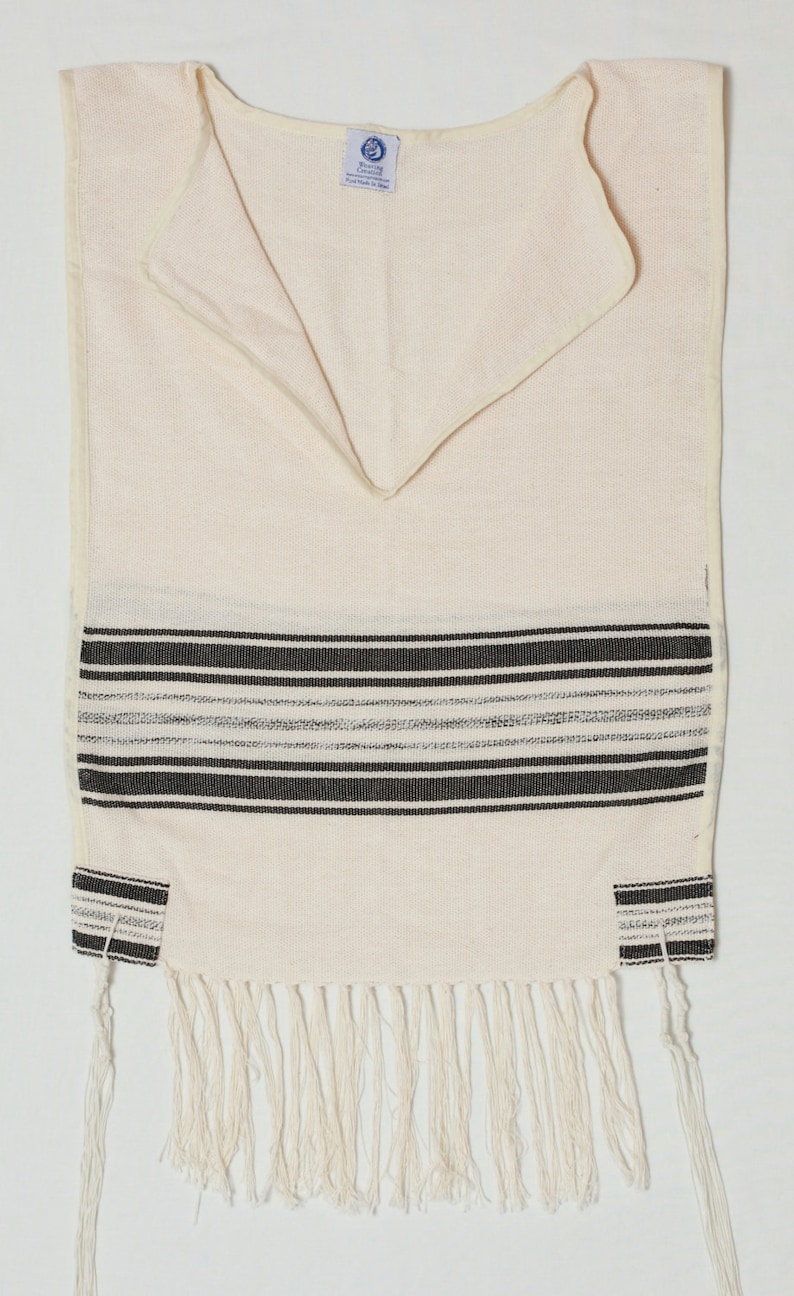
As aside: the old rumor that Jews were only intimate through a hole in a sheet (assumedly for modesty) was a misunderstanding that arose from Europeans seeing Jewish men’s Tallit Katan hanging up to dry, as that resembles a sheet with a hole in the middle.
https://i.etsystatic.com/6764031/r/il/90da3c/635550669/il_794xN.635550669_9si2.jpg

The Ramban, almost 1000 years ago, explains that Rav Yosef’s understanding of She’era is the most accurate, since the word she’erah is clearly related to the word for flesh, in the context of sexual relations.  According to his interpretation, our verse has two references to intimacy, both to the quality (she’erah: with closeness of flesh) and to the quantity (onatah: her time: with regularity). 

tzktn1

The Torah requires a man and wife to have both quality (passion) and regularity in their intimate life.  This understanding fits the opinion in the Talmud that a man’s obligation to feed his wife is on the Rabbinical level, not explicitly mentioned in the Bible.

Turning back to our source verse for the key elements of a marriage, we now have two words out of the three referring to sexual intimacy, according to Rav Yosef.  What about the odd word out?  “Kesuta” is often understood as clothing, but the usual word for clothing is “Beged“. 

Ramban explains Kesuta as meaning the bed or bed coverings used by the couple. However, the suffix -ah is the possessive feminine, so it could certainly refer to coverings that are specific to the woman.

“Kesuta” really means her covering, implying a less substantial garment than normal clothing.  See Genesis 20:16 “kesut eynaim” meaning eye-covering or eye-patch.  One does not wear actual clothing over the eye, but something more flimsy.

In context with the other two words which are about intimacy, we can safely conclude that “Kesuta” implies a special type of covering used by a woman to make her sexually attractive to her husband, such as lingerie.

According to our full understanding of Exodus 21:10, a husband was also expected to supply his wife not just with her regular clothing, but also with special garments to help her be more attractive to him. 

The Bible encouraged the couple to enhance their intimate life by having the woman dress in an attractive manner when with her husband.  Keep in mind that in ancient times women did not dress in a provocative manner in public.  However, the Torah is hinting that it is appropriate and necessary to look sexy and be arousing in private.

The Talmud refers to such undergarments as “bigde tzivonim” colored clothing, because most outer clothing was not made in bright colors while these were.  In those times, a red dress was considered too scandalous to wear in public

However, in private a man and wife were expected to make an effort to appear attractive to one another.  Lingerie was designed to catch the eye, so it was made with attractive colors.  This is another way the Bible teaches us to emphasize our intimate life, by increasing desire.

Men are especially attracted to what the eye sees, so he is told to get her sexy clothing which will enhance her attractiveness and his desire.  This also helps her to reciprocate his desire, because women enjoy being desired by a valuable, successful man.  (If the man is developing himself through learning and following God’s instructions, he is becoming more valuable).  Therefore, “kesuta” refers to garments that improve the sex life for both partners.

thQJJPSYGE

With this deeper understanding of Exodus 21:10, we realize that all three words describing the core requirements of a Biblical marriage are actually ingredients to bake a healthy sex life.  To modern people unaware that the ancient Bible speaks to all areas of human life, it may be shocking that the Torah contains sexual regulations. 

We have learned sections of the Talmud that show us that sexual intimacy was considered normal and expected in ancient society.  We know from Brakhot 24 that our sages were not embarrassed when their students knew they had slept with their wives.

By contrast, modern secular society is simultaneously lewd and prude.  The media and advertising depict sex constantly since sex sells.  But in many contexts, revealing any hint of sexual interest in a woman, let alone having an open discussion of intimacy is verboten.

Men lose their jobs over mild, vague remarks or even glances.  America especially has a dysfunctional mix of a remnant puritanism than shuns sex as shameful with a pervasive media that pushes explicit content on us to sell products. It’s schizophrenic.

Back 2000 years ago, intimacy was a normal human function that everyone knew about, so it wasn’t a big deal. But no one went around publicly talking about it. Married women, Jewish or not, would not even show their hair in public, to avoid sexual attention other men. Now, sex is both forbidden to mention and half naked women are used to sell any product under the sun.

Intimacy was considered normal, healthy, and even holy.  Not only does the Bible give a couple advice as to how to maintain a good sex life, Jewish law gives guidelines for how often a man is obligated, as a minimum, to provide sex “onatah” for his wife:

Students may leave their homes and travel in order to learn Torah (without their wives’ permission) for up to thirty days, and laborers may leave their homes for up to one week.  The set interval of a husband’s conjugal obligation to his wife stated in the Torah, Exodus 21:10, (unless the couple stipulated otherwise), varies according to the man’s occupation:

Men of leisure, who do not work outside the home, must engage in marital relations every day, laborers must do so twice a week, donkey drivers once a week, camel drivers once every thirty days, and sailors once every six months. This is the statement of Rabbi Eliezer.  Talmud, Ketuvot 61b

The variation in timing is according to the man’s occupation and resulting proximity to his home.  For example, sailors were expected to be home long enough to rest up and pleasure their wives at least once every six months.  A man who had a career that allowed him to be home was not allowed to become a sailor without his wife’s permission, since she would suffer in his absence.

https://getwalls.io/media/large/2020/07/popeye-the-sailor-man-hd-1080p-widescreen-best-live-download-large-60315837.jpg

These guidelines are the minimum level, Jewish law explains that whenever a man understands that his wife desires intimacy, he should fulfill her desire.  The Talmud and Shulchan Aruch (code of law) note that a woman normally expresses her desire in a nonverbal manner. A man is expected to be perceptive to nonverbal cues that his wife is interested and be ready to act on them.

The man does express his desire verbally, and a good wife is expected to want to please him.  After all, this is a core component of a marriage.  If a wife is not willing to be intimate, the husband may divorce her without paying her marriage contract. 

However, a man must realize when she is not receptive and avoid sexual contact then.  Our sages not only condemn marital rape, but also explain that children from an encounter without genuine desire are inferior.

A wise man learns to read his wife and her moods, and use his own talents to plant in her seeds of desire, or to fan her flames of desire.  Even when she in menstruating and they cannot sleep together, our sages note the value of a husband and wife being alone together, and disapprove of interfering with a couple’s privacy.

The classic philosophical work “Duties of the Heart” written by Rabbeinu Bachye in eleventh century Spain, in Gate of Trust chapter three lists items that are necessary for life and must be worked for. Rabbeinu Bachye includes food, drink, clothing, housing, and intimacy. The Hebrew word used for the last item is cognate to a word for concubine, connoting sexual companionship. Our sages knew that both men and women need this intimacy.

Again, sexual intimacy within marriage was normal and discussed by our ancient holy men and sages.  The Bible itself makes it the key component of a marital relationship.  This reflects what we know about the Bible: far from being an arcane tome focused on spiritual minutiae, it is practical guide to everyday life for every human being.

Even if you don’t believe that the Bible is Divine at all, it still provides a useful window into how men understood humanity over 3000 years ago.  Learning how men and women were expected to get along according to the Biblical view of human relationships is incredibly eye opening, especially when you make the effort to compare it to modern cultural expectations. 

Studying the Bible as as sociological and historical document gives us tremendous insight into the reality of human interactions, before political correctness and various ideologies began to pull the wool over our collective eyes.  Men, including holy wise men, understood millennia ago that sex is critically important to a committed relationship.  That truth should be obvious, but some deny this today.

If you are married, you should be having good sex regularly.  Otherwise you are glorified roommates.  God, in the Bible, taught us that intimacy is vital for marriage.  If you or your partner are not enjoying this part of life, something is very wrong.  The Bible gives concrete suggestions to improve the quality, quantity, and desire in our intimate life.

Judgment is yours

Neither shall you glorify a poor man in his lawsuit.” 23:3

“Do not pervert the judgment of the destitute in his grievance.” 23:6

The Torah commands that judges do not take sides.  This applies even if one side is poor or destitute.  Now, we know the Bible commands we give charity (Deuteronomy 15:7, Deuteronomy 26:12).  But God does not allow the court to give one side the benefit of the doubt in order to take into account his personal situation.

We can imagine the temptation of a merciful judge to rule against a rich megacorporation, forcing it to give desperately needed money to a poor individual.  It won’t cost the business much, relative to their assets.  You may have thought this would be a valid form of charity.  Perverting justice is never acceptable.

However, these same verses are taken to mean that both sides get exactly the same rights in court.  The Sforno explains, citing our sages, that the judge may not speak harshly to one litigant and kindly to another, or allow one party to sit but the other must stand.  In addition, the case cannot begin if one side is dressed in nice clothing and the other is dressed in rags, because a judge can influenced by the appearance of both. 

Jewish law (Choshen Mishpat 17:1) requires that the litigants are told that either the poor person should be given clothing equal to the rich man, or the rich person should remove his expensive clothing and dress simply.  This reminds us that how we dress and appear to others does influence how they think of us.  Even before you open your mouth, other people are already judging you based on how you present yourself visually.

Jewish law does not allow favoring a poor litigant, but demands that he get an equal chance to present and explain himself.  We see the importance of both sides having equal representation and ability to present their case.  One of the many problems in the modern secular “justice” system (if you can even call it justice) is that often one side has the resources to wage a much more intense or prolonged fight in court. 

One side may be willing and able to drag out the litigation for years, causing considerable loss to the other side. This is especially true when the state, with unlimited resources and the home court advantage, goes up against individuals.

https://thecrimereport.org/wp-content/uploads/2017/05/scales-of-justice-by-North-Charleston-1170x780.jpg

The concepts of Justice and Equality are straight out of the Bible.  But when we reflect on how the Bible discusses the justice system, we see that the focus is not on using judicial action to change society, but on giving every person a fair shake and equal rights.  This is sorely missing in modern America.

Of course, judgment also applies on the individual level. We are all constantly making judgments about the people we meet, even if these valuations are subconscious.

A wise man is aware that other people will try to influence his internal view through their words and appearance. He also knows that he can do the same.

Daily dose of wisdom, Pesachim 83: breaking bones

The Talmud continues explaining the laws of disposing a Paschal lamb that was contaminated and cannot be eaten.  Our sages ask if we must burn the bones that contain edible marrow, or if we can break the bones and remove the marrow.  There is a prohibition on breaking bones for a Paschal lamb, from “And you shall not break a bone in it” (Exodus 12:46).  However, for an offering that cannot be eaten, perhaps we can break the bones.

There is profound wisdom in this commandment.  One take is that since eating the Passover offering is a Divine command, we don’t want to look like we are motivated instead to fill our stomachs, seeking out every edible part including the marrow.  This reflects on the idea that looking desperate does not look good.  This is especially true if you are pursuing a relationship.

Another reason is given by the Rashbam, who links the prohibition on breaking bones to the rule that the Paschal Lamb was eaten in haste (12:11).  We don’t have time to look for scraps and possible edible piece, we are supposed to focus on the central portion of meat.  We can draw an analogy that if you are looking for scraps of affection or attention in your relationship, then you are not getting what you need.

Daily dose of wisdom, Pesachim 82: find an expert

Today we continue exploring bringing the Passover offerings in a state of ritual impurity.  The Talmud explains that there is a special type of impurity known as “ritual impurity of the deep” (tumat hatehom).  This is a source of impurity that no one knew about, such as a long buried corpse about which no one is around who remembers the burial.  An example (in the Jerusalem Talmud, Pesachim 93) is that in the days of Chizkiyahu the skull of Aravna the Yevusi (who had sold the land to King David) was found underneath the Temple altar centuries later, causing the Priests and the vessels to become contaminated just before Passover.

There are leniencies that apply to tumat hatehom, which is logical as no one was aware of it before it was revealed.  The implication of this concept is that when you can find out, you must.  If there was someone to ask about a long lost grave we would need to ask and figure out where it was to avoid ritual contamination.
The same applies in your life.  Your problems are not impossible, your questions are not enigmatic.  Men face similar challenges everywhere and in every generation.  Having financial issues?  Find an expert.  Problems with women?  Seek out men who have experience and can share wisdom.

One of the big problems we have today is there is so much out there that it can be hard to narrow down your sources.  This takes effort, patience, and a desire to winnow out the fakes and grifters who are trying to sell you a plan for success.  However, finding men who have wisdom you can use is priceless.

Daily dose of wisdom, Pesachim 81: for shame

The Talmud teaches what to do when a Pascal lamb becomes ritually contaminated and cannot be eaten.  If the whole animal becomes impure before it is cut up, the owners must burn it inside the Temple courtyard.  The Gemara states that this was required to embarrass these men who were not careful with their offering.

Our sages clearly understood the power of shame, the Gemara then rules that if someone needs to burn contaminated offerings at the Temple we do not allow him to bring his own firewood.  One of the reasons for this is to avoid embarrassing other men who do not have their own firewood, due to financial circumstances or because they are visiting Jerusalem.  They would feel bad being forced to use the Temple’s firewood, using up resources that are not their own.

See the source image

Shame is a social emotion.  In modern society, shame is typically used on you by other people to get you to behave the way they want.  Their implication is that you should perform to their standards and change yourself to fit their mold.  Shaming tactics won’t work as well if you don’t care about living up to their standards.
Our ancient sages employed shame to motivate men to be more careful with sacrificial meat, and to prevent men from feeling bad.  A man was supposed to feel embarrassed for being sloppy with offerings, since God requires us to protect them.  God doesn’t ask us for the impossible, so this should inspire men to improve.

Be aware of when shame is used against you, and how you can draw motivation from appropriate uses of shame.

Daily dose of wisdom, Pesachim 80: one man matters

We continue studying when the Passover offering is brought despite ritual impurity, or when some men who were impure on the first date are deferred for a month until “Pesah sheni” the back up Passover.  Our sages ask what if exactly 50% of the community was impure, and one more pure man shows up.  Rabbi Elazar ben Matya derives from Deuteronomy 16:5 that a single man does not tip the scales to bring a Passover offering.  However, the majority of the sages disagree and argue that even one man can tilt the scales.

There is powerful wisdom here is in how men must view ourselves.  Every man matters, each individual can change the situation.  See Trumah regarding how conventional Judaism is very individual oriented.

The Rambam (Maimonides, a great sage about 1000 years ago) teaches that a man should see himself as exactly half worthy and half unworthy, and the entire universe too as balanced on a scale between merit and guilt.  Therefore, when you do one positive act, you tilt not just yourself but the entire world towards good. (Rambam’s Mishna Torah, Hilchot Teshuva 3:4*).

This is a profound lesson.  When you understand that you truly matter, your actions take on deeper significance.  As we wrote in Trumah:

You have unique talents and hold tremendous potential:  You are a world unto yourself, and you can create worlds, or destroy them.  You have been given a mission to make yourself into whatever you choose to be and you are infused with the power to accomplish anything.  Your choices matter.

My rabbi taught us an amazing thing.  He said take every man seriously.  Most of all, take yourself seriously.

*לְפִיכָךְ צָרִיךְ כָּל אָדָם שֶׁיִּרְאֶה עַצְמוֹ כָּל הַשָּׁנָה כֻּלָּהּ כְּאִלּוּ חֶצְיוֹ זַכַּאי וְחֶצְיוֹ חַיָּב. וְכֵן כָּל הָעוֹלָם חֶצְיוֹ זַכַּאי וְחֶצְיוֹ חַיָּב. חָטָא חֵטְא אֶחָד הֲרֵי הִכְרִיעַ אֶת עַצְמוֹ וְאֶת כָּל הָעוֹלָם כֻּלּוֹ לְכַף חוֹבָה וְגָרַם לוֹ הַשְׁחָתָה. עָשָׂה מִצְוָה אַחַת הֲרֵי הִכְרִיעַ אֶת עַצְמוֹ וְאֶת כָּל הָעוֹלָם כֻּלּוֹ לְכַף זְכוּת וְגָרַם לוֹ וְלָהֶם תְּשׁוּעָה וְהַצָּלָה שֶׁנֶּאֱמַר (משלי י כה) “וְצַדִּיק יְסוֹד עוֹלָם” זֶה שֶׁצָּדַק הִכְרִיעַ אֶת כָּל הָעוֹלָם לִזְכוּת וְהִצִּילוֹ.